 1-361-589-1048
Last Updated: October 22, 2026
Quick Summary
To build a sustainable nerd wardrobe, start with a closet audit and repair what you own, then build a capsule of roughly 25 to 35 pieces split about 70 percent neutral base and 30 percent statement. Cap statement pieces at 6 to 8, shop secondhand, and track cost per wear before buying.
- Sort your closet into keep, repair, and donate piles before buying anything new.
- Aim for 25 to 35 total pieces, including shoes, in your capsule.
- Cap statement pieces at 6 to 8 so each earns its slot.
- Wash graphic tees cold, inside out, and skip the hot dryer.
- A $16.00 tee worn 50 times costs about $0.32 per wear.
Table of Contents
- Start With a Wardrobe Audit: Assess What You Already Own
- Choose Sustainable Graphic Tees That Survive the Wash Cycle
- Build a Nerd Capsule Wardrobe Around Versatile Pieces
- Shop Secondhand Clothing for Rare Finds and Lower Impact
- Learn How to Care for Graphic Tees So Prints Last
- Evaluate Sustainability Claims and Avoid Greenwashing
- Plan Your Sustainable Nerd Wardrobe by Budget
- Frequently Asked Questions
Start With a Wardrobe Audit: Assess What You Already Own
The fastest way to build a sustainable nerd wardrobe is to shop your own closet first. A wardrobe audit is a simple inventory of what you own, what fits, and what you actually wear.
Here at The Wits End, we make graphic apparel for makers, thinkers, and vintage tech fans. We also know how easy it is to pile up convention shirts and impulse buys. Before you buy anything new, do this:
- Pull every graphic tee, hoodie, and pair of pants out of storage
- Sort into three piles: keep, repair, donate
- Try each item on and note the fit honestly
- Write down what you reach for most in a normal week
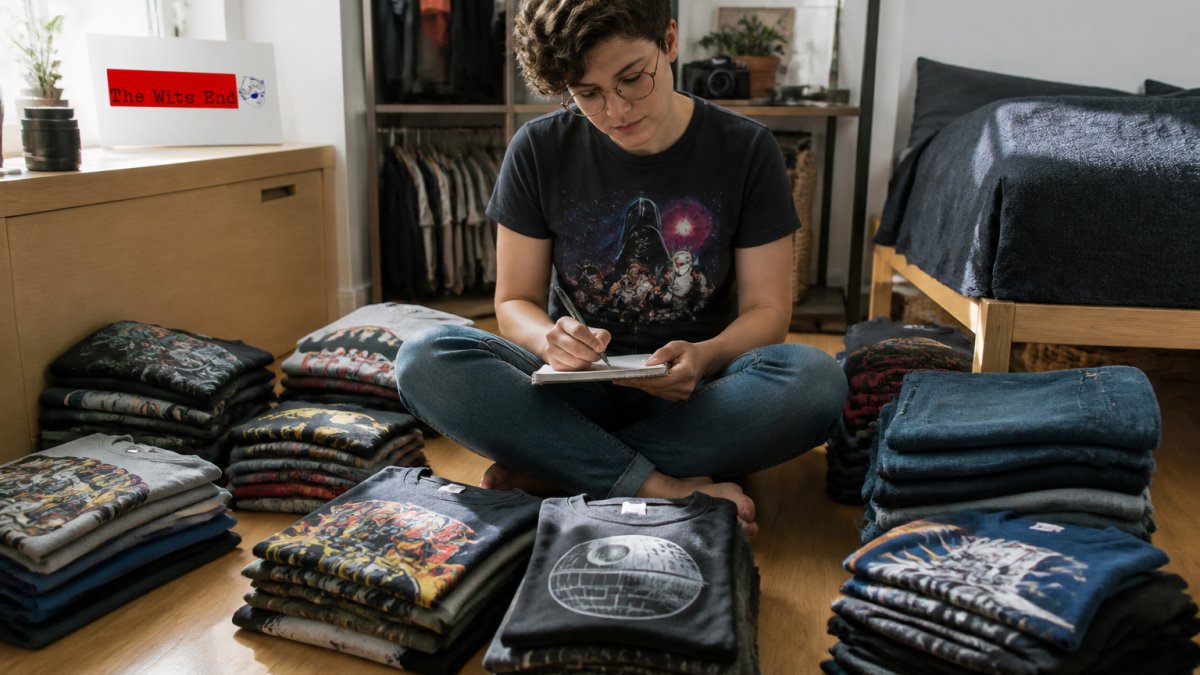
The repair pile matters more than people expect. A loose hem or a small hole is often fixable in ten minutes.
Choose Sustainable Graphic Tees That Survive the Wash Cycle
Durable clothing starts with fabric, stitching, and print method. A sustainable graphic tee is one built to last years of washing, not one that cracks after a few wears.
Our own tees, like the Think More, Stupid Less Unisex t-shirt, use 100% combed and ring-spun cotton at a 4.2 oz. fabric weight.

A common mistake is chasing the cheapest tee. A shirt that fades or cracks in a few months gets replaced, and the cost per wear climbs fast.
Build a Nerd Capsule Wardrobe Around Versatile Pieces
A capsule wardrobe is a small, curated set of clothes that mix and match across most of your week. For a nerd capsule wardrobe, the trick is separating fandom expression from disposable merchandise.
Aim for roughly 25 to 35 pieces total, including shoes, so every item works with at least three others. The exact number matters less than the ratio: about 70 percent neutral base, 30 percent statement. That ratio is what lets a single retro-computing tee or a progressive-values graphic carry an outfit instead of competing with it.
Start with the base layer:
- 5 to 7 plain tees in solid colors (black, gray, navy, white, one earth tone)
- 2 hoodies or sweaters, at least one in a neutral
- 2 pairs of jeans or chinos, one dark and one casual
- 1 pair of shorts for warmer months
Then add the statement layer, capped at 6 to 8 pieces:
- 3 to 4 graphic tees you truly love, each tied to a fandom, hobby, or value you return to
- 1 cosplay-inspired piece that reads as normal clothing (a utility vest, a bomber, a color-blocked jacket)
- 1 subtle geek motif item, like a sock, beanie, or pin, that adds reference without a logo
- 1 "event" piece reserved for conventions or meetups
The cap is the mechanism. When statement pieces are limited, you stop buying every clever shirt you see and start asking whether a new find replaces something in the slot.
Make Fandom Expression Work Without Disposable Merch
The nerd-specific problem is that fandom merchandise often signals belonging through a specific print, and prints date fast. Three habits keep expression sustainable:
- Favor motifs over logos. A pixel-art pattern, a colorway, or a silhouette reference survives a franchise reboot; a dated movie logo does not.
- Buy the blank, not the drop. A durable blank with a print you chose lasts longer than a limited-run item made for a release window.
- Route one-off needs to rental or swaps. A costume for a single convention is a rental or a swap, not a purchase.
Build a Remix Grid, Not a Pile
Before you buy anything, lay the base and statement pieces out and build a simple remix grid: list each statement piece down one side and each base bottom across the top, then mark the combinations that work.
That is the payoff: more looks from fewer garments, less shopping, and more rewearing. Versatile clothing does the heavy lifting, and your favorite designs become accents instead of clutter.
Shop Secondhand Clothing for Rare Finds and Lower Impact
Secondhand shopping is one of the simplest ways to lower your wardrobe's footprint. Pre-loved clothing keeps garments in use and out of landfills.
Thrifting rewards patience. Check the seams and underarms for wear, and hold prints up to the light to spot fading.
Think More, Stupid Less Unisex t-shirt →
The U.S. Environmental Protection Agency's material facts on textiles show how much clothing ends up in the waste stream each year.
Learn How to Care for Graphic Tees So Prints Last
Learning how to care for graphic tees is the single best way to extend their life. Most print damage comes from heat and friction, not from wearing the shirt. Wash cold, turn the shirt inside out, and skip the dryer when you can.
Follow these habits and a good print will outlast the trend that inspired it:
- Wash in cold water on a gentle cycle
- Turn the garment inside out to protect the print
- Use a mild detergent, not bleach
- Tumble dry low or hang dry
- Never iron directly on the graphic
Mending small issues early saves shirts. A loose thread or a tiny hole is a quick fix with a needle and thread. Repair and rewearing beat replacement every time.
Evaluate Sustainability Claims and Avoid Greenwashing
Greenwashing is marketing that makes a product sound greener than it is. Vague words like "eco-friendly" or "natural" mean little without proof.
Use this quick checklist to judge a sustainability claim:
- Does the brand name the actual fabric and fiber percentages?
- Does it explain how the garment is made, such as on-demand or hand-screened?
- Are there third-party certifications, or just buzzwords?
- Does the brand talk about overproduction and waste?
- Can you find the same claims repeated clearly on the product page?
The Federal Trade Commission's Green Guides set the rules for environmental marketing claims. A brand that respects those rules will spell out its materials and methods instead of hiding behind slogans. When a claim feels vague, ask what backs it up.
Plan Your Sustainable Nerd Wardrobe by Budget
You do not need a big budget to build a conscious wardrobe. What you need is a sequence: repair and reuse first, fill gaps second, invest last. A staged plan works at any price point because it spends money only where it changes how often you wear things.
Stage 1: Zero-Cost Moves (Do These First)
- Full closet cleanout and a repair pile
- A basic sewing kit: needle, thread, and a few patches
- A wishlist with a one-week waiting rule before any purchase
- A clothing swap with friends or a local fan group
These moves cost little or nothing and usually remove the need for a third of the items on your wishlist.
Stage 2: Low-Cost Fills
- Thrift and swap for plain tees, hoodies, and basics
- Buy one or two durable graphic tees instead of four cheap ones
- Use rental for one-off convention costumes
Stage 3: Mid-Range Investment
- Three to four quality tees plus a durable hoodie and pants
- One secondhand statement piece that fits the remix grid
- A repair kit kept where you actually see it
Stage 4: Higher-Investment Buys
- A durable jacket or boots that layer across the capsule
- Tailoring on pieces that fit everywhere except one spot
- A small clothing rental budget for event pieces
Do the Cost-per-Wear Math Before You Buy
Cost per wear is the sticker price divided by the number of times you expect to wear the item. A $16.00 tee worn 50 times costs about $0.32 per wear.
Run the math on the wishlist before checkout. If you cannot picture at least 20 wears, the item is an event purchase, and event purchases belong in rental or swap, not the capsule.
Plan Around the Merchandise Lifecycle
Fandom merchandise moves in short cycles: a release, a convention, a trend, then clearance. The impulse buy is the enemy of the budget, because it fills the statement slot with something that dates fast. Three habits blunt the cycle:
- Wait one week before buying any fandom item; most urges fade.
- Check the secondhand market first for out-of-print shirts and older drops.
- Repair before replacing; a cracked print can become a patch or a sleep shirt rather than waste.
Make Fit and Comfort Part of the Budget
A garment that does not fit gets worn rarely, which wrecks cost per wear no matter the price. Check the size chart, not the tag, and budget a small tailoring allowance for pieces that fit everywhere except one spot.
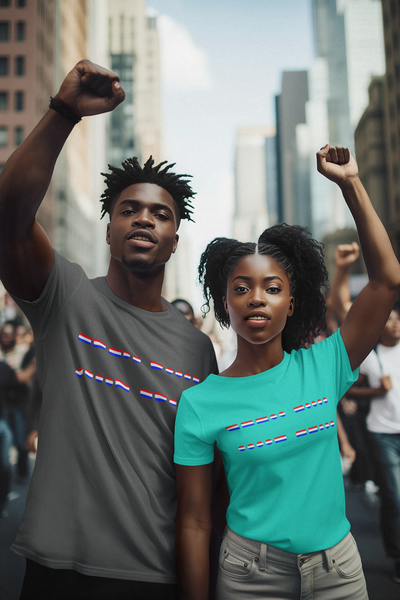
Our tees start at $16.00, and the Resist Multiple Unisex t-shirt is a good example of a durable statement piece that earns its place. Sizes run up to 4XL on that listing, and our Eat Fruit Not Friends tee goes up to 5XL, so inclusive sizing is part of the plan.


Frequently Asked Questions
How do I build a sustainable nerd wardrobe from scratch?
Start with a wardrobe audit to see what you already wear, then build around a small capsule wardrobe of versatile pieces. Add sustainable graphic tees from brands that print on demand or use durable methods, and fill gaps with secondhand clothing. Choose quality garments you will rewear for years, and learn how to care for graphic tees so prints survive repeated washing. The goal is intentional shopping: fewer items, better materials, and designs that match your fandom long term.
How do I choose graphic tees that actually last?
Look for 100% combed and ring-spun cotton with side-seamed construction and shoulder-to-shoulder taping, which help a tee keep its shape. Pre-shrunk fabric reduces surprise shrinkage. Check care instructions, wash cold inside-out, and hang dry. A durable tee that survives 50 washes beats three cheap ones that crack after five.
Is buying secondhand clothing more sustainable?
Yes, secondhand clothing keeps garments in use and reduces demand for new production, which cuts fashion waste. Thrifting and clothing swaps are especially useful for nerd wardrobes because older fandom tees and out-of-print designs surface there. Check seams, prints, and fabric weight before buying, and skip items with cracked graphics or thin, pilled fabric. Pair secondhand finds with a few durable new pieces to cover gaps without overbuying.
How can I style nerdy graphic shirts for everyday wear?
Treat a graphic tee as the base layer and keep everything else simple. Pair it with dark jeans, chinos, or a plain skirt, then add a cardigan, denim jacket, or flannel for cooler days. Stick to two or three colors so the design stands out. For a capsule wardrobe, choose tees with designs you will rewear weekly, and rotate them with neutral bottoms. This outfit remixing stretches your wardrobe without buying more.
Building a wardrobe that reflects your values takes a little planning, but the payoff is clothes you love and keep. At The Wits End, we help you get there with durable, hand-screened and on-demand apparel in inclusive sizes up to 5XL, all from a veteran-owned shop. Start with a closet audit, choose quality garments, and care for them well. Shop now at The Wits End and build a sustainable nerd wardrobe that lasts.