 1-361-589-1048
Table of Contents
- What Makes a Great Graphic Tee in Size 5XL
- How to Measure for a 5XL Shirt: Getting the Right Fit
- Graphic Tee Fabric and Print Durability: What Actually Lasts
- 5XL vs. 5XLT Graphic T-Shirts: Understanding the Difference
- Sizing Across Different Body Shapes and Fits
- Common Mistakes When Shopping for Extended-Size Graphics
- Frequently Asked Questions
Last Updated: October 21, 2026
What Makes a Great Graphic Tee in Size 5XL
A quality graphic tee in size 5XL comes down to fabric weight, print durability, fit proportions, and construction quality, the difference between a staple and a disappointment.
Shoppers seeking graphic tees size 5XL often find designs they love, but the sizing doesn't match their body or the print won't survive a season. This guide fixes that.
A great graphic tee in size 5XL delivers on three fronts: proportional fit cut for how fabric drapes on larger frames, a print that survives repeated washing without cracking or peeling, and solid construction, reinforced seams, quality stitching, fabric that holds its shape.
The difference between a less expensive shirt and a more expensive shirt often comes down to these details: heavier cotton resists shrinking, hand-screened or direct-to-garment printing outlasts cheap transfers, and double-needle stitching holds at stress points.
How to Measure for a 5XL Shirt: Getting the Right Fit
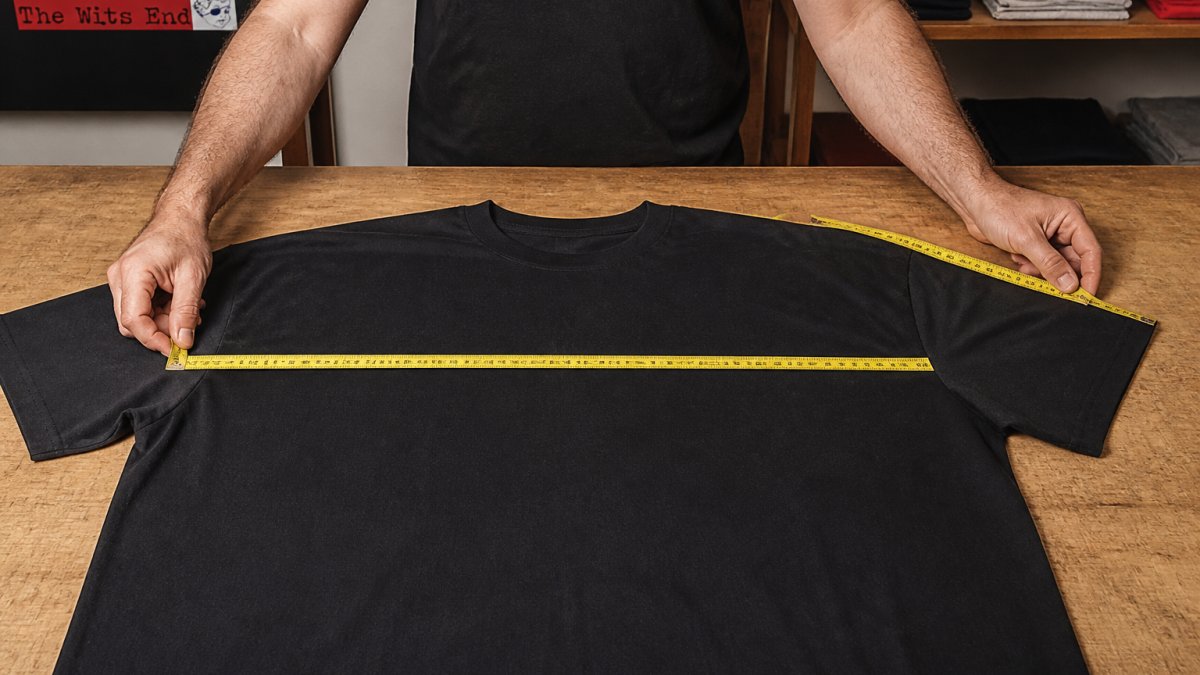
Measuring yourself properly is the most important step before ordering a graphic tee in size 5XL. Guessing leads to shirts that swim on you or bind across the chest, and most size charts list only a single chest number, useless for comparing one brand's 5XL to another's.
The three measurements that actually matter
Lay the shirt flat and take three measurements. Chest width: armpit to armpit across the front, doubled for full circumference, a true 5XL typically measures 25-27 inches flat (50-54 inches total). Body length: base of neck to hem, usually 32-34 inches. Sleeve length: center back neck, across the shoulder, down to the cuff.
Record those three numbers for your best-fitting shirt as your baseline. Every product you consider should publish them, a listing showing only "5XL" with no garment specs is a red flag.
How 5XL garment specs vary across brands
Nominal sizing isn't standardized in extended-size apparel. One brand's 5XL may measure 26 inches across and 33 long; another 28 across and 31 long, a two-inch swing that decides whether a shirt fits. Compare chest width, body length, and sleeve length side by side, not size labels.
A practical comparison method:
- Chest width (laid flat): Look for 25-27 inches for a standard 5XL. Anything under 24 inches will fit like a 4XL; anything over 28 inches runs closer to a 6XL.
- Body length: 32-34 inches is typical. If you have a long torso, favor the upper end or look for a tall cut.
- Sleeve length (from center back neck): Most 5XL short-sleeve tees land around 19-21 inches. Compare this to your baseline before ordering.
- Shoulder width (seam to seam): Less commonly published, but ask for it if you have broad shoulders, a 5XL with narrow shoulders will pull across the back.
Account for fit preference and shrinkage
Compare garment measurements against your own body, not just another shirt. A 26-inch chest width on a 26-inch chest fits snugly, not loosely, a relaxed graphic tee needs at least 2-4 inches of extra room in the chest.
Factor in shrinkage: even pre-shrunk cotton can shrink 3-5% in the wash, roughly 1-1.5 inches on a 33-inch body. If you're between sizes or the shirt fits snugly out of the bag, size up or wash cold and air dry. Cotton-poly blends shrink less overall.
A quick side-by-side comparison checklist
Before buying, line up these fields for every candidate: price, size range (does it actually reach 5XL?), fabric weight and composition, fit style, body length, chest width, sleeve length, print method, and return policy. A shirt that wins on price but loses on chest width and returns is usually the costlier choice.
Graphic Tee Fabric and Print Durability: What Actually Lasts
Fabric determines how long your graphic tee looks good. Cheap, lightweight cotton feels thin and wears immediately; heavier fabrics hold structure and resist pilling. Here's how to actually test whether a shirt will hold up.
Fabric weight and composition: what the numbers mean
Look for 100% cotton at 6 ounces or higher, or a cotton-poly blend combining breathability with durability. Heavier weight resists shrinkage and holds shape; lightweight cotton (under 5 ounces) shrinks unpredictably. The sweet spot is 6-7 ounces: substantial enough to drape and hold a print without feeling like canvas.
Composition affects shrinkage and pilling as much as weight. 100% cotton breathes well and screen-prints cleanly but shrinks and pills over time; a 60/40 or 50/50 cotton-poly blend shrinks less and resists pilling but feels less breathable. Ring-spun cotton's tighter-twisted fibers take finer print detail and feel softer than open-end cotton.
Print methods ranked by durability
Print method matters as much as fabric. Hand-screened printing pushes ink through a mesh screen directly onto the garment, creating a bond that withstands dozens of washes without significant fading or cracking. Quality direct-to-garment printing is also durable, though quality varies widely.
Cheap transfer printing heat-presses a pre-made graphic onto the shirt, so it sits on top rather than bonding. It tends to crack and peel within 5-10 washes, splitting along stress lines as the fabric flexes.
A quick field test before you buy: run your fingers over the print. A quality screen print often has slight texture and depth. A cheap transfer may feel slick and plastic-like. If you can feel a raised, rubbery edge around the graphic, that's often a transfer that will likely peel.
A consistent wash-and-wear test you can run at home
Rather than trusting product claims, you can test a shirt the same way: wash inside out in cold water with mild detergent, tumble dry low or hang dry, and repeat for 10 cycles, checking four things after each wash:
- Fading: Compare the graphic against a photo taken when the shirt was new. Screen prints should show minimal change; transfers often lighten first at the edges.
- Cracking: Flex the printed area gently. Cracks appear first along the stress lines where the fabric stretches.
- Pilling: Look at the underarm and side-seam areas, where friction is highest. Pilling shows up there first.
- Fabric weight and shape: Check whether the body length and chest width have changed. Measure again after the tenth wash and compare to your baseline.
Heavyweight (6+ ounce) ring-spun cotton with a screen print often holds up well across this cycle; lightweight cotton with a transfer print may show more wear. A simple log of shirt, fabric weight, print method, wash count, and observations can turn impressions into a comparison.
Care habits that extend print life
Wash inside out in cold water, heat accelerates fading and cracks prints. Skip fabric softener and dryer sheets, which break down print adhesion. Tumble dry low or hang dry. These habits won't rescue a cheap transfer, but they noticeably extend a quality screen print.
5XL vs. 5XLT Graphic T-Shirts: Understanding the Difference
5XLT and 5XL are fundamentally different cuts, and knowing the distinction saves you from ordering a shirt that doesn't fit your proportions.
A standard 5XL is scaled up proportionally from smaller sizes, larger chest, wider shoulders, longer sleeves, same proportions as a medium. A 5XLT adds 2-3 inches of length to the body and sleeves for taller individuals, with chest width similar to a regular 5XL.
Choose 5XL for a typical height-to-width ratio; choose 5XLT if you're taller than average or long-torsoed relative to chest width. Many people in extended sizes assume they need tall sizing when they don't, the extra length looks oversized and sloppy if unneeded.
Sleeve length matters too: a 5XLT sleeve runs about an inch longer. Shorter arms relative to body size will bunch at the wrist in a 5XLT; longer arms may find a standard 5XL sleeve doesn't reach the wrist comfortably.
Sizing Across Different Body Shapes and Fits
Not all 5XL graphic tees suit every body shape. A relaxed, boxy fit works for some; others prefer a tapered or contoured cut. Knowing your shape helps you choose.
A relaxed fit has consistent width from chest to hip, draping loosely without following contours, good for comfort and movement or weight carried evenly. A boxy fit is roomier still, with straight sides and minimal shaping for maximum comfort and a looser silhouette.
A contoured 5XL is narrower at the waist and wider at chest and hip, creating definition for those who want the shirt to follow their shape. Fitted cuts in extended sizes are less common but worth seeking for a tailored look.
Crew neck is the standard and works for most; a slightly deeper crew flatters broader shoulders. V-necks elongate the torso and suit wider chests, while Henleys add visual interest without changing fit much.
Sleeve length affects the look too: baggy long sleeves overwhelm a frame, while sleeves ending right at the wrist look cleaner. Test by raising your arms, the sleeve should move with you without bunching or riding up.
Common Mistakes When Shopping for Extended-Size Graphics
Most people make predictable errors buying graphic tees in size 5XL. Recognizing them avoids wasting money on shirts that don't work.
First: trusting size charts without measuring yourself. Manufacturers vary wildly, one brand's 5XL fits like another's 4XL. Measure your body and compare against the specific product's measurements, not the size name.
Second: ignoring fabric weight. A 4-ounce cotton shirt feels cheap and wears out fast; a 6-ounce shirt feels substantial and lasts years, usually for minimal price difference.
Third: buying on design alone without checking print durability.
Fourth: overlooking seam construction. Double-needle stitching, especially at shoulder seams and armholes, holds up for years; single-stitched seams fail faster under stress.
Fifth: not accounting for shrinkage. Even pre-shrunk cotton can shrink 3-5%, so a snug shirt may be too small after one wash. Buy with room to shrink, or wash cold and air dry.
Finding the right graphic tees size 5XL requires attention to fit, fabric, print durability, and construction.
Frequently Asked Questions
What is the difference between 5XL and 5XLT graphic T-shirts?
5XL offers standard proportions scaled up for larger frames, while 5XLT adds extra length in the body and sleeves for taller individuals. The T stands for tall. If you're 6'2" or taller, 5XLT prevents the shirt from riding up at the waist and wrists. Check the brand's size chart to compare actual measurements; not all manufacturers offer both options, and proportions vary significantly between brands.
How do I know if a graphic tee's print will hold up after washing?
Hand-screened and direct-to-garment prints typically outperform heat transfers, which crack and peel after repeated washing. Look for brands that specify their printing method and use heavyweight cotton (at least 6 oz). Wash in cold water, turn the shirt inside out, and air dry to extend print life. Read customer reviews mentioning durability after multiple washes, not just first impression.
How should I measure my chest and sleeve length for a 5XL graphic tee?
Lay a well-fitting shirt flat on a table. Measure across the chest from armpit to armpit and double that number for full chest width. For sleeve length, measure from the center back neck down the shoulder and along the arm to the wrist. Compare these measurements to the brand's size chart before ordering. Many extended-size brands have different proportions, so never assume all 5XLs fit the same.
Are graphic tees in size 5XL available for most designs?
Availability varies by brand and printing method. Before committing to a purchase, confirm 5XL stock for your specific design. Many retailers show extended sizes online but have limited in-stock quantities, so order early if you find something you want.