 1-361-589-1048
Last Updated: November 6, 2026
Quick Summary
Screen printing can be eco-friendly for clothing brands, but only in part, because the impact depends on the ink, fabric and production habits you choose. Water-based inks generally release fewer VOCs than plastisol, though neither is free of impact.
- Water-based inks use water as the carrier and generally release fewer VOCs during curing.
- Plastisol is a PVC-based ink that cures at high heat and is the default for dark garments.
- Ask printers for the product data sheet rather than relying on the word "eco" on a label.
- Consolidate colors and batch orders to reduce setup, cleanup and screen-related waste.
- Plan order volumes around demand, since overprinting can produce unsold stock and waste.
Table of Contents
- How Screen Printing Works and Where Its Impact Comes From
- Water-Based vs. Plastisol Inks: Which Is Less Harmful
- Choosing Eco-Friendly Screen Printing Ink for Your Designs
- Organic and Responsibly Sourced Fabrics for Printed Tees
- How Screen Printing Compares to Digital and DTG Methods
- Building Eco-Friendly T-Shirt Printing Into Your Production
- Print-on-Demand Options and Verifying Supplier Claims
- Next Steps for Sourcing Greener Prints From The Wits End
- Frequently Asked Questions
How Screen Printing Works and Where Its Impact Comes From
Screen printing can be eco-friendly for clothing brands only in part, and the answer depends on which ink, fabric and production habits you choose. The process pushes ink through a stencil mesh onto fabric, one color at a time, so each design needs its own screen and each color needs its own pass. That setup is where most of the environmental cost hides, and it is also where smart choices pay off.
For most brands, the real question is not whether screen printing is good or bad, but where the impact concentrates and how much of it you can reduce. Ink chemistry, fabric sourcing, water use and waste all contribute. A brand that addresses only one of these will still carry the rest.
Where waste and water use show up in the process
Waste and water use appear in predictable places. Screens must be cleaned after each run, which uses water and reclaiming solvent or emulsion. Excess ink left in mixing containers and on squeegees becomes waste if it is not measured and stored well. Every color adds another setup, another screen and another cleanup cycle, so a multi-color design multiplies these losses.
Reducing them starts with planning. Consolidate colors where the design allows, order in batches large enough to justify a full setup, and mix only the ink you will use. Many shops also reuse screens for repeat designs rather than burning new ones for every small order. These steps cut waste without touching the ink you put on the shirt.
Water-Based vs. Plastisol Inks: Which Is Less Harmful
The difference between the two ink families is more conditional than most summaries suggest. The difference comes down to carrier chemistry, cure mechanics, and what happens to the print at end of life.
Water-based inks use water as the carrier, with the pigment suspended in a binder. Because the carrier is water, these inks are generally described as releasing fewer volatile organic compounds (VOCs) during curing than plastisol.
Plastisol is a suspension of PVC particles in a plasticizer that does not dry. It cures only when heated to a high temperature, at which point the PVC particles fuse into a continuous film. That film is durable and opaque, which is why plastisol remains the default for dark garments and high-opacity designs. The trade-offs are real: the print is a plastic layer on the fabric, curing requires sustained high heat, and cleanup uses solvent rather than water. Many plastisol systems are now formulated without phthalates or heavy metals, but the PVC base itself is the part that matters for recyclability and compostability claims.
A few practical distinctions matter more than the general label:
- Opacity and color count. Water-based inks typically need a base white or a discharge underlay to cover dark fabrics, which adds a print station and a cure pass. On light cotton with one or two colors, water-based is straightforward. On dark garments with bold artwork, the extra steps can erase part of the environmental advantage.
- Cure energy. Plastisol cures hotter but faster; water-based often cures at lower temperatures but needs adequate dwell time to drive off the water. Ask your printer which cure profile they run, because energy use per shirt depends on the combination of temperature and belt speed, not temperature alone.
- Cleanup chemistry. Water-based cleanup produces wastewater with pigment and binder solids that must be handled; plastisol cleanup produces solvent waste. Neither is free, and the better choice depends on which waste stream your printer is equipped to manage.
- End of life. A water-based print on a 100% cotton tee is more compatible with textile recycling and industrial composting than a plastisol print, which introduces a PVC film that most mechanical recyclers cannot separate.
Watch out: "Water-based" is not a single category. Some water-based inks still contain PVC or added solvents, and some plastisol is marketed as eco-friendly because it is phthalate-free. Ask for the safety data sheet and the technical data sheet, and read the binder chemistry rather than the marketing name.
Ask any printer how they manage leftover ink, screen reclaim and wastewater before you commit to a run.
The two ink families differ in carrier chemistry, cure mechanics and end-of-life behaviour, as summarised below.
| Factor | Water-based ink | Plastisol ink |
|---|---|---|
| Carrier | Water | PVC particles in plasticizer |
| Curing | Dries off water at lower temperature | Fuses at high heat |
| Cleanup | Water, with wastewater to handle | Solvent waste |
| Dark garments | Often needs base white or discharge underlay | Opaque by default |
| Recyclability on 100% cotton | More compatible with textile recycling | PVC film hard to separate |
Choosing Eco-Friendly Screen Printing Ink for Your Designs
When you evaluate ink, ask your printer for the product data sheet rather than relying on the word "eco" on a label. A credible supplier will name the ink system, state whether it is water-based or plastisol, and disclose any additives. Non-toxic claims should be backed by a recognized certification, and you can check certifications against the issuing organization's public database.
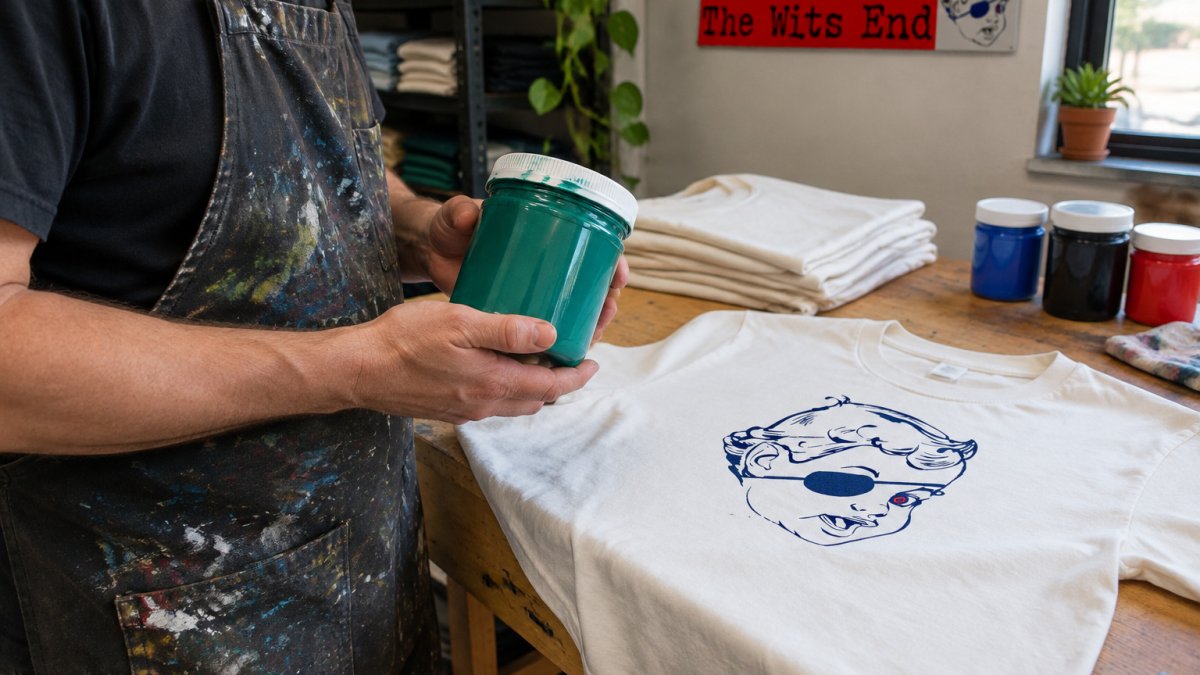
Match the ink to the design, and confirm with your printer which inks they use for each garment colour and artwork type. Choosing the right ink for each job avoids reprints, which are a hidden source of waste.
Organic and Responsibly Sourced Fabrics for Printed Tees
The fabric matters as much as the ink. Ask any supplier for documentation of fabric sourcing rather than accepting a general organic claim.
Fabric weight and blend also affect how a print performs over time.
How Screen Printing Compares to Digital and DTG Methods
No single printing method is universally sustainable, and the honest comparison is a lifecycle one: materials, energy, water, waste, and production volume all shift the answer. Most brand-facing guides pick a winner; the more useful approach is to compare screen printing, direct-to-garment (DTG), heat transfers, and dye sublimation across the same five dimensions and then match the method to the order.
Materials and ink chemistry. Screen printing, direct-to-garment (DTG), heat transfers and dye sublimation each use different ink and transfer systems, and the right method depends on the garment and order size.
Energy. Screen printing concentrates energy in the cure stage, where each color pass typically gets its own flash or full cure. DTG concentrates energy in pretreatment (heat press) and in the final cure, and the per-shirt energy is higher at low volumes because the printer runs a fixed warm-up and maintenance cycle regardless of order size. Heat transfers concentrate energy in the transfer press, which is short but repeated per garment. Sublimation needs a heat press per item plus energy to print the transfer paper. At high volume, screen printing usually has the lowest energy per shirt because the cure runs continuously and the per-shirt ink deposit is small.
Water and wastewater. Screen printing generates wastewater from screen reclaim and, with water-based inks, from cleanup. DTG generates less process water but produces waste pretreatment liquid and ink-flush waste. Heat transfers and sublimation generate little process water but produce carrier waste, transfer film, backing paper, and liner that often cannot be recycled in standard streams.
Waste and overproduction. Screen printing has high setup waste per design: emulsion, ink mixing, test prints, and screen reclaim. That setup waste is amortized across the run, so a 24-piece run carries far more waste per shirt than a 500-piece run. DTG has low setup waste and suits short runs and print-on-demand, but it uses more ink per shirt and produces ink-flush and cleaning waste between jobs. Heat transfers can be printed in bulk and pressed on demand, which reduces overproduction but creates carrier waste. Sublimation is efficient on polyester at volume but is limited to synthetic fabrics.
Durability and end of life. Screen-printed plastisol sits on the fabric as a film and can crack over many washes; water-based screen prints and DTG prints tend to fade rather than crack. Heat transfers can peel at the edges if the press profile is off. Sublimation is permanent in the fiber but locks the garment into a polyester stream that is harder to recycle mechanically. For brands making recyclability or compostability claims, print coverage and ink chemistry matter as much as the base fabric.
A practical way to choose, based on general production patterns:
Watch out: per-shirt comparisons can mislead when run sizes differ, so ask your printer for waste and energy estimates at your actual quantity before deciding.
The most defensible brand position is not "we use the greenest method" but "we match the method to the order and can show the trade-offs." Ask each printer for their setup waste per design, their cure energy profile, and how they handle carrier waste and wastewater, then compare on your real order size rather than on a generic ranking.
Building Eco-Friendly T-Shirt Printing Into Your Production
Turn these choices into a production policy you can repeat. Set a default ink (water-based where the design allows), specify certified organic fabric, and limit the number of colors per design. Batch orders to reduce setup waste, and track how much ink and water each run uses so you can see what is improving.
Plan order volumes around demand. Overprinting to chase a lower unit price can produce unsold stock, which is a common source of waste in apparel.
Print-on-Demand Options and Verifying Supplier Claims
Print-on-demand (POD) can reduce unsold inventory because shirts are printed only after an order arrives. Before committing to any supplier, request its ink type, fabric certification and waste-handling policy in writing.
Use a short checklist when you vet a printer or POD provider:
- Names the ink system (water-based or plastisol) and provides a data sheet
- Provides a certificate number for any organic or non-toxic claim
- Describes how leftover ink, solvent and wastewater are handled
- Explains minimum order sizes and how they affect waste
- Offers a sample print so you can judge the finish before a full run; use this screen printing inspection checklist to review it.
Verify claims rather than accepting them at face value. A supplier that answers these questions specifically is far more likely to deliver what it promises.
Next Steps for Sourcing Greener Prints From The Wits End
Screen printing can be a responsible choice for clothing brands when you pick water-based inks where the design allows, source certified fabric, and plan orders to limit waste. Start by auditing your current process against the checklist above, then change one variable at a time so you can measure what actually improves.
At The Wits End, our hand-screened and direct-to-garment shirts are designed for durability. Explore our collection to see which designs fit your next run.
Frequently Asked Questions
What is the most eco-friendly ink for screen printing?
Water-based inks are generally considered a lower-impact option for screen printing. Ask any printer you work with for the ink's safety data sheet and confirm which inks they use before you commit to a run.
Can you screen print on organic cotton?
Yes, you can screen print on organic cotton. Ink adhesion works on organic cotton much as it does on conventional cotton, though the fabric's texture and weight can affect how crisp the print looks. Test a sample first, since fabric finish and ink type both influence the final print quality.
Is screen printing more sustainable than direct-to-garment printing?
It depends on the order. Screen printing and direct-to-garment printing have different setup and waste profiles, so compare both using your expected order size rather than general claims.
Is screen printing eco-friendly for clothing brands?
Screen printing can be eco-friendly for clothing brands when they plan orders carefully and ask suppliers for documentation of their ink and wastewater practices. The process still uses water, energy, and screens that generate waste, so the impact is real rather than zero. Pricing and minimum quantities vary by order, so request a quote from The Wits End for your specific run.