 1-361-589-1048
Last Updated: November 16, 2026
Quick Summary
The meaning behind feminist graphic tees goes beyond decoration: each design carries a message about who made it, who wears it, and what the wearer wants to say in public without speaking. Reading one means checking the slogan, the cause the purchase supports, and the conditions under which the shirt was made.
- A slogan that names a specific demand has a position; one that gestures at girl power without naming anything can be printed on anything.
- Ask which organization, how much per shirt, and whether the donation is tied to a set window.
- Subtle shirts build community among people who already share the reference but do less advocacy work.
- A joke that punches down at another marginalized group is not feminist, no matter what the tag says.
- Email the brand and ask where the blank shirt comes from; silence tells you what you need to know.
Table of Contents
- What Feminist Graphic Tees Actually Say
- How to Read Common Slogans and Symbols
- The Meaning Behind Feminist Graphic Tees LGBTQ+ Wearers Bring to Them
- Feminist T-Shirts for a Cause: Where Your Money Goes
- Subtle Feminist Shirts for Everyday Wear
- Funny Feminist Shirts That Still Land the Point
- Is Your Feminist Tee Ethically Made? Check These Four Things
- Shop a Tee That Matches Your Values
- Frequently Asked Questions
What Feminist Graphic Tees Actually Say
A feminist graphic tee is a T-shirt printed with a slogan, symbol, or illustration that states a position on women's rights and gender equality.
The category has grown from a few loud slogans into a whole vocabulary, some a wink, some a protest, some a marketing department borrowing the language of a movement it never joined.
Below, we will show you how to read the most common slogans, where the money from cause tees really goes, and how to check whether a shirt was made ethically.
How to Read Common Slogans and Symbols
Reading a slogan starts with one question: is this shirt making an argument, or selling a mood?
Here is a working decoder for the phrases you will see most, with the origin and the variation that most product pages leave out:
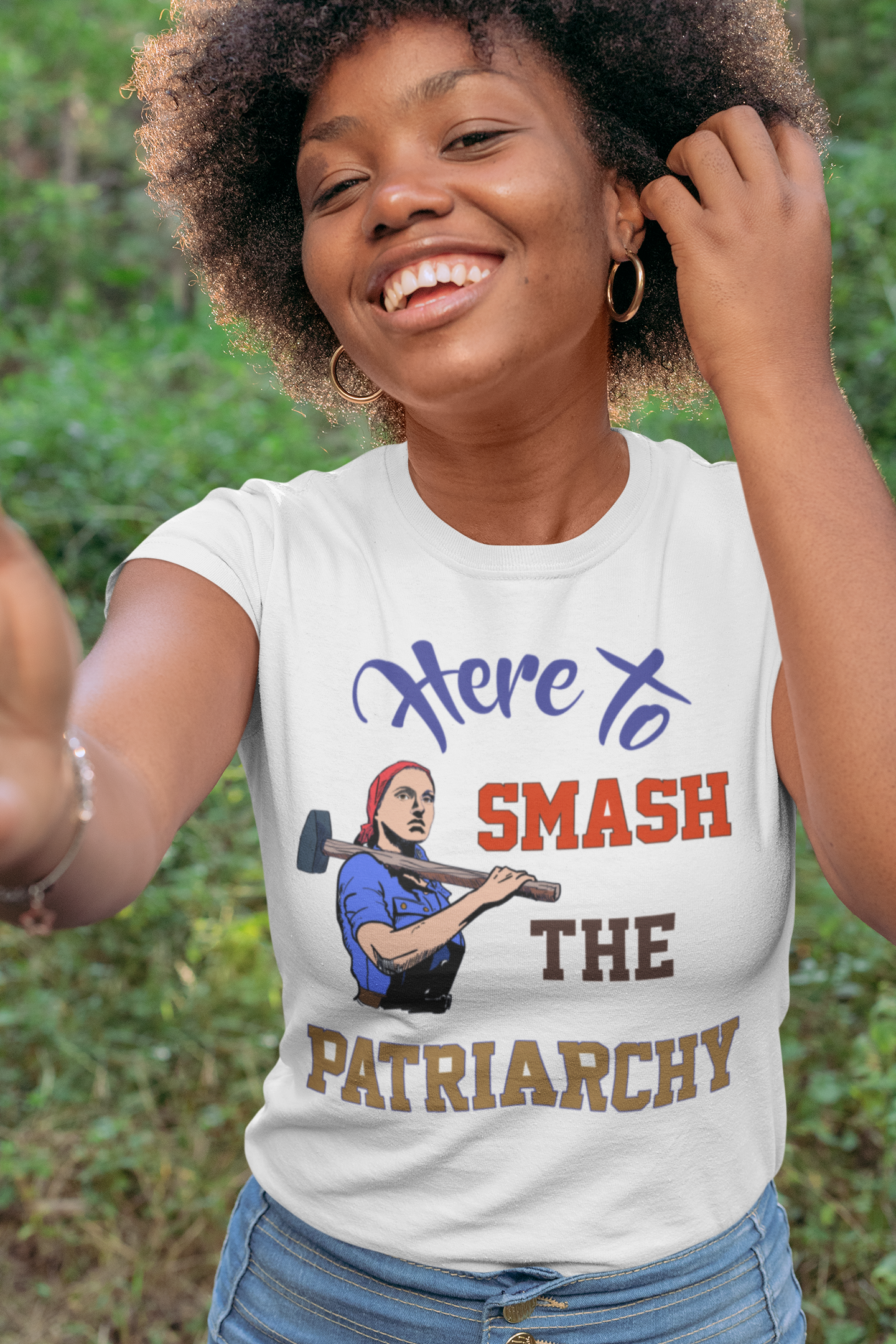
- "Smash the patriarchy" is confrontational by design. The sledgehammer imagery leans on the idea that a system, not individual men, is the target. It reads as a demand for structural change. The phrase gained a second life in the 2010s through online feminist communities and protest signage, and it now appears on everything from tote bags to baby onesies. Interpretation varies sharply: some wearers mean it as a literal call to dismantle institutions, while others treat it as a shorthand for "I am a feminist" and are surprised when it starts a conversation. If you wear it to a workplace, expect it to be read as a statement, not a joke.
- "Women's rights are human rights" is a formal, legalistic framing. It moves the argument out of lifestyle territory and into civil rights territory. The line is most associated with Hillary Clinton's 1995 speech at the United Nations Fourth World Conference on Women in Beijing, though the idea predates that speech in international human rights advocacy. On a shirt, it reads as a policy position rather than a personal vibe, which is why it tends to appear in more formal or institutional settings. The variation to watch for is dilution: printed in a soft script font on a pastel tee, it can read as a decorative quote rather than a demand.
- "The future is female" is a statement of ownership over the future tense. It is aspirational rather than accusatory, which is why it travels well on merch. The phrase has roots in 1970s lesbian-feminist print culture and was revived on apparel in the 2010s. Its meaning shifts with the wearer: for some it is a celebration of girls' potential, for others it is a claim about who will hold power, and for critics it can read as a gender-essentialist slogan that leaves nonbinary people out. That last reading is why some intersectional brands pair it with more inclusive language or avoid it altogether.
Symbols do similar work, and they carry their own histories.
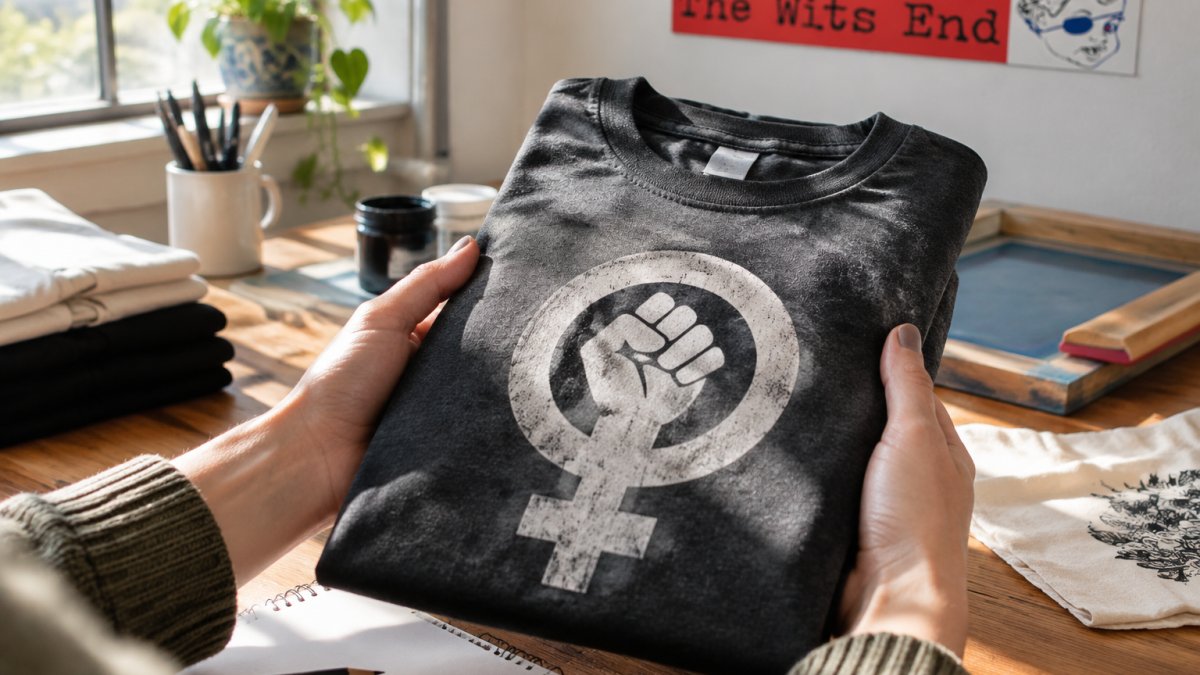
The practical test is simple. If you cannot explain what a slogan is asking for in one sentence, it is probably decoration, fine, just know which one you are buying.
The Meaning Behind Feminist Graphic Tees LGBTQ+ Wearers Bring to Them
For many LGBTQ+ wearers, a feminist graphic tee is a visibility tool before it is a fashion choice.
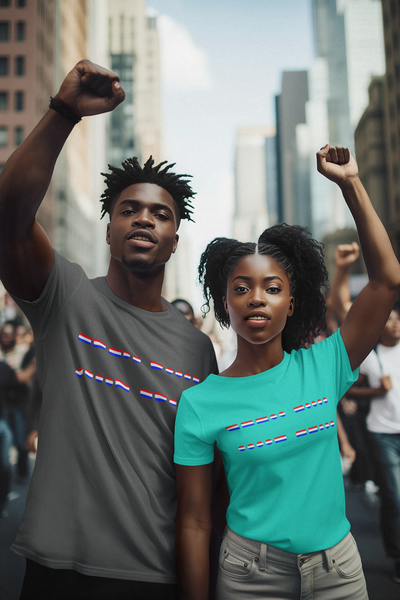
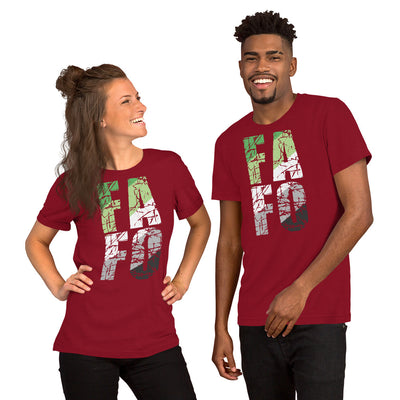
That overlap has a history. The transgender pride flag, designed by Monica Helms in 1999, uses light blue, pink, and white stripes arranged so the pattern is always correct no matter which way it is flown.
A straight ally and a queer wearer in the same slogan tee are making different statements, and both are legitimate, signals are read in context.
If you want the history behind the colors and symbols you see on these shirts, our breakdown of transgender flag colors and their meaning covers the design story and why the pattern was built to be reversible.
Feminist T-Shirts for a Cause: Where Your Money Goes
A cause tee only means something if the money actually moves.
Ask three questions before you buy a shirt that claims a charitable purpose:
- Which organization, exactly? A named nonprofit with a public mission beats "a women's charity" every time.
- How much, and per what? A flat amount per shirt sold is verifiable. A vague percentage of "profits" is not, because profit can be defined after the fact.
- Is the donation tied to a window? Many campaigns run for a set period. A shirt sold after the window closes may not fund anything.
The Internal Revenue Service's tax-exempt organization search lets you confirm that a named nonprofit is a recognized charitable organization before you assume your purchase supports it.
Some brands use cause language purely as a marketing layer. A shirt can raise awareness and still be a business decision, not automatically bad, but know which you are buying.
Subtle Feminist Shirts for Everyday Wear
Not every setting rewards a loud slogan.
The trick is moving the message from text to image.
Fit and fabric carry more weight here than the slogan does. Our progressive graphic tees collection shows how small-scale prints read on a real garment rather than a flat mockup.
One honest limitation: subtle shirts do less advocacy work. They build community among people who already share the reference.
Funny Feminist Shirts That Still Land the Point
Humor is the most durable delivery system a slogan has.
The best ones share a structure: a familiar phrase, flipped. "Well-behaved women seldom make history" works because the joke is also a genuine historical observation.
Where funny shirts fail is when the punchline lands on someone else's identity.
A useful test: buy the joke you would be happy to explain to a teenager.
Is Your Feminist Tee Ethically Made? Check These Four Things
An ethically made tee is one where the people who grew the cotton, cut the fabric, and printed the design were paid and treated according to law, and where the brand can show you how it knows that.
- Fabric content is stated plainly. Look for a specific fiber breakdown on the label or listing, not just "cotton blend." Organic cotton versus polyester is a real difference in water use, durability, and how the shirt feels after twenty washes. Organic cotton is grown without synthetic pesticides and can be certified under the USDA National Organic Program, which is a verifiable standard rather than a marketing word. Our comparison of organic cotton versus polyester in activist tees walks through the trade-offs. Watch out: "organic" on a hangtag is not the same as certified organic, and a brand that cannot name its certifier is asking you to take its word.
- Production method is named. Screen printing, direct-to-garment, and on-demand production have different waste profiles. A brand that tells you which production method it uses, and why, is usually a brand that has thought about it. The practical question is whether the brand can explain its choice in plain language.
- Supply chain is described at least one level deep. "Made in a facility we can name" beats "ethically sourced" with no further detail. Workers' rights in garment supply chains are a labor issue before they are a branding issue. A useful evidence standard is whether the brand can name the cut-and-sew facility or at least the country and the tier of production, and whether it publishes a supplier list. Third-party certifications such as Fair Trade Certified or SA8000 are not perfect, but they require audits that a brand cannot self-issue. Watch out: a brand that lists a certification logo without a certificate number or issuing body is often using the logo as decoration.
- The brand will answer a direct question. Email and ask where the blank shirt comes from. A specific answer is a good sign. Silence, or a copy-pasted sustainability page, tells you what you need to know. A useful follow-up is to ask what happens when a supplier fails an audit, because that question separates brands with a process from brands with a paragraph.
Fast fashion makes this hard on purpose. If you want to dig further into what ethical production looks like in practice, our ethical T-shirt guides collect the checks we use ourselves.
| Check | What Good Looks Like | Red Flag |
|---|---|---|
| Fabric | Named fiber breakdown, certified organic options | "Cotton blend," no detail |
| Printing | Method stated, on-demand or screen print | Unspecified "eco printing" |
| Supply chain | Facility or region named, supplier list published | "Ethically sourced" only |
| Certifications | Issuing body and certificate number shown | Logo with no verifiable source |
| Responsiveness | Specific answer to a direct question | No reply, generic page |
No checklist makes a purchase fully ethical. Every shirt has a supply chain, and every supply chain has trade-offs.
Shop a Tee That Matches Your Values
The meaning behind feminist graphic tees is decided at three points: the slogan you choose, the cause the purchase supports, and the conditions under which the shirt was made. Get all three right and the shirt does what you bought it for.
We are a veteran-owned shop, and we print on demand, which helps reduce overproduction and means your shirt is made after you order it. If you want a shirt that says the thing plainly, the Here to Smash the Patriarchy women's relaxed tee is 100% combed and ring-spun cotton, pre-shrunk, with a relaxed fit, at $17.99.
Pick the slogan you can explain, check where the money goes, and ask any brand the awkward question about its supply chain. Then wear it like you mean it.
Most shoppers never ask where the blank shirt came from, and that is exactly why so many slogan tees mean so little.
Frequently Asked Questions
What do common feminist T-shirt slogans and symbols mean?
Most slogans fall into a few families. 'Smash the patriarchy' targets the systems that concentrate power, not individual men. 'Women's rights are human rights' traces back to a 1995 speech and frames equality as a baseline, not a favor. Symbols like the raised fist, the Venus sign, and the double-mars interlocking rings each carry their own history. The key is knowing which wave of the movement a phrase came from, since older slogans often carried narrower definitions of who counted as a woman.
How can you tell whether a feminist shirt supports a cause?
Ask where the money goes. A shirt tied to a nonprofit or fundraiser should name the organization and the amount or percentage donated, ideally on the product page. If a brand uses feminist language but never mentions a partner, proceeds, or advocacy, treat the slogan as decoration rather than activism. You can also check whether the brand publishes its supply chain and labor standards, since a shirt made in unsafe conditions undercuts the message printed on it.
Can a feminist T-shirt make a meaningful statement?
Yes, with limits. A shirt is a low-effort form of visibility that can start conversations, signal solidarity to people around you, and raise money when proceeds go to a cause. It is not a substitute for voting, donating, organizing, or showing up. The most useful framing is to treat the tee as an entry point: it opens a door, and what you do after someone asks about it is where the actual advocacy happens.
What should you consider when choosing a feminist graphic tee?
Start with the message: does the slogan match your actual politics, or will you feel awkward explaining it? Then check fit and fabric, since a shirt you never wear makes no statement. Look at print method and care instructions, because a cracked graphic in three washes undercuts the design. Finally, verify the brand's ethics and sizing range. A tee that only fits straight sizes sends a message about who the brand thinks the movement is for.