 1-361-589-1048
Last Updated: November 7, 2026
Quick Summary
To choose ethical atheist apparel, check the fiber, where the blank is made, the print method, and whether the brand names its certifying bodies with verifiable certificate numbers. A logo alone is not enough, so confirm which tier of the supply chain each claim covers before you buy.
- A made in label names only the final assembly country, not where cotton grew or who sewed seams.
- A certification on the blank shirt does not automatically cover the printer who decorated it.
- Screen printing is high durability and best for bold graphics and bulk orders.
- Balance your closet with one loud statement shirt for every two quiet ones.
- Ask a print-on-demand seller which blank brand and model they use, then check that maker's disclosures.
Table of Contents
- Why Ethical Atheist Apparel Is Harder to Shop For Than It Looks
- Start With the Supply Chain Behind Your Graphic Tee
- How to Spot Ethical T-shirts: A Practical Vetting Checklist
- What Fair Trade Clothing Claims Actually Mean
- Comparing Print Methods, Inks, and Decoration
- Subtle Atheist Clothing vs. Statement Shirts: Matching the Message to the Moment
- Funny Atheist Shirts Without the Ethical Compromise
- Shop Atheist Apparel You Can Vet Before You Buy
- Frequently Asked Questions
Why Ethical Atheist Apparel Is Harder to Shop For Than It Looks
Finding atheist apparel is easy. Finding atheist apparel you can actually stand behind takes work. This guide from The Wits End walks through how to choose ethical atheist apparel, from the cotton in the shirt to the ink on the chest.
A graphic tee passes through many hands before it reaches you: cotton growers, spinners, cut-and-sew shops, printers. Each step hides a choice. A funny slogan printed on a shirt that falls apart in ten washes isn't a good deal, it's waste.
Here's what most guides get wrong: they treat "ethical" as a single checkbox. It isn't. You're weighing fiber, factory conditions, print method, and durability at once.
Start With the Supply Chain Behind Your Graphic Tee
A supply chain is the full path a garment takes from raw fiber to your doorstep. For a graphic tee, that path has four main stops: fiber, fabric, cut-and-sew, and printing.
Tracing it sounds hard. You don't need to trace all of it. You need the brand to tell you something concrete.
Ask three questions:
- Where does the blank shirt come from?
- Who prints the design, and how?
- What fiber is used, and is it organic or recycled?
Brands that care tend to answer these on the product page.
Watch out: a "made in" label only names the final assembly country. It says nothing about where the cotton grew or who sewed the seams. Don't confuse one label with a full picture.
How to Spot Ethical T-shirts: A Practical Vetting Checklist
Ethical T-shirts usually show their standards up front. If a brand can't tell you where the blank came from or how it prints, treat that as a red flag.
Use this checklist before you add to cart:
- The listing names the fiber (organic cotton, recycled blend, or standard cotton)
- The brand states where the blank is made
- Print method is disclosed (screen print, direct-to-garment, or heat transfer)
- Care instructions are included
- Sizing runs to inclusive sizes, not just small through large
- The brand answers sourcing questions on request
- Return policy is clear
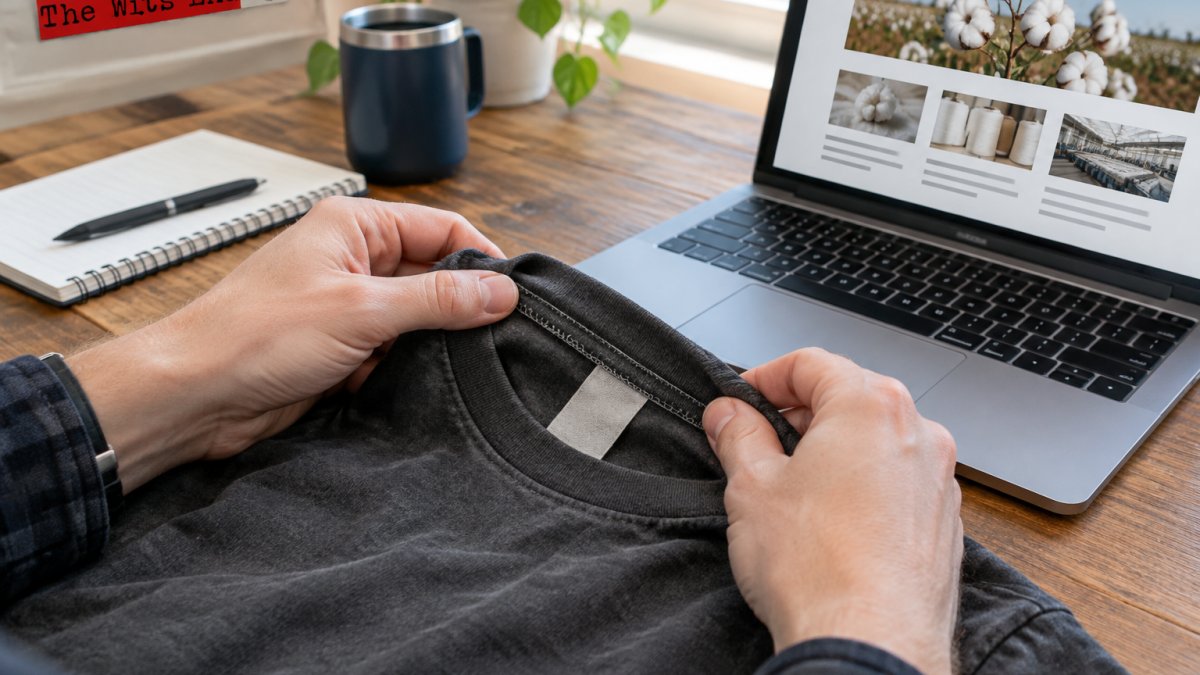
That last item matters more than people think. A brand that answers a sourcing question in plain language is usually one that knows its suppliers.
What Fair Trade Clothing Claims Actually Mean
Fair trade clothing refers to garments made under certified standards for wages, working hours, and safety. The label is a starting point, not a finish line.
Start by learning the major certification families you'll see on apparel listings, because each covers a different slice of the supply chain:
- Fair Trade Certified (Fair Trade USA): Focuses on social and environmental standards at the factory or farm level, including worker empowerment and a community development premium. It does not certify the cotton fiber itself.
- Fairtrade International (Fairtrade America): A separate system with its own mark, concentrated on smallholder farmers and workers in producing countries, with minimum price and premium structures for commodities like cotton.
- Global Organic Textile Standard (GOTS): Covers organic fiber content plus processing, environmental, and social criteria across the textile supply chain. A GOTS claim is broader than fiber alone, but it is not a fair-trade wage certification.
- OEKO-TEX Standard 100: Tests finished articles for harmful substances (OEKO-TEX® STANDARD 100). It says nothing about labor conditions or organic farming.
- bluesign: Focuses on environmental and chemical safety in textile production, not wages.
- SA8000 (Social Accountability International): A workplace social-performance standard covering labor rights, often used at the factory level (SA8000).
- B Corp Certification: A whole-company governance and impact certification, not a product-level labor standard. It signals accountability but does not audit a specific shirt's factory.
A shirt can carry an organic fiber label and still be sewn in a factory nobody has audited. That is why you verify rather than assume:
- Identify the exact certifying body. A logo alone is not enough. The listing should name the organization (for example, "GOTS certified by [certifier name]") and, where applicable, a license or certificate number.
- Check what the standard covers. Match the claim to the concern. If your priority is worker welfare, an OEKO-TEX hangtag does not answer that question. If your priority is chemical safety, a fair-trade mark does not answer it either.
- Look up the certificate in the certifier's public database. GOTS, OEKO-TEX, and Fair Trade USA all maintain searchable directories or certificate lookups. A brand that cannot point you to a verifiable certificate number is asking you to take its word.
- Read the traceability statement. Good listings say which tier of the supply chain is certified, fiber, yarn, fabric, or final garment. "GOTS certified cotton" and "GOTS certified finished garment" are different claims.
- Check the scope of the claim. A certification on the blank shirt does not automatically cover the printer who decorated it. Ask whether the printing facility is included in any social or environmental audit.
Watch out: a brand can display a certification logo that applies only to one component (say, the cotton) while implying the whole garment is certified. Read the fine print on what tier and what facility the certificate actually covers.
If you want a wider method for vetting values-driven brands beyond fair trade labels, our guide to progressive values clothing brands walks through the questions to ask.
The honest truth: no single label proves a shirt is fully ethical. Labels reduce risk. They don't erase it.
Comparing Print Methods, Inks, and Decoration
Print method affects how long your shirt lasts and how much waste it creates. Screen printing lays down thick, durable ink. Direct-to-garment sprays ink into the fabric. Heat transfer presses a film onto the surface.
Here's how they stack up:
| Method | Durability | Best For | Watch Out For |
|---|---|---|---|
| Screen print | High | Bold graphics, bulk | Uses more ink setup |
| Direct-to-garment | Medium | Detailed, one-off designs | Can fade with harsh washing |
| Heat transfer | Lower | Small runs, quick turns | Film can peel over time |
In practice, hand-screened shirts tend to hold their print longer than heat transfers. If you want the deep reason, our piece on why hand screened shirts last longer breaks it down.
If you're weighing whether the most common method is actually clean, read is screen printing eco-friendly before you decide.
Subtle Atheist Clothing vs. Statement Shirts: Matching the Message to the Moment
Subtle atheist clothing whispers. Statement shirts shout. Neither is wrong, but they fit different rooms.
Subtle designs work for the office, family dinners, and anywhere you'd rather not open a debate at the coffee machine. A small symbol or a quiet word does the job.
Statement shirts are built for pride events, rallies, and days you want the conversation. Bold text, big symbols, no ambiguity.
Match the shirt to the setting:
- Work or mixed company: subtle symbol or single word
- Community events: statement graphic
- Everyday wear: either, depending on your mood
A common mistake is buying only statement pieces, then having nowhere to wear them. Balance your closet. One loud shirt, two quiet ones is a solid ratio.
Funny Atheist Shirts Without the Ethical Compromise
Humor and ethics aren't opposites. You can wear a clever atheist shirt without settling for a flimsy blank.
The trick is reading the listing before the joke sells you. A great pun on a shirt that shrinks two sizes isn't funny for long. Check the fiber, the print method, and the sizing range first.
For design inspiration that lands the joke without cutting corners, our modern irony graphic T-shirt designs guide shows how the humor works on fabric.
A few things to look for in a funny atheist shirt:
- The joke reads clearly at a glance
- The print won't crack after a few washes
- Sizing goes up to 5XL, not just standard sizes
- The brand tells you how to care for it
Shop Atheist Apparel You Can Vet Before You Buy
At The Wits End, we're a veteran-owned shop, and we print on demand, so products are made after you place an order.
Where POD earns its keep:
Where POD creates ethical questions:
- Sourcing transparency can be thin. Many POD platforms source blanks from large contract manufacturers, and the platform, not the shop, controls which blanks are available. The shop may not know the fiber origin or factory conditions behind every option. Ask the seller which blank brand and model they use, then check that blank maker's own disclosures.
A practical way to vet a POD atheist shirt before you buy:
- The listing names the blank brand and fabric weight
- The seller discloses the print method (DTG, screen print, or heat transfer)
- The seller can tell you where the blank is manufactured
- Care instructions are included so the print lasts
- Sizing runs to inclusive sizes, not just small through large
- The seller answers sourcing questions in plain language
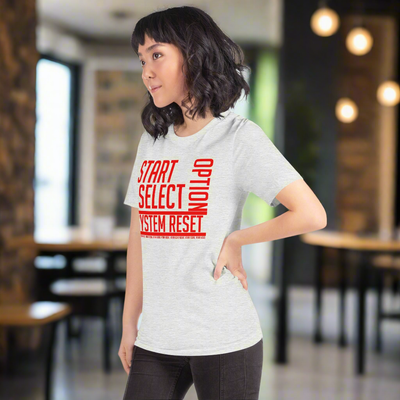
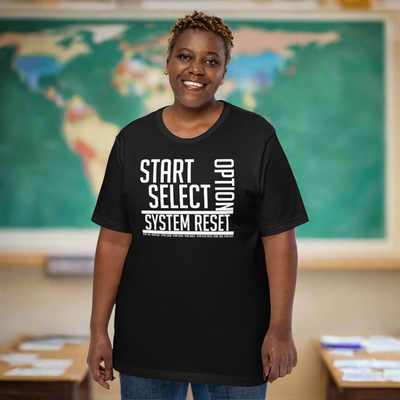
Our Atheist spelled out Unisex t-shirt is a good place to start. It's 100% combed and ring-spun cotton, pre-shrunk, with side-seamed construction and shoulder-to-shoulder taping. Sizing runs up to 5XL.

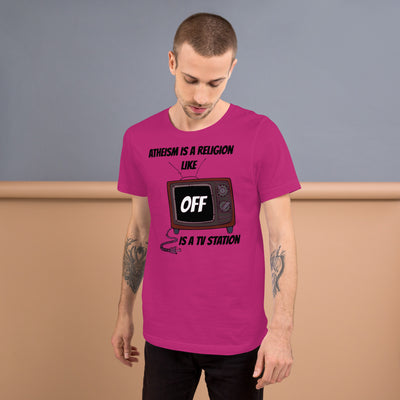
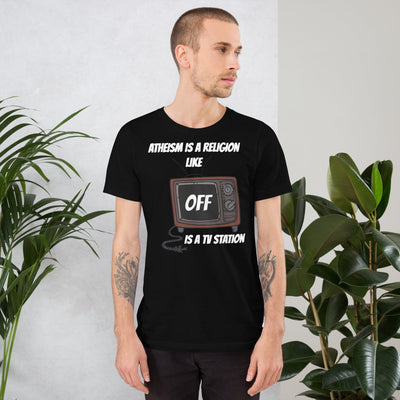
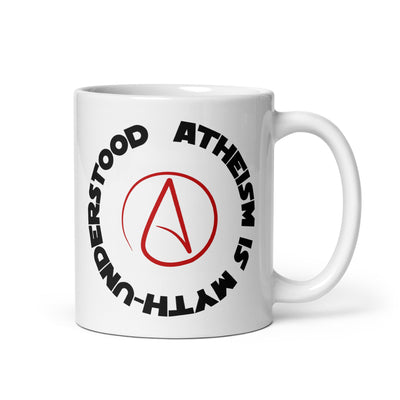
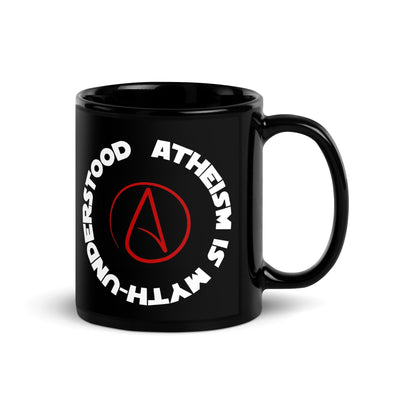
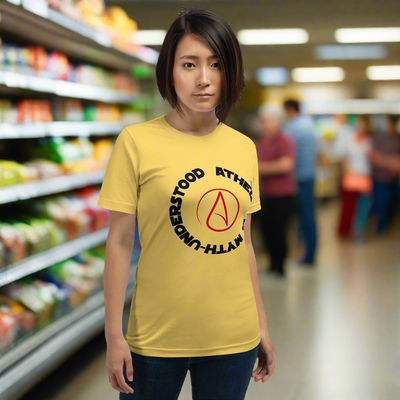
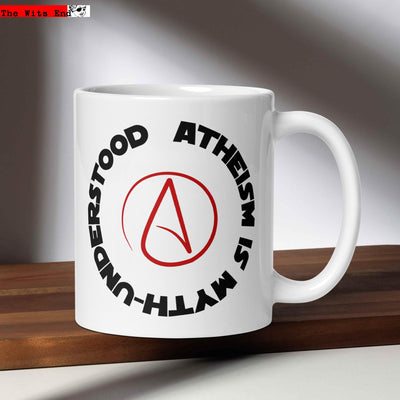
We also carry designs like the Rainbow Atheist tee and the "Atheism is Myth-Understood" shirt. Product pages list the fabric and construction details.
Here's the challenge: most graphic tees hide their supply chain. We don't think they should.
Get started with The Wits End and wear your values on a shirt that's built to last.
Frequently Asked Questions
Where can I find atheist shirts that are actually made ethically?
Look for shops that publish where their blanks come from, how they print, and how they handle sizing and returns. The Wits End, a veteran-owned shop, prints on demand and lists blank sourcing from Nicaragua, Mexico, Honduras, or the US, plus fabric weight (4.2 oz/yd²) and construction details like side seams and shoulder taping. Ask any seller three things: who made the blank, what ink or method was used, and whether the listing states fiber content. Shops that answer all three without prompting are usually the ones worth buying from.
What should I look for in ethically made T-shirts?
Start with fiber content and weight: 100% combed and ring-spun cotton at 4.2 oz/yd² is a common baseline for a durable tee. Then check construction: side-seamed shirts hold their shape better than tubular cuts, and shoulder-to-shoulder taping reduces stretching at the neck. After that, look for sourcing transparency, a stated print method, and care instructions that extend the garment's life. Cost per wear matters more than sticker price: a $16.50 shirt worn 60 times costs about 28 cents a wear, which beats a cheap tee that cracks after five washes.
Are atheist shirts available from sustainable clothing brands?
Yes, though the selection is narrower than general graphic tees. Print-on-demand models make each shirt after the order is placed. Look for listings that name the blank supplier region, state fiber content, and explain the decoration method. If a brand sells atheist apparel and also publishes sourcing and care details, that combination is a reasonable signal. Treat sustainability claims without specifics as marketing until the seller can point to a material, a method, or a certification.
How can I tell whether a clothing brand treats workers fairly?
Ask for specifics rather than adjectives. A useful answer names the country or region where blanks are made, the factory or supplier relationship, and any third-party standard the brand follows. Vague phrases like ethically sourced mean little on their own. You can also check whether the brand offers a real size range, including extended sizes up to 5XL. Brands that answer plainly and quickly tend to have less to hide than ones that redirect you to a generic values page.