 1-361-589-1048
Table of Contents
- Why Hand Screened Shirts Outlast Mass-Produced Prints
- The Science of Ink Bonding: Thickness, Fiber Penetration, and Curing
- Screen Printing vs DTF Durability: Where Each Method Wins
- How Fabric Weight and Weave Change Print Longevity
- How to Wash Screen Printed Shirts Without Ruining Them
- How to Prevent Screen Print Cracking and Peeling
- The Bottom Line on Hand Screened Shirts
- Frequently Asked Questions
Last Updated: September 7, 2026
Why Hand Screened Shirts Outlast Mass-Produced Prints
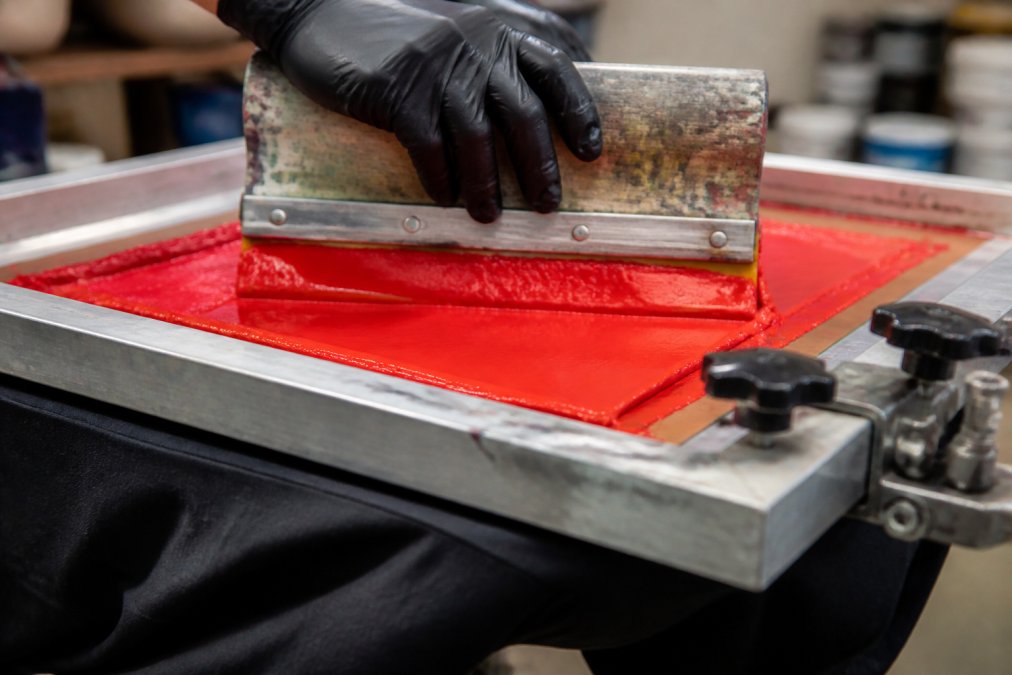
Most graphic tees start cracking and peeling after a handful of washes. Hand screened shirts last longer because a skilled printer physically forces a thicker layer of ink into the fabric with a squeegee, creating a bond that survives years of wear. At The Wits End, a veteran-owned shop in Corpus Christi, Texas, we specialize in on-demand, hand-screened, or direct-to-garment items.
The durability of a graphic tee is decided in about 30 seconds during the printing process. Below, we walk through the science of ink bonding, how to wash screen printed shirts without ruining them, and how to prevent screen print cracking.
The Science of Ink Bonding: Thickness, Fiber Penetration, and Curing
Screen printing pushes ink through a mesh stencil onto fabric using a squeegee. Hand screened shirts differ from automated runs in one critical way: the amount of ink deposited. A manual press operator controls squeegee pressure and angle on every stroke, forcing a heavy layer of ink deep into the weave.
That ink deposit matters because durability is a function of fiber penetration and ink adhesion. When ink wraps around individual yarns instead of just coating the top, it has more surface area to grip. But the type of ink you choose changes the nature of that bond entirely.
Plastisol vs. Water-Based: Two Different Bonding Mechanisms
Plastisol ink is a suspension of PVC particles in a plasticizing carrier. It sits on top of the fabric until heat fuses the particles into a continuous film. The bond is mechanical, the ink solidifies around the microscopic irregularities of the yarn surface. When cured correctly, that film is extremely flexible and abrasion-resistant, which is why plastisol remains the industry standard for garments expected to survive years of wash cycles.
Water-based ink works differently. The pigment is suspended in water that carries it deep into the yarn bundle. As the water evaporates, the pigment and binder are left locked inside the fiber structure. The result is a print that feels like part of the fabric itself, no raised edge, no plastic film, and nothing on the surface to crack or peel. The trade-off is that water-based ink requires a higher level of skill to cure properly and can dry in the screen mid-run.
Why the Chemistry Matters for Longevity
The failure modes differ. Plastisol cracks when the film loses plasticizer over time, accelerated by heat, UV exposure, and repeated washing in hot water. Water-based prints fade gradually as pigment particles are abraded away, but they rarely crack because there is no continuous film to fracture.
Durable work comes from matching the ink to the garment. Heavyweight 100% cotton shirts pair well with plastisol because the dense weave gives the film a stable base. Polyester blends require water-based or specially formulated plastisol, as standard plastisol does not bond well to synthetic fibers.
The curing process then locks the bond. The shirt passes through a dryer that heats the ink to polymerization, where plastisol particles melt into a solid, flexible film. Too low, and the ink never fully cures; too high, and the fabric degrades. For plastisol, the target cure temperature is typically around 320°F at the ink surface, held for 30 to 60 seconds (the FDA). Water-based inks require a higher dwell time because the water must fully evaporate before the binder can cross-link.
The Role of Additives and Catalyst
Experienced printers also adjust ink formulation for specific jobs. Adding a catalyst to plastisol increases cross-linking density, improving wash and abrasion resistance, common for workwear or athletic apparel. However, over-catalyzing makes the ink brittle and prone to cracking.
Similarly, soft-hand additives reduce plastisol viscosity, allowing deeper penetration into the weave. This improves durability by increasing the surface area of the mechanical bond, but it also reduces the ink film's thickness. A skilled hand printer knows when to use a softer ink for flexibility and when to lay down a heavy, high-opacity deposit.
Screen Printing vs DTF Durability: Where Each Method Wins
The biggest competitor to screen printing right now is direct to film (DTF), where a design is printed onto a plastic film and heat-pressed onto the shirt. DTF produces vibrant, detailed graphics quickly, but the trade-off shows up in the wash.
Why DTF Prints Fail First
DTF relies on a thermal transfer adhesive layer that bonds to the fabric's surface rather than penetrating it. Over repeated wash cycles, that layer weakens, leading to cracking, peeling, and edge lifting. The print sits on top like a sticker, with no structural anchor to the fibers below.
Where Screen Printing Holds Its Ground
Screen printing embeds ink into the fabric weave itself, making the ink part of the garment rather than a film glued to it. This is why screen printed graphics maintain color vibrancy and resist fading far longer. DTF wins on photographic detail and low setup cost for small runs; screen printing wins on wash durability and print longevity.
| Method | Ink Placement | Primary Failure Mode | Best For |
|---|---|---|---|
| Hand Screen Printing | Penetrates fibers | Fading over years | Durable daily-wear graphics |
| DTF | Adhesive layer on surface | Cracking and peeling | Detailed multi-color designs |
| Heat Transfer Vinyl | Plastic layer on top | Edge lifting | Small batch names and numbers |
How Fabric Weight and Weave Change Print Longevity
The shirt itself is half the equation. A 6.1 oz heavyweight cotton tee with a tight, dense weave gives ink more yarn to grab onto. Lightweight shirts around 4.3 oz have looser fabric weave and thinner yarns, meaning the ink has less structure to hold it and the garment distorts more in the wash.
Heavier substrate fabrics also resist the tensile strength issues that cause prints to crack. When a thin shirt stretches, the print stretches with it and returns imperfectly, fatiguing the ink film. A heavier shirt moves less, so the ink film stays intact. The garment lifespan of a quality heavyweight tee is simply longer, which is why our sizing at The Wits End runs up to 5XL on durable blanks.
How to Wash Screen Printed Shirts Without Ruining Them
Knowing how to wash screen printed shirts is the single biggest factor in extending their life after they leave the printer. Most damage happens in the first few washes, when the ink is fully cured but the fabric is still relaxing.
- Turn the shirt inside out. This protects the print from abrasion against other clothes.
- Wash in cold water on a gentle cycle. Hot water accelerates fading and stresses the ink film.
- Use mild detergent. Skip bleach and fabric softeners, which break down ink binders.
- Never use tumble dry on high heat. Air dry, or use the lowest heat setting. Dryer heat is the fastest way to cause cracking.
- Wash with like colors and avoid overloading the machine, which increases friction.
How to Prevent Screen Print Cracking and Peeling
Cracking happens when the ink film loses flexibility. Peeling happens when the bond between ink and fiber breaks. Both are preventable with the right habits, but the root cause is often set before the shirt ever reaches your hands.
Environmental Factors Beyond the Wash Cycle
Most care guides focus exclusively on washing, but the environment where you store and wear your shirts plays an equally large role in print longevity.
UV exposure is the silent killer of screen printed graphics. Ultraviolet light breaks down plasticizers in plastisol ink, making the film rigid and brittle over time (peer-reviewed research). A shirt left in a car dashboard for a summer will crack far faster than one stored in a dark drawer. If you must line dry, do it in the shade.
Humidity and heat also matter. High humidity can cause water-based inks to re-soften if the print was not fully cured. Plastisol becomes more brittle in extreme cold and more flexible in heat, but repeated cycling between hot and cold stresses the film and accelerates fatigue. Storage in an attic or garage where temperatures swing dramatically will shorten the life of any print.
Troubleshooting: Why Did This Print Fail?
When a print cracks or peels after a few washes, the cause is almost always one of four things.
Under-curing is the most common production defect. If the ink was not heated to the full polymerization temperature, the film never reaches its designed strength. The symptom is a print that cracks in large, jagged pieces within the first five washes, often with the ink flaking off in chunks. You cannot fix this at home, the shirt needs to be reprinted.
Poor fabric quality produces a different failure pattern. If the shirt is a lightweight, loose-weave cotton, the ink has less structure to grip. The print may crack in fine, spider-web patterns that follow the weave. The garment itself may also warp or shrink in the wash, distorting the print and causing stress fractures.
Ink-to-fabric mismatch shows up as peeling or delamination. Standard plastisol does not bond well to polyester or high-poly blends because the synthetic fibers are smooth and non-porous (peer-reviewed research). The print lifts away in sheets, often starting at the edges. If you have a polyester athletic shirt with a peeling print, the printer used the wrong ink formulation for the substrate.
Washing errors produce gradual edge wear. The print starts to look rough around the borders, with small chips appearing before the center shows any wear. This is caused by abrasion against other garments in the drum. Turning the shirt inside out and washing with similar fabrics reduces this dramatically.
The Stretch Test and What It Tells You
In production, a proper cure means the ink passes the stretch test: pull the fabric tight and the print should flex without any sign of ink adhesion failure. If the print cracks when stretched, it was under-cured. If it peels away, the ink did not bond to the substrate. If it passes but cracks after a few washes, the issue is likely environmental, UV damage or heat stress from the dryer.
Storage and Handling Best Practices
How you store your shirts between wears matters more than most people realize. Fold shirts rather than hanging them on wire hangers, which can stretch the shoulder fabric and stress the print. Store them in a cool, dark, dry place, not in direct sunlight or a humid basement. Avoid placing heavy items on top of stacked folded shirts that could crease the fabric and create stress points in the ink film.
The Bottom Line on Hand Screened Shirts
Hand screened shirts last longer because they are built with more material, more skill, and more control than mass-produced alternatives. The thick ink deposit, the fiber bonding achieved through squeegee pressure, and the precise curing process all contribute to a graphic that survives dozens of washes while maintaining its color vibrancy. Combined with proper garment care, a hand screened shirt can look good for years, not weeks.
Mass-produced prints and DTF transfers have their place, but if you want apparel that reflects your values and holds up to regular wear, the choice is clear. At The Wits End, every design is hand-screened or direct-to-garment printed on demand, with inclusive sizing up to 5XL and a focus on geek culture, retro tech, and progressive themes. We build our shirts the way we think they should be built: to last.
Frequently Asked Questions
Which lasts longer, screen printing or DTF?
Screen printing generally lasts longer than DTF for most wear patterns. The ink is pressed directly into the fabric weave and cures as a single layer, so it flexes with the shirt rather than sitting on top of it. DTF prints use an adhesive layer that bonds to the surface, which can peel or crack after repeated wash cycles. For hand screened shirts, the thicker ink deposit and deeper fiber penetration mean the print fades with the fabric instead of flaking off it.
How can I tell if a shirt was screen printed by hand?
Flip the shirt inside out. A hand-screened print shows ink that has soaked through to the back of the fabric, especially in solid areas. Run your fingers over the design: screen printed ink has a noticeable raised texture. DTF prints feel like a smooth plastic sticker, while direct-to-garment prints feel like part of the fabric with no texture at all. Hand-screened prints also have slightly soft edges where the ink was pressed through the mesh.
Why does my screen-printed shirt crack after a few washes?
Cracking happens when the ink was under-cured during production or when the shirt is washed in hot water and dried on high heat. Under-cured plastisol ink never fully polymerizes, so it stays brittle. At home, cold water and low-heat drying protect the print. Turn the shirt inside out before washing so the design doesn't rub against other clothes. If a print starts cracking, it usually means the cure temperature was too low, not that you did something wrong.
Does how I dry my hand screened shirts affect how long they last?
Yes. The dryer is the biggest threat to hand screened shirts. High heat breaks down the plastisol bond and causes the fabric to shrink, which pulls the print out of shape. Always use the lowest heat setting or hang the shirt to dry. If you must use a dryer, pull the shirt out while it is still slightly damp and lay it flat to finish. This prevents the ink from softening and sticking to itself or other garments during the tumble cycle.
Getting a graphic tee that survives more than a handful of washes should not feel like a gamble. The Wits End offers hand-screened apparel in sizes up to 5XL, with designs celebrating 1980s computer nostalgia and modern irony, all produced by a veteran-owned shop in Corpus Christi. Shop now to find a shirt that will still look sharp next year.