 1-361-589-1048
Last Updated: November 20, 2026
Quick Summary
To order bulk custom t-shirts online, confirm your headcount and collect sizes first, set a hard in-hands date, then choose the garment and printing method together. Prepare print-ready artwork, approve a proof before full production, and budget for shipping plus a small buffer quantity.
- Build a size breakdown before requesting quotes, adding 1 to 3 spares in middle sizes.
- Compare landed cost per usable shirt, not the advertised per-shirt price.
- Screen printing suits larger runs of one design; direct-to-garment suits small or varied runs.
- Set your order deadline at least a week before you actually need the shirts.
- Inspect every box against your size breakdown the day it arrives, not at the event.
Table of Contents
- Plan Your Bulk Custom T-Shirts Order Before You Buy
- How Bulk Custom T-Shirt Pricing Really Works
- Choose Your Custom T-Shirt Printing Methods
- Build a Bulk T-Shirt Order Size Breakdown That Fits Your Group
- Prepare Print-Ready Artwork and Get a Proof Approved
- Understand Bulk Custom Apparel Turnaround Time
- Check Your Bulk Custom T-Shirts Delivery Like a Pro
- Place Your Bulk Custom T-Shirts Order With The Wits End
- Frequently Asked Questions
Plan Your Bulk Custom T-Shirts Order Before You Buy
The fastest way to waste money on bulk custom t-shirts is to start with the design instead of the plan. Group orders often fall apart when nobody writes down the headcount, the deadline, or the budget before the first mockup is approved.
Ordering bulk custom t-shirts online is the process of gathering group sizes, choosing blank garments and a printing method, preparing print-ready artwork, approving a proof, and scheduling delivery before a deadline. Each step depends on the one before it, so a rushed start usually means a costly redo.
Here is the short version of how we would sequence it:
- Confirm the final headcount and collect sizes before you shop
- Set a hard in-hands date, then work backward to your order deadline
- Pick the garment and printing method together, not separately
- Approve a physical or digital proof before full production
- Budget for shipping and a small buffer quantity
Watch out: ordering the exact headcount with zero spares is the most common mistake we see. A few extra shirts cost less than a second short run after someone's size changes.
How Bulk Custom T-Shirt Pricing Really Works
Bulk custom t-shirt pricing is not a single number. It is the sum of blank garment cost, print setup, per-piece printing, shipping, taxes, and any rush or artwork charges, and each part moves differently as quantity rises. That is why two quotes for the same design can land far apart even when the advertised per-shirt price looks identical.
Setup fees are generally charged once per design or per screen, so they shrink as a share of each shirt when you order more. Shipping is the piece buyers often forget. Sales tax depends on your delivery address, and rush fees can be structured in different ways depending on the supplier.
The practical fix is to stop comparing per-shirt headlines and start comparing landed cost. Build a simple landed-cost worksheet before you request quotes, with one column per supplier and one row per cost line. Ask every supplier for the same quantity levels so the rows line up.
| Cost Line | What to Ask For | How It Moves With Volume |
|---|---|---|
| Blank garment | Unit price at each quantity tier | Drops at wholesale breaks |
| Setup or screen fee | Per design, per screen, per color | Fixed, spread thinner per shirt |
| Printing | Per-piece price at each tier | Drops at quantity breaks |
| Artwork charges | Vector conversion, redraw, separations | Usually fixed per design |
| Rush fee | Percentage or flat, with cutoff date | Fixed or percentage |
| Shipping | Weight, speed, split-shipment charges | Slight per-unit drop |
| Sales tax | Rate for your delivery address | Proportional |
| Landed cost per shirt | Total divided by usable shirts | The only number that compares |
Divide the total by the number of shirts you can actually use, not the number you ordered. If you order 100 and 4 are misprints or spares you hand out, your real cost per usable shirt is higher than the quote implies. A quote can look cheaper per shirt yet carry setup or rush charges that change the winner once you do the division.
Watch out: comparing quotes at different quantity levels hides the real winner, because setup fees and volume breaks distort the per-shirt number at each tier. Request every quote at the same two or three quantities, and ask each supplier to itemize setup, shipping, tax, and rush separately so nothing is buried in the per-shirt price.
Our custom screen printing guide walks through how these costs stack up for screen-printed runs.
Choose Your Custom T-Shirt Printing Methods
Custom t-shirt printing methods fall into two main families: screen printing and direct-to-garment. Screen printing pushes ink through a mesh screen and suits larger runs of one design. Direct-to-garment prints the design digitally onto the shirt and suits small runs or many different designs.
For a group order, screen printing is often the better fit for larger runs of the same artwork. Direct-to-garment suits several designs in small numbers or a one-off. A fabric blend matters here too: 100% cotton takes both methods well, while high-polyester shirts behave differently with each.
A common mistake is choosing the method before checking the garment. Pick the shirt first, then confirm which method suits that fabric.
Build a Bulk T-Shirt Order Size Breakdown That Fits Your Group
A bulk t-shirt order size breakdown is a count of how many shirts you need in each size, and it is the single most useful document in the whole order. Build it before you request a quote, not after.
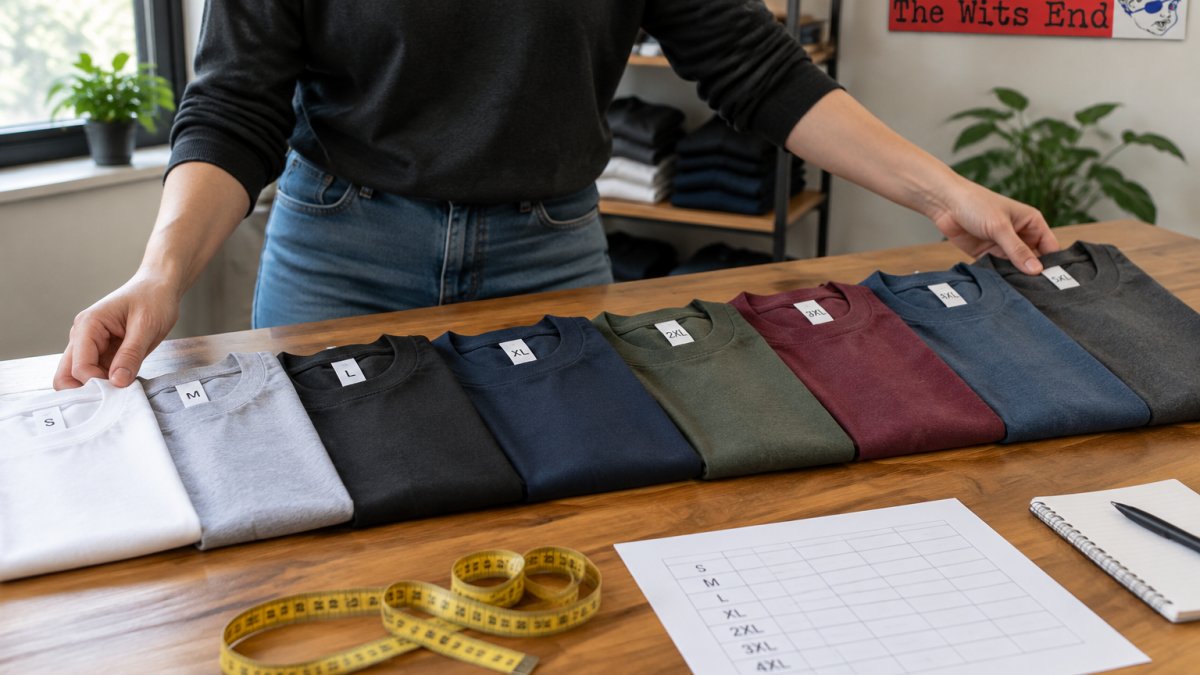
Start with a simple shared form where each person enters their size from the supplier's own size chart. Do not let people guess. Then group the responses and add a small buffer in the middle sizes, which tend to run out first.
If your group includes plus sizes, check the full range before you commit. Our plus-size fit guide up to 5XL explains how to measure and confirm sizing so nobody gets a shirt that does not fit.
| Size Band | Typical Share of a Group | Buffer to Add |
|---|---|---|
| Small to Medium | Moderate | 1 to 2 spares |
| Large to XL | Largest share | 2 to 3 spares |
| 2XL and up | Smaller share | 1 to 2 spares |
Buffer to Add
Prepare Print-Ready Artwork and Get a Proof Approved
Print-ready artwork is a design file prepared at the correct resolution, in the correct color mode, with clean edges and no stray background. Getting this right up front helps avoid blurry or off-color prints and delays caused by files that need rebuilding.
Ask your printer for their file requirements before you design anything, because the specs differ by printing method.
| Specification | Screen Printing | Direct-to-Garment |
|---|---|---|
| Preferred file type | Vector (AI, EPS, PDF) | PNG or PDF, flattened |
| Raster resolution | 300 DPI at print size | 300 DPI at print size |
| Color mode | Spot colors, separated | RGB or sRGB |
| Background | Transparent or removed | Transparent |
| Text | Converted to outlines | Converted to outlines or embedded |
| Line weight | Minimum roughly 1 point | Minimum roughly 1 point |
Vector files scale cleanly to any print size, and high-resolution raster files work for detailed art. Keep the print placement inside the printable area of the garment, and confirm the placement dimensions with your printer before you finalize the file. Confirm the exact printable area for your specific garment and size range, because a print that fits a medium may not fit a 5XL.
Color accuracy is the other half of print-ready. Screen colors and fabric colors can shift a design's look, and a bright color on a dark shirt may need an underbase layer that changes the hand feel. Ask whether your printer provides a digital proof, a physical proof, or both, and approve the proof before full production. A proof shows placement, size, and color on the actual garment, and it is your last cheap chance to catch a problem.
Approve the proof on the actual garment color and size you are ordering, since a proof on a different shirt color can hide problems that only appear in production.
Our guide to printing for individuals covers file formats and options if you are preparing artwork for the first time.
Understand Bulk Custom Apparel Turnaround Time
Bulk custom apparel turnaround time is the total window from order confirmation to delivery, and it is usually longer than the printing itself.
Add up proof approval, production, and shipping, then compare that total to your in-hands date. Rush timelines usually cost more and leave less room for a reprint if something goes wrong. Set your order deadline at least a week before you actually need the shirts.
Watch out: counting only production days and ignoring shipping is how groups miss their event. Build the buffer into the deadline, not the hope.
Check Your Bulk Custom T-Shirts Delivery Like a Pro
Inspect your bulk custom t-shirts the day the boxes arrive, not the morning of the event. Open every box and check against your order.
- Count each size against your size breakdown
- Confirm the design placement matches the approved proof
- Check print quality for cracks, smudges, or misalignment
- Verify garment color against the sample
- Note any shortages or defects in writing before you distribute
Catching a problem on delivery day gives you time to fix it. Catching it at the venue does not.
Place Your Bulk Custom T-Shirts Order With The Wits End
You have the plan, the sizes, and the artwork. The last step is choosing a printer you trust to deliver on all three.
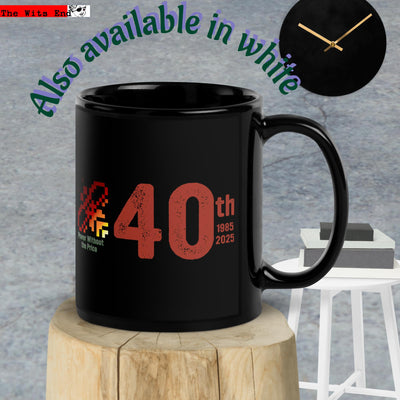
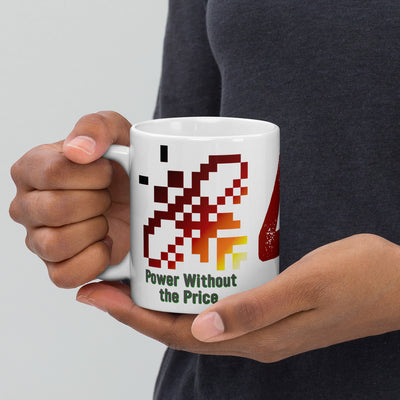
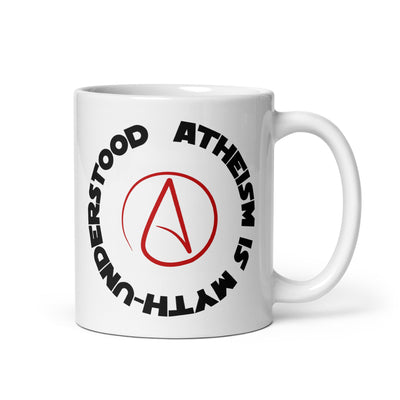
At The Wits End, we are a veteran-owned shop that hand-screens and direct-to-garment prints apparel for makers, thinkers, and vintage enthusiasts, with inclusive sizing up to 5XL. When you are ready to see how a finished piece looks, browse our custom mug example to get a feel for our print quality.
If your order is tied to a cause or an event, our guide on designing protest t-shirts that get read helps you make the message land. Then send us your size breakdown and artwork, and we will be happy to discuss your order details. For current pricing or a quote, visit The Wits End website.
Ordering for a group should not feel like a gamble. Send us your headcount, sizes, and design, and we will help you lock in the garment, the print method, and the deadline so your shirts arrive right the first time. Get started with The Wits End and put a durable, well-fitted custom order in your group's hands.
Frequently Asked Questions
How many custom T-shirts should I order for my group?
Start with a confirmed headcount and add 5-10% extras in your most common sizes. For a team or event, collect sizes in advance rather than guessing. Ordering slightly more can give you replacements for lost or damaged shirts. Confirm your final quantity before proof approval, because changes after that point can affect turnaround time.
What is the best printing method for bulk T-shirts?
Screen printing is often a good choice for larger runs of one or two colors, while direct-to-garment suits detailed designs and smaller quantities. Ask your printer about the method that fits your design before committing to a large run.
How long does it take to print and ship bulk custom T-shirts?
Turnaround time depends on the printing method, quantity, and how quickly you approve your proof. Shipping adds transit days on top of production, so build a buffer before your event date.
Should I order a sample before placing a bulk T-shirt order?
Checking fit, color, and print placement before a full run is a sensible step. For plus-size customers, confirm that your chosen style is available in your size, since sizing up to 5XL is offered.