 1-361-589-1048
Table of Contents
- Quick Comparison: Custom Apparel for Plus Sizes at a Glance
- Why Plus Size Print on Demand Finally Works in 2026
- How to Measure for Custom Clothing in Five Steps
- Best Fabrics for Plus Size Custom Shirts
- Top Picks: Custom Apparel for Plus Sizes From The Wits End
- Inclusive Design, Ethical Sourcing, and Virtual Fit Tools
- Conclusion
- Frequently Asked Questions
Last Updated: September 19, 2026
Quick Comparison: Custom Apparel for Plus Sizes at a Glance
Shopping for custom apparel for plus sizes usually means settling: a design you love, in a size that fits, on fabric that survives more than a handful of washes. At The Wits End, a veteran-owned shop that prints on demand up to 5XL, a tailored fit and a loud graphic can live on the same shirt.
| Option | Starting Price | Size Range | Best For | Print Method |
|---|---|---|---|---|
| What Is Normal Anyway Unisex Tee | $15.50 | XS-5XL | Everyday wear, all body types | Direct-to-garment |
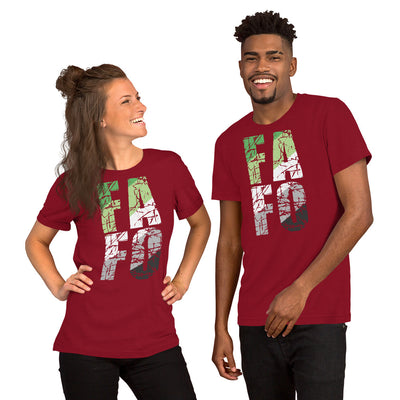
| Rainbow FAFO Unisex Tee | $15.50 | XS-5XL | Statement graphics, soft feel | Direct-to-garment |
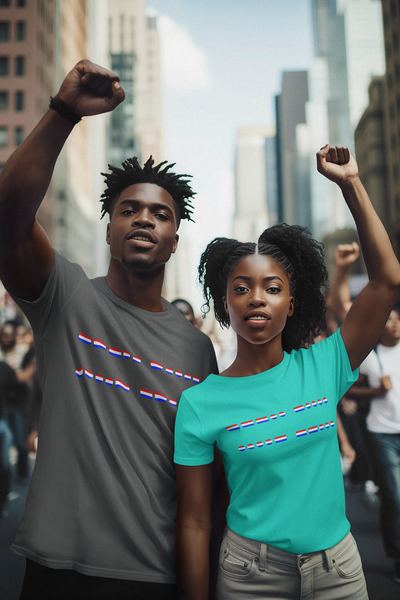
| Free To Be Me Trans Flag Tee | $16.00 | XS-5XL | Pride events, bold color | Direct-to-garment |
| WOKE Cutout Tee | $17.50 | XS-2XL | Layered messaging graphics | Direct-to-garment |
Why Plus Size Print on Demand Finally Works in 2026
Plus size print on demand works now because production happens after the order, not before it. That removes the biggest barrier plus-size shoppers have faced: brands refusing to stock extended sizes because unsold inventory costs too much.

On-Demand Production and Overproduction
Overproduction is the quiet villain in apparel. Brands print thousands of units, discount the leftovers, and landfill what doesn't sell. On-demand printing skips that entirely, which is why it pairs naturally with inclusive sizing. The U.S. Environmental Protection Agency's textile waste data shows how much material ends up discarded each year, and made-to-order production is one of the few structural fixes.
How to Measure for Custom Clothing in Five Steps
Learning how to measure for custom clothing takes about five minutes and one soft tape measure. The catch: standard advice was written for straight-size bodies, so plus-size shoppers need extra checkpoints most guides skip.
- Chest: Measure around the fullest part of your chest, tape level and snug, not tight. On a curvy frame the fullest point is often lower than you expect, measure at the apex, not the armpit line.
- Waist: Find your natural waist, the narrowest point above your hips. If you can't find a clear narrowest point, bend sideways, the crease that forms is your natural waist.
- Hips: Stand with feet together and measure around the fullest part of your hips and seat. This is usually 8 to 10 inches below the natural waist, not at the hip bone.
- Length: Measure from the high point of your shoulder straight down to where you want the hem to fall. Plus-size shoppers often prefer a hem 1 to 2 inches lower than a straight-size chart assumes, because a shorter hem rides up when seated.
- Compare to the chart: Match your largest measurement to the size chart, not your usual letter size. If your chest and hip measurements land in different columns, size to the larger one and plan on a tailor or a relaxed fit.
Reading a Size Chart Without Guessing
A size chart lists body measurements, not garment measurements, and the difference matters. If your chest measures 58-61 inches, you're a 4XL in a unisex cut, not a 2XL hoping it stretches. Garment measurements, the flat-lay width, typically run 2 to 4 inches larger than the body measurement to allow for movement, so a 4XL tee with a 30-inch flat chest width fits a 58-61 inch chest.
Two more numbers worth writing down:
- Waist-to-hip ratio: If your hips measure more than 10 inches larger than your waist, look for side-seamed or curved-hem cuts. Straight-cut tees will pull across the hip and ride up at the front hem.
- Armscye depth: The distance from the top of your shoulder to the bottom of the armhole. If a shirt binds under the arm, the armscye is too shallow, a common problem when a straight-size pattern is graded up without adjusting the armhole.
Virtual Fit Tools and Why They Cut Returns
Most plus-size returns aren't about the design, they're about fit. Shoppers order two sizes, keep one, and send the other back, which doubles shipping costs and often means the returned shirt can't be resold. Virtual fit tools attack that before checkout.
Two approaches dominate right now:
- Size-recommendation quizzes: You enter height, weight, chest, waist, and hip measurements plus fit preference (snug, regular, relaxed), and the tool maps you to a size across multiple styles. These work best when the brand publishes real garment measurements, not just body measurements.
- Digital body scanning: A phone camera or short video captures your measurements in about 30 seconds. Accuracy is improving, but it still struggles with loose clothing and non-standard postures, so treat the output as a starting point and cross-check against the brand's size chart.
Best Fabrics for Plus Size Custom Shirts
The best fabrics for plus size custom shirts are combed and ring-spun cotton in the 4.2 to 4.3 oz/yd² range, because they stretch with movement instead of pulling tight across the body. Fabric is only half the story, the other half is how the pattern was graded, and that's where most plus-size custom apparel quietly fails.
Look for these fabric markers:
- Combed and ring-spun cotton: Softer and smoother than standard cotton, with less pilling. Combing removes short fibers; ring-spinning aligns the rest, so the surface stays smooth after repeated washes.
- Side-seamed construction: Follows your curves instead of twisting after a few washes. Tubular (no side seam) tees are cheaper to make but rotate on the body, which is more noticeable on a curvy frame.
- Pre-shrunk fabric: Keeps the fit consistent, which matters most in extended sizes. A shirt that shrinks 5% in length loses more absolute inches at 4XL than at small.
- Shoulder-to-shoulder taping: Reinforces the seams where plus-size shirts tend to strain. The tape runs across the back of the neck and over both shoulders, stopping the seam from stretching out of shape.
- A touch of stretch: Blends with 5% spandex or a cotton-poly mix move with you and recover their shape. 100% cotton has no recovery, so it can bag out at the elbows and hem by day's end.
Inclusive Design: The Pattern-Making Details That Actually Matter
Inclusive design means building the garment around real bodies from the start, not shrinking a straight-size pattern and calling it extended. That's the difference between a 4XL that fits and a 4XL that just has more fabric. Three pattern adjustments separate the two:
- Armscye depth: As sizes increase, the armhole needs to drop and the sleeve cap needs to flatten. A straight-size armscye graded up without adjustment binds under the arm and pulls the chest seam. If a shirt feels tight in the armpit but loose everywhere else, this is why.
- Waist-to-hip ratio: Bodies don't scale linearly. A pattern that adds the same inches to waist and hip at every size will gap at the waist or pull at the hip on a pear-shaped frame. Better patterns grade waist and hip independently, which is why side-seamed and curved-hem cuts drape more cleanly.
- Neckline and shoulder slope: A wider neck opening and a slightly sloped shoulder seam keep the collar from riding up and the shoulder from pulling. This is a small change that makes a disproportionate difference in how a plus-size tee sits.
Fabric Care and Print Longevity in Extended Sizes
Print durability is a fit issue, not just a laundry issue. When a shirt is tight across the chest, the fabric stretches every time you move, and the print stretches with it. Direct-to-garment ink sits on top of the fibers, so repeated stretching can cause the fine cracks that eventually flake.
What Is normal anyway Unisex t-shirt →
- Wash cold, inside out. Heat is the enemy of both cotton and DTG ink. Cold water slows shrinkage and keeps the print from curing further.
- Skip the dryer or use low heat. High heat shrinks cotton and stresses the print. Air-drying flat preserves both the fit and the graphic.
- Avoid fabric softener on the print area. Softener leaves a residue that can dull the ink and weaken its bond to the fabric.
- Don't iron directly on the print. If you need to press the shirt, turn it inside out or use a pressing cloth.
Top Picks: Custom Apparel for Plus Sizes From The Wits End
The strongest custom apparel for plus sizes pairs a flattering cut with a print method that won't crack. Every tee below is made to order with the same side-seamed, pre-shrunk construction.
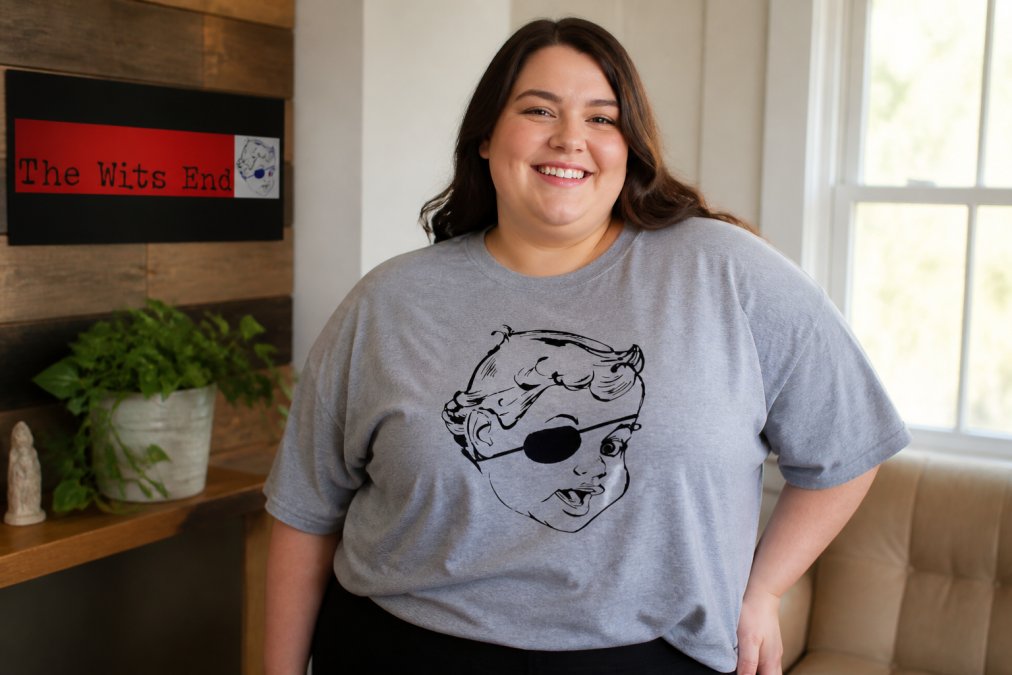
What Is Normal Anyway Unisex Tee: The Everyday Staple ($15.50)
This is the shirt to buy first. It runs XS through 5XL in the same cut, so a 5XL gets the same design and fabric as a small. The 100% combed and ring-spun cotton feels soft and lightweight, with enough stretch to move without clinging. Pre-shrunk, side-seamed, and shoulder-taped, it holds its shape wash after wash.
Rainbow FAFO Unisex Tee: Loud, Soft, and Built to 5XL ($15.50)
Same fabric specs as the staple tee, same full size run, but the design does the talking. If you've been burned by "extended sizes" that stop at 3XL, this one goes to 5XL across the board.
Free To Be Me Trans Flag Tee: Color That Holds Up ($16.00)
This tee's soft blue, pink, and white gradient is printed on the same combed cotton base, so the color sits on the fabric rather than in it.
WOKE Cutout Tee: Statement Graphics on a Flattering Cut ($17.50)
The layered cutout design reads "WOKE" over a stack of messages, printed on the same soft, stretchy base as the rest of the lineup. This one currently runs XS through 2XL.
Inclusive Design, Ethical Sourcing, and Virtual Fit Tools
Three things are pushing inclusive design forward:
- Ethical sourcing: Blanks from Nicaragua, Mexico, Honduras, and the U.S. keep supply chains shorter and more traceable. The U.S. Federal Trade Commission's textile labeling rules govern how those materials must be disclosed to you.
- Virtual fit tools: Size-recommendation quizzes and fit finders reduce returns by matching your measurements to the right size before checkout.
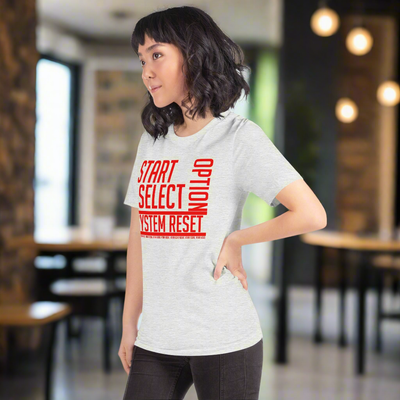
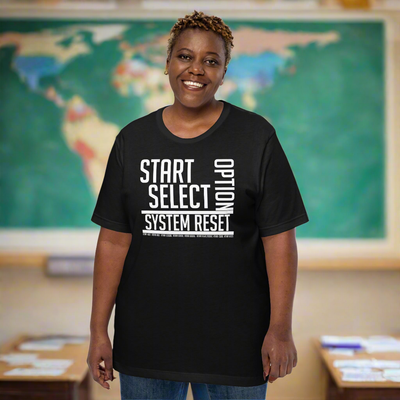
- Body positivity in practice: Showing plus-size models in real product photos, not just listing measurements, helps you judge how a shirt drapes.
Conclusion
The hardest part of buying custom apparel for plus sizes has always been trusting that the fit and the print will both hold up. Made-to-order production removes the inventory excuse, and side-seamed, pre-shrunk cotton removes the fit excuse. The Wits End prints on demand up to 5XL, backs every order with veteran-owned craftsmanship, and uses the same durable construction across the whole size range, from the everyday What Is Normal Anyway tee to the loud Rainbow FAFO.

Frequently Asked Questions
Do custom apparel companies actually offer extended sizing?
It depends on the shop. The Wits End runs its unisex tees from XS through 5XL, with a 5XL measuring 35 inches long, 31 inches wide, and fitting a 62-65 inch chest. That full run applies to designs like What Is Normal Anyway, Rainbow FAFO, and the Good Trouble tees, not just a token item or two. Always check the size chart on the product page before ordering, because women's cut styles often stop at 2XL while unisex goes further.
How do I ensure a perfect fit when ordering custom plus size apparel?
Measure a shirt you already own and love, not your body. Lay it flat, measure armpit to armpit for width and collar to hem for length, then compare those numbers to the size chart. For the unisex tees at The Wits End, a 4XL is 34 inches long and 30 inches wide. If you land between two sizes, size up, since 100% combed ring-spun cotton is pre-shrunk but still relaxes slightly with wear.
Is custom plus size apparel more expensive than standard sizes?
Not at The Wits End. Prices start at $15.50 for the What Is Normal Anyway and Rainbow FAFO unisex tees, $16.00 for Free To Be Me and Love is Love, $16.50 for the Good Trouble and Halloween tees, and $17.50 for the WOKE Cutout design. Those prices hold across the size run, so a 5XL costs the same as a small. You are paying for the design and the print method, not a plus-size surcharge.
How do I find inclusive custom apparel brands that match my style?
Look for three things: a published size chart that goes past 3XL, fabric specs you can actually read, and designs that speak to your interests rather than generic filler. The Wits End is a veteran-owned shop that prints on demand, so nothing sits in a warehouse, and the catalog leans into geek culture, retro tech, and progressive values. If a brand hides its size chart or caps at 2XL, move on.
What are the best print-on-demand options for plus size clothing?
Prioritize shops that print after you order and list fabric weight. The Wits End uses 100% combed and ring-spun cotton at 4.2 oz./yd.² for its unisex tees, with pre-shrunk fabric and side-seamed construction. That combination holds shape through repeated washes better than lighter, tube-cut blanks. Print-on-demand also cuts overproduction, since your shirt is made only after you place the order.