 1-361-589-1048
Last Updated: November 19, 2026
Quick Summary
Keep screen-printed shirts from cracking by turning them inside out, washing in cold water on a gentle cycle with mild detergent, and skipping bleach and fabric softener. Air dry them or tumble on the lowest heat, and never iron directly on the print.
- Turn the shirt inside out before washing to reduce friction against the ink.
- Skip bleach, fabric softener, and oxygen boosters, which break down ink and fibers.
- Air drying is the safest option; high heat cracks ink and shrinks cotton.
- Iron inside out on low or medium heat with no steam, never on the print.
- Most plastisol prints survive 50 or more home washings when cared for properly.
Table of Contents
- How to Wash Printed T-Shirts in a Washing Machine
- How to Keep Print on Shirts From Cracking
- How to Dry Screen Printed Shirts Without Ruining the Ink
- How to Iron Screen Printed Shirts Safely
- Care Instructions by Ink Type and Printing Method
- Stain Removal, Storage, and Fixing a Damaged Print
- Shop Screen-Printed Shirts That Hold Up
- Frequently Asked Questions
How to Wash Printed T-Shirts in a Washing Machine
Caring for custom screen printed clothing starts with one rule: treat the print like a delicate layer, not part of the fabric.
Below is the exact routine that keeps screen-printed shirts looking crisp instead of cracked.
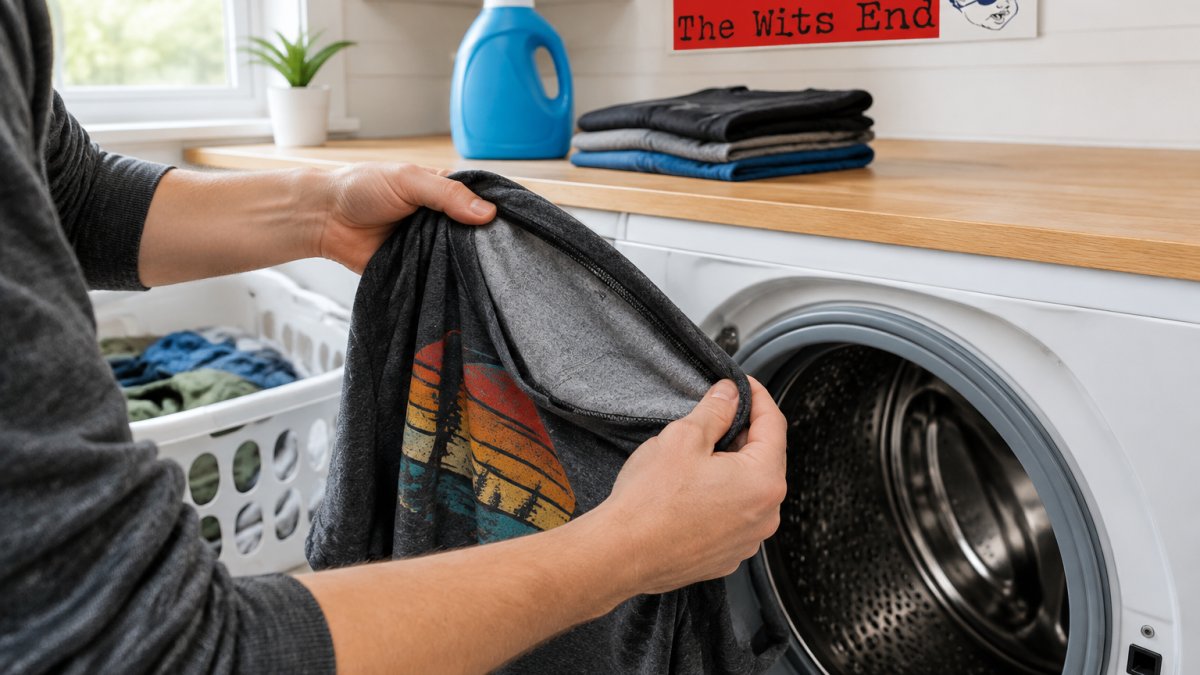
Turn the garment inside out before it hits the drum
Flipping the shirt inside out is the easiest habit to build. It puts the print against itself, not against the drum, zippers, or buttons from other laundry. Friction wears ink down, and the inside-out trick removes most of it.
- Turn the shirt inside out and close any zippers on nearby items.
- Wash with like colors and similar weights.
- Use cold water on a gentle or delicate cycle.
- Add a mild detergent, and skip the fabric softener.
- Pull the shirt out promptly when the cycle ends.
Pick cold water and a gentle cycle
Cold water protects both the ink and the fabric. Hot water softens the ink bond and shrinks cotton, which stretches the print surface and invites cracking. A gentle cycle means less agitation and less abrasion.
For a deeper walkthrough, our guide on how to wash screen printed shirts covers water temps, detergent amounts, and cycle settings step by step.
How to Keep Print on Shirts From Cracking
The fastest way to crack a print is heat, harsh chemicals, and rough handling. Keep all three away from the ink and the graphic will outlast the shirt.
Skip bleach, fabric softener, and harsh chemicals
Bleach breaks down ink pigments and cotton fibers alike. Fabric softener leaves a residue that coats the print surface and weakens the ink bond over time. Stain fighters and "boosters" can be just as rough.
Bleach can dull the colors of a printed shirt, so keep it out of the wash for printed garments.
Also avoid:
- Overloading the machine, which increases friction
- Washing printed shirts with towels, which shed lint and add abrasion
- Leaving shirts in the washer after the cycle, which traps moisture
How to Dry Screen Printed Shirts Without Ruining the Ink
Air drying is the safest option for any screen-printed clothing. If you must use a machine, choose the lowest heat setting and pull the shirt out while still slightly damp. High heat cracks ink and shrinks cotton.
Try these drying habits:
- Hang the shirt inside out on a plastic hanger or line
- Keep it out of direct sunlight, since UV exposure fades ink
- Skip dryer sheets, which leave residue on the print
Tumble drying on low heat works in a pinch. Just check the shirt every few minutes and remove it early.
How to Iron Screen Printed Shirts Safely
Never iron directly on the print. The heat melts and lifts the ink, and the iron plate can drag the design off the fabric. Iron the shirt inside out, or place a thin cotton cloth or parchment paper between the iron and the print.
A safe ironing routine looks like this:
- Set the iron to low or medium heat, no steam
- Turn the shirt inside out
- Press around the print, not on it
If the print feels stiff or tacky, stop. That shirt needs a lower setting.
Care Instructions by Ink Type and Printing Method
Not every print behaves the same, and the care label is your first stop. But the label on a blank tee was written for the fabric, not the ink, so follow the stricter of the two sets of instructions. If the label says tumble dry medium but the print is water-based, air dry it.
Here is how the major ink types actually differ in the wash.
Plastisol ink
Plastisol is the workhorse of screen printing. It is a PVC-based ink that sits on top of the fabric as a cured plastic layer rather than soaking in.
Best habits: cold wash, inside out, gentle cycle, air dry or lowest-heat tumble. Avoid ironing directly on the print; if you must press it, use a low setting with a cloth barrier.
Water-based ink
Water-based ink soaks into the cotton fibers instead of sitting on top, giving a softer hand feel and a print that breathes with the fabric.
Best habits: cold wash, mild detergent, no bleach, air dry out of direct sun. Water-based prints generally do not crack the way plastisol does, they fade, so sun protection matters more than heat protection.
Discharge ink
Discharge ink is a water-based ink mixed with a discharging agent that removes the garment's dye rather than covering it. The print becomes part of the fabric, giving an exceptionally soft feel and no raised layer to crack or peel.
Best habits: cold wash, mild detergent, air dry. Because there is no ink layer to protect, discharge prints are among the most wash-durable, but the garment's own dye is now the variable, so wash with like colors to avoid dye transfer onto the discharged areas.
Specialty inks
Metallic, glitter, puff, and high-density inks are thicker and more brittle than standard plastisol. Puff ink expands during curing and can flatten or crack with heat; metallic and glitter inks can dull or flake at the edges. Treat these as the most delicate prints in the drawer: cold wash, inside out, gentle cycle, air dry, and never iron directly on the design.
Direct-to-garment (DTG)
DTG printing works like an inkjet printer for fabric: the ink bonds to the surface, usually with a pretreatment. DTG prints are softer than plastisol but less abrasion-resistant, and they crack along fold lines if washed hot or dried on high heat.
Best habits: gentle cycle, cold water, no bleach, hang dry. Avoid washing DTG prints with heavy items like jeans or towels, which abrade the ink surface.
When is a new print safe to wash?
A newly printed garment should be fully cured before its first wash. Most commercial screen printers cure plastisol at around 320°F for a short dwell, and water-based inks are cured with heat as well. A print-on-demand shirt was almost certainly cured before shipping, but the first wash is still the true test.
| Printing Method | Ink Behavior | Key Risk | Best Care Habit |
|---|---|---|---|
| Screen printing (plastisol) | Sits on top of fabric | Cracking from heat and flex | Cold wash, inside out, air dry |
| Screen printing (water-based) | Soaks into fibers | Fading from heat and UV | Cold wash, mild detergent, dry out of sun |
| Screen printing (discharge) | Removes garment dye | Dye transfer in wash | Cold wash with like colors, air dry |
| Specialty (metallic, puff, glitter) | Thick, brittle layer | Flaking, flattening | Gentle cycle, air dry, no direct iron |
| Direct-to-garment (DTG) | Bonds to surface | Cracking, fading | Gentle cycle, no bleach, hang dry |
If you want the science behind that difference, read our breakdown of why hand screened shirts last longer.
Stain Removal, Storage, and Fixing a Damaged Print
Most print damage happens between washes, not in them. A stain treated too aggressively, a shirt stored against a hot pipe, or a small crack ignored until it peels, these everyday failures shorten a printed garment's life. Here is how to handle each.
Stain removal without wrecking the print
The instinct is to scrub. Don't. Scrubbing drives pigment into the fibers and abrades the ink layer, and on plastisol prints it can lift the edge of the design.
- Blot the stain with a clean white cloth or paper towel, working from the outside in so you don't spread it.
- Rinse the back of the stain with cold water, not the front, so the water pushes the stain out rather than through the print.
- Apply a small amount of mild liquid detergent or a drop of dish soap to the stain, not to the print, and work it in gently with your fingers.
- Let it sit for 5-10 minutes, then rinse with cold water.
- Wash the garment as usual, inside out, and check the stain before drying, heat sets stains permanently.
For oil-based stains, press a small amount of cornstarch or baking soda into the spot to absorb the oil before applying detergent.
Watch out: bleach, OxiClean-style oxygen boosters, and enzyme stain removers can dull or discolor screen-printed ink even when they don't touch the print directly, because they travel through the wash water.
Storage that protects the print
How you store a printed shirt matters more than most people think. The two enemies are pressure and heat.
- Fold shirts so the print faces inward or is cushioned by another garment, not pressed against a hard shelf edge or a hanger clip.
- Hang heavy garments on wide plastic or padded hangers; wire hangers concentrate pressure on one line and can crease the print.
- Keep stored shirts out of damp basements and away from direct sun, radiators, and hot water pipes. Prolonged heat softens plastisol and can cause prints to stick to whatever they're folded against.
Fixing a damaged print
Not all damage is preventable, and not all damage is a defect. Distinguish the two before you try a fix.
- Small cracks in plastisol: A low-heat iron over parchment paper can sometimes relax the ink and close fine cracks. Use the lowest setting with no steam, press for a few seconds, and let the shirt cool flat. This is a cosmetic fix, not a repair, the crack will return with wear.
- Peeling edges: Press the lifted edge flat with a cloth barrier and low heat for 10-15 seconds. If the edge lifts again after cooling, the ink bond has failed and the print will continue to peel.
- Heavy fading: No home method restores pigment once it has faded. Prevention is the only fix: cold wash, air dry, and store out of sun.
A print that cracks along fold lines after months of wear is normal aging. A print that peels within the first few washes is a curing or adhesion problem, and most reputable printers will replace it. Keep your order confirmation and a photo of the damage, that is the evidence a printer needs to make it right.
Shop Screen-Printed Shirts That Hold Up
The best care routine starts with a well-made shirt. Our tees are available in a range of designs, including the Resist Multiple Unisex t-shirt and the Eat Fruit Not Friends tee.


If you're shopping and want to know what lasts, our guide on buying durable graphic tees online breaks down fabric weight, stitching, and print quality. And if you're weighing print methods, read why screen printing is better for durable graphic tees.
Cracked prints come from heat, harsh chemicals, and rough handling, and every one of those is fixable with a better laundry routine.
Frequently Asked Questions
How soon after printing can you wash a screen-printed shirt?
Wait at least 24 to 72 hours before the first wash. Screen-print ink needs time to fully cure and bond to the fabric. If the shirt was printed on demand and shipped right away, give it a couple of days at home before it goes in the machine. After that first wash, follow the inside-out, cold-water routine and the print will hold up far longer.
Can you put screen-printed shirts in the dryer?
You can, but low heat is the ceiling. High heat softens the ink and stresses the fibers under it, which is the fastest route to cracking and peeling. Tumble dry on low for a short cycle, then hang the shirt to finish drying. Air drying is the safest option for print longevity, and it also cuts down on shrinkage and static. Never dry a printed shirt on a high-heat setting or leave it in a hot dryer after the cycle ends.
Will fabric dye or Rit Dye ruin a screen-printed design?
It can. Fabric dye bonds to cotton fibers, and screen-print ink sits on top of those fibers, so a dye bath can tint the print, dull bright colors, or cause the ink to lift. If you want to refresh a faded shirt, test dye on an inside hem first and keep the water cool. For screen-printed shirts you care about, spot cleaning and a color-safe wash are safer than a full dye job.
How do you keep screen-printed shirts from cracking in the wash?
Turn the shirt inside out, use cold water on a gentle cycle, and choose a mild detergent without bleach or fabric softener. Skip the dryer's high heat and never iron directly on the print. Wash printed shirts with similar colors and avoid overloading the drum, since friction and abrasion wear down the ink. Following these steps on every wash is what keeps the design intact over the garment's lifespan.