 1-361-589-1048
Table of Contents
- What Separates Durable Graphic Tees From Disposable Ones
- The Best Fabric for Graphic Tees: GSM, Cotton, and Blends
- Screen Printing vs Direct to Garment Durability
- How to Spot Quality Construction Before You Buy
- How to Wash Screen Printed Shirts So the Design Lasts
- Finding Your Fit: Sizing Consistency and Body-Type Considerations
- Where to Buy Durable Graphic Tees Online in 2026
- Frequently Asked Questions
Last Updated: September 14, 2026
What Separates Durable Graphic Tees From Disposable Ones
Most graphic tees fail at the seams, not the design. A shirt can have a brilliant print and still fall apart after fifteen washes because the neckline stretched, the hem twisted, or the cotton thinned. Buying durable graphic tees online 2026 means knowing which construction details predict longevity and which marketing language is noise. At The Wits End, we specialize in on-demand, hand-screened, or direct-to-garment items.
Four things separate a tee that survives three years from one that dies in three months: fabric density, stitch quality, ink type, and how you wash it.
Here's the uncomfortable truth most buying guides skip: a heavier shirt isn't automatically a better shirt. The American Society for Testing and Materials textile standards exist precisely because "heavy" and "durable" are not synonyms.
The Best Fabric for Graphic Tees: GSM, Cotton, and Blends
The best fabric for graphic tees balances weight, fiber length, and weave. GSM (grams per square meter) measures fabric density, and the practical sweet spot runs from roughly 4.2 oz/yd² to about 6.5 oz/yd², depending on whether you want a lightweight summer shirt or a heavyweight workhorse.
Why Fabric Weight and GSM Matter More Than You Think
GSM determines how a shirt drapes, holds ink, and wears over time. A 4.2 oz/yd² ring-spun cotton tee breathes well for everyday wear, while a 6 oz/yd² heavyweight cotton feels sturdier and resists transparency but takes longer to break in.
Ring-spun cotton beats standard open-end cotton for print durability: the spinning process aligns fibers more tightly, producing a smoother surface that holds ink better. Fiber content matters too, 100% combed cotton gives the best print surface, while cotton-poly blends resist shrinkage but can pill faster.
Pre-shrunk fabric reduces the surprise factor, but even pre-shrunk cotton can move slightly after a hot wash.
| Fabric Type | Typical Weight | Print Durability | Best For |
|---|---|---|---|
| Ring-spun cotton | 4.2-4.5 oz/yd² | High | Everyday wear, soft feel |
| Heavyweight cotton | 6-6.5 oz/yd² | Very high | Longevity, structured fit |
| Cotton-poly blend | 4.3-5 oz/yd² | Moderate | Shrink resistance |
| Tri-blend | 3.8-4.2 oz/yd² | Moderate | Vintage hand-feel |
Screen Printing vs Direct to Garment Durability
Screen printing pushes ink into the fabric, which can result in a durable print. Direct-to-garment printing lays down a water-based ink layer, which can be suitable for detailed designs.
DTG can handle photographic detail and small runs. For complex images, DTG is an option; for graphics, screen printing is also available.
How Ink Type Affects Longevity and Environmental Impact
Plastisol ink dominates commercial screen printing because it's cheap, opaque, and durable. It also contains PVC, which raises real disposal concerns. Water-based and discharge inks avoid PVC, print softer, and break down more cleanly, though they require more careful curing and can fade faster on dark fabrics. The Environmental Protection Agency's guidance on printing industry waste outlines how print shops should handle ink waste and solvent disposal.
How to Spot Quality Construction Before You Buy
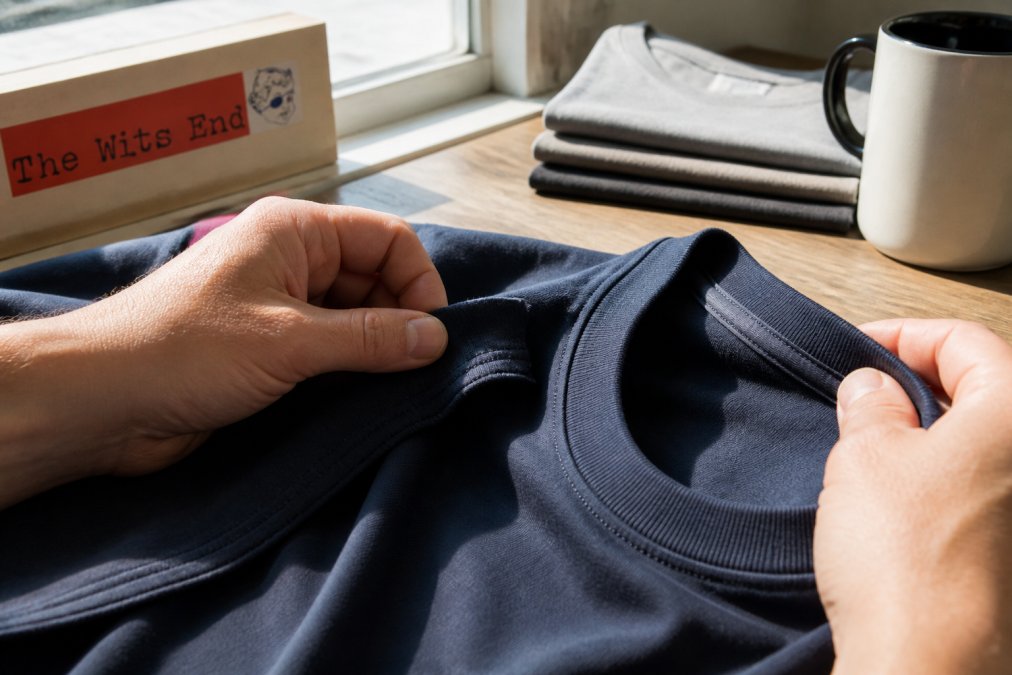
Stitch quality and seam reinforcement are the fastest tells of a well-made tee. Look for double-needle stitching at the hems and sleeves, single stitching unravels faster after repeated washing. Side-seamed construction beats tubular because it holds shape instead of twisting.
Neckline integrity deserves its own check. Shoulder-to-shoulder taping keeps the neckline from stretching into a scoop, and a ribbed collar with a bound edge outlasts a simple folded hem.
Check for these specific markers:
- Double-needle hems on sleeves and bottom
- Shoulder-to-shoulder taping at the neck
- Side-seamed body panels
- Reinforced collar with a bound edge
- Even, tight stitching with no loose threads
How to Wash Screen Printed Shirts So the Design Lasts
Most guides tell you to wash inside out in cold water and hang dry. What determines whether a print survives is how the ink was cured, how the fabric moves under abrasion, and whether your routine matches the ink chemistry on your shirt.
Why heat, not water, is the real enemy
Plastisol ink is known to cure into a flexible film bonded to cotton fibers. Hot dryer cycles can affect the ink, potentially leading to micro-cracks over time.
Water-based and discharge inks are designed to penetrate fibers. The routine that protects plastisol prints (avoid heat) differs from the one that protects water-based prints (avoid harsh detergent and high agitation).
The wash-testing framework
You can run a controlled comparison. Buy two identical shirts, wash one on your normal routine and one on a gentler protocol, and observe the differences over time.
- Turn the shirt inside out so the ink film rubs against itself, not zippers, buttons, or denim.
- Wash cold, 60°F to 80°F, on a gentle cycle. Cold water also limits shrinkage, which matters because a shirt that shrinks 4% pulls the print out of register.
- Use a mild liquid detergent with no bleach, optical brighteners, or fabric softener. Softener leaves a cationic film that interferes with ink adhesion and dulls the print.
- Skip the dryer. Hang dry or lay flat in the shade; UV exposure fades dye even when the print survives.
- If you must iron, iron the reverse side only, on low, and never touch the print directly, a hot iron melts plastisol in seconds.
- Wash graphic tees separately from towels and anything with zippers, hooks, or Velcro for the first ten washes, when the ink film is most vulnerable to abrasion.
What actually shortens a print's life
The failure modes, ranked by how often they show up in real wardrobes:
- Hot dryer cycles. The single biggest killer of plastisol prints, one hot cycle does more damage than ten cold washes.
- Fabric softener. Coats fibers, degrades adhesion, accelerates fading.
- Bleach. Attacks both the garment dye and the ink binder.
- Overloading the washer. More friction against other garments means more abrasion on the print.
- Tight fit at the chest or shoulders. A shirt stretched to its limit flexes the ink film every time you move, cracking the print along stress lines.
That last point is why fit and wash care are the same conversation: a shirt that fits correctly outlasts an identical shirt worn two sizes too small, even with the same laundry routine.
A note on detergent and water hardness
Hard water leaves mineral deposits that dull a print over time; a water softener or chelating detergent helps. It's a minor factor compared to heat and softener, but it separates a shirt that looks new at year three from one that looks tired at year two.
Finding Your Fit: Sizing Consistency and Body-Type Considerations
Fit is not a comfort issue, it's a durability issue. A shirt that pulls at the shoulders, strains across the chest, or bunches at the waist puts constant mechanical stress on the print and seams, cracking ink and blowing out stitching long before the fabric wears out. Getting fit right is one of the highest-leverage things you can do to make a graphic tee last.
Why the number on the tag means almost nothing
There is no enforceable standard for what a "large" measures. A large from one manufacturer can run a full size smaller than another's, and the same brand can change its block season to season. The only reliable reference is the specific size chart for the specific shirt you're buying, measured flat against a shirt you already own and like.
Measure a shirt you own that fits the way you want, chest, body length, sleeve length, laid flat, and compare those numbers to the listing's chart. Two minutes eliminates most returns.
How cut affects print longevity
Different cuts put stress on different parts of the print:
- Slim and fitted cuts flex the ink film across the chest and shoulders with every movement, where plastisol cracks start. If you prefer slim, look for water-based or discharge inks, which flex with the fabric instead of cracking.
- Boxy and relaxed cuts drape away from the body, so the print sits on fabric that isn't under tension and tends to last longer. The trade-off: a boxy cut can distort a centered graphic if the shirt is too wide for your frame.
- Standard or classic cuts are the middle ground and the safest bet when buying online without trying the shirt on.
Body-type-specific guidance
Most fit guides assume one body type. Here's how the major fit issues play out:
Broad shoulders, narrow waist. The shoulders are the binding constraint: if the shirt fits there, it billows at the waist. Look for side-seamed construction and a slightly tapered body, and avoid tubular construction, which twists and pulls unevenly across a tapered torso.
Fuller chest or midsection. A shirt that fits at the chest but pulls at the hem rides up and distorts the print. Look for pre-shrunk fabric and a longer body length. Extended sizing up to 5XL should use quality construction standards. If a listing doesn't specify construction on extended sizes, it's a good idea to inquire before you buy.
Long torso. Standard body lengths ride up and expose the print to more abrasion against waistbands and belts. Look for tall sizing or a brand that publishes body length in the size chart.
Petite frame. A standard cut hangs past the hips and bunches, creasing the print. A boxy cut in a smaller size often fits better than a slim cut in a larger size.
Sizing consistency across a single brand
Even within one brand, sizing drifts between product lines. A unisex tee and a women's cut tee from the same shop are built on different blocks and won't fit the same at the same labeled size. Always check the chart for the specific product, not the brand's general guide. A single generic chart across a whole catalog signals the shop isn't measuring its own garments.
Where to Buy Durable Graphic Tees Online in 2026
Buying durable graphic tees online in 2026 comes down to choosing sellers who publish their fabric specs and printing methods. If a listing doesn't state GSM, fiber content, or print type, the seller either doesn't know or doesn't want you to compare.
The Wits End is a veteran-owned shop that hand-screens and direct-to-garment prints apparel for makers, thinkers, and vintage enthusiasts. Our tees are built for people who care about what's on the shirt and how long it lasts. The Federal Trade Commission's guidance on textile labeling requires accurate fiber content disclosure, so any legitimate seller should state exactly what you're buying.
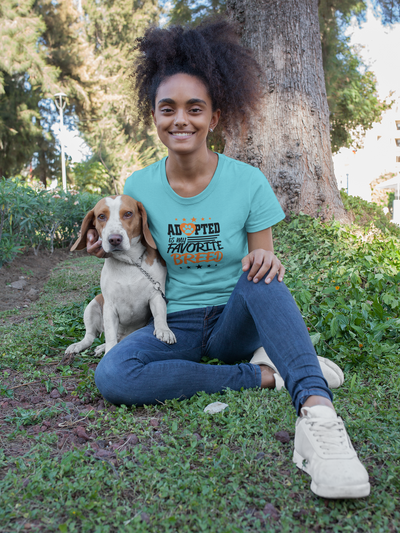
Our catalog runs from $15.50 to $20.50, with inclusive sizing up to 5XL across the collection. The It's never too early for Halloween unisex t-shirt uses 100% combed ring-spun cotton at 4.2 oz/yd² with side-seamed construction and shoulder-to-shoulder taping, the exact markers that predict longevity. For a classic-fit option, the women's short sleeve version is pre-shrunk to hold its size through repeated washes.


Every purchase from a small shop like ours supports hand-screened or direct-to-garment production.
Frequently Asked Questions
How can I tell if a graphic tee will last through multiple washes?
Check the fabric weight and construction first. A 4.2 oz./yd.² (142 g/m²) ring-spun cotton tee with side-seamed construction and shoulder-to-shoulder taping holds up better than a lighter, tube-knit shirt. Next, look at the print method. Screen printing is a common print method. Finally, check the care label. Pre-shrunk fabric and after-care instructions that recommend cold washing and air drying are signs the maker expects the shirt to last.
What is the difference between screen printing and direct-to-garment printing for durability?
Screen printing pushes ink through a mesh screen, which can result in a durable design. Direct-to-garment printing works like an inkjet printer for fabric, spraying ink onto the surface. DTG is great for detailed, full-color designs and print-on-demand. Both screen printing and DTG are practical choices for different artwork and production needs.
Are heavyweight cotton tees better for graphic prints?
Heavier fabric, usually 5 oz./yd.² and up, provides a more stable surface for the print and resists stretching that can distort a graphic. That said, a well-made 4.2 oz./yd.² ring-spun cotton tee with proper ink adhesion can also last years. The key is the combination of fabric density, stitch quality, and print method. Look for heavyweight cotton paired with screen printing or high-quality DTG for the best results.
How do I maintain the print quality of my graphic tees?
Wash inside out in cold water on a gentle cycle. Skip fabric softener because it coats the ink and dulls colors. Tumble dry low or hang dry. If you iron, never touch the printed area directly; turn the shirt inside out or place a cloth over the design. Following these after-care instructions keeps ink adhesion strong and color vibrancy intact. Heat exposure during washing and drying can contribute to cracking and fading.
Do graphic tees from smaller online shops last as long as big-brand ones?
It depends on the blanks and print method, not the brand size. Many small shops use the same wholesale blanks, like combed ring-spun cotton from Nicaragua or Mexico, that larger retailers use. What matters is whether the shop specifies fabric weight, garment construction details, and print type. A veteran-owned shop using hand-screened or DTG printing on premium blanks can offer quality tees.
What should I look for in a high-quality graphic tee when shopping online in 2026?
Look for four things: fabric specs (GSM or oz./yd.², fiber content, pre-shrunk), print method (screen printing vs DTG), construction details (side seams, shoulder taping, stitch quality), and sizing info (measurements, not just S-5XL labels). Reviews that mention wash-fastness after multiple cycles are a good sign. If a listing skips fabric weight or print method entirely, that is a red flag. Durable graphic tees come from shops that share these specs openly.
The real challenge with graphic tees isn't finding a design you like. It's finding one that still looks good after a year of wear. The Wits End builds apparel for people who want graphics that hold up, with hand-screened and direct-to-garment printing, inclusive sizing up to 5XL, and construction details like side-seamed panels and shoulder-to-shoulder taping. Shop Now and get a shirt that outlasts the trend that inspired it.