 1-361-589-1048
Table of Contents
- Vintage Style vs Modern Ironic Apparel: Core Differences
- The Role of Nostalgia in Vintage Fashion
- 1980s Computer Nostalgia Apparel and Retro Technology
- Modern Irony in Fashion Design
- How to Style Graphic Tees with Vintage and Ironic Pieces
- Sustainability and the Environmental Cost of Ironic Consumption
- Generational Divide: How Different Ages Approach Irony and Vintage
- Frequently Asked Questions
Last Updated: October 1, 2026
Vintage Style vs Modern Ironic Apparel: Core Differences
Vintage style and modern ironic apparel now coexist in the same wardrobe. Understanding the distinction matters if you're building a wardrobe that reflects who you are rather than following contradictory trends.
Vintage style vs modern ironic apparel differs fundamentally in intent, sourcing, and how the wearer relates to what they're wearing. Vintage fashion celebrates authenticity and historical craftsmanship. Ironic apparel, by contrast, wears mediocrity as a statement. One looks backward with reverence. The other looks backward with a wink.
Authenticity and Intent
Vintage pieces carry genuine history. A 1980s band tee from an actual concert or a Commodore computer graphic were made for their original purpose, someone wore them because they loved the band or worked with that technology. The authenticity is built in.
Ironic apparel is designed to be worn with a knowing distance. The wearer understands the piece is "bad" or dated or mediocre, and that's precisely why it's interesting. There's self-awareness in the choice. You're not wearing a retro OS warning sticker because you genuinely believe people will spontaneously discuss BeOS file systems, you're wearing it because the absurdity of the warning is funny.
![Warning: May Spontaneously Start Talking About [Platform] T-Shirt](https://cdn.shopify.com/s/files/1/0602/8866/3769/files/unisex-staple-t-shirt-dark-grey-heather-front-69fe575c8074b.jpg?v=1778665717)
Craftsmanship and Production
Authentic vintage garments were made with durability in mind: ring-spun cotton, side-seamed construction, shoulder-to-shoulder taping. Manufacturers expected them to last years of wear, before fast fashion existed.
Modern ironic apparel varies widely. Some brands use on-demand production with hand-screened prints and premium fabrics designed to last. Others produce disposable commentary pieces worn a few times then discarded.
The Wits End approaches ironic apparel with the craftsmanship philosophy of vintage. Their hand-screened and direct-to-garment items use pre-shrunk, combed ring-spun cotton with side-seamed construction. The graphics are designed to last through countless washes. This bridges the gap: modern design sensibility with vintage-era durability standards.
The Role of Nostalgia in Vintage Fashion
Nostalgia drives vintage fashion differently across generations. For someone who lived through the 1980s, an authentic vintage piece reconnects them to lived experience. For someone born in 2010, it's pure imagination, engaging with a cultural moment they never experienced. Both are valid forms of nostalgia, just operating at different distances from the source material.
The psychology of nostalgia in fashion is powerful. According to research on nostalgia marketing trends, people use nostalgic products to feel connected to simpler times or to reclaim aspects of their identity. A vintage Atari graphic tee isn't just clothing, it's a statement about valuing craftsmanship, rejecting fast fashion, and claiming membership in a community that appreciates retro technology.
1980s Computer Nostalgia Apparel and Retro Technology
The 1980s computer aesthetic has exploded in mainstream fashion. The 1980s represented a genuine technological inflection point when personal computing became possible and command-line interfaces still dominated.
Why Retro Computing Resonates Today
Retro computing nostalgia taps into a moment when technology felt transparent and human-scaled. You could understand how your Atari or Commodore worked, see the pixels, and read actual instructions rather than navigate opaque menus.
Today's technology feels opaque, algorithms make decisions we don't understand, interfaces hide complexity. Retro computing represents a lost simplicity, or the fantasy of it.
The aesthetic is striking: neon phosphor text on black backgrounds, geometric pixel art, distinctive fonts and color palettes of Atari and Commodore. These elements are instantly recognizable and satisfying to those who experienced the era or discovered it through cultural osmosis.
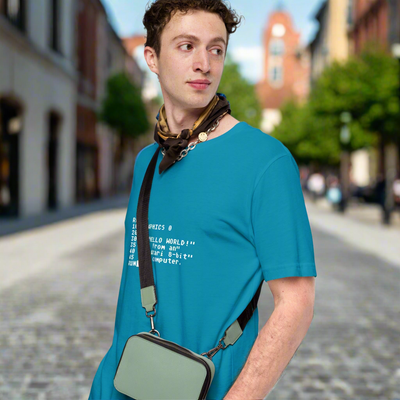
Products like the Grue Warning t-shirt ($16.59) capture this perfectly. The neon green "phosphor" text on midnight black recreates the exact visual experience of booting up an 8-bit computer. It's not ironic, it's reverent. The wearer is saying: I value this moment in technology history.

From Niche Hobby to Mainstream Aesthetic
Retro computing started as genuine nostalgia among people who actually used these machines. Enthusiasts built preservation communities, but the aesthetic remained niche for decades. Then mainstream fashion brands incorporated 1980s computer graphics, moving the aesthetic from hobbyist circles into streetwear. What was once a marker of genuine tech enthusiasm became a visual style anyone could wear.
This migration creates an interesting dynamic: authentic enthusiasts can wear their passion in culturally legible ways, but the aesthetic gets diluted. Someone wearing 1980s computer graphics might genuinely love BeOS or just like the colors. The aesthetic now exists as a shared visual language regardless of the wearer's knowledge.
Grue Warning: Classic 8-Bit Text Adventure t-shirt →
Modern Irony in Fashion Design
Irony in fashion operates as cultural commentary, a way of engaging with aesthetics while maintaining critical distance. The ironic wearer signals: I understand this is "bad" or dated, and I'm choosing it anyway, and that choice means something.
Ironic Detachment as Cultural Commentary
Modern irony in fashion often targets consumer culture itself. An ugly graphic tee becomes interesting because it's ugly. A warning sticker about spontaneously discussing retro operating systems works because the absurdity is the point.
This form of irony requires the viewer to get the joke, it's in-group signaling. If you understand why a "Garbage Scow Captain" shirt from Star Raiders is funny, you're part of a community that appreciates obscure retro gaming references.

Ironic fashion serves as a buffer against sincere emotional investment. By wearing something ironic, you're protected from judgment. You can wear a retro OS warning shirt and claim you're being funny, but underneath you're expressing genuine affection for these operating systems.
Ugly-Chic and the Aesthetics of Mediocrity
"Ugly-chic" deliberately embraces aesthetics traditional fashion rejects: oversized silhouettes, clashing colors, poor-quality graphics. It rejects aspirational fashion, saying: I'm wearing this because it's interesting and challenges your assumptions about what looks good.
Ugly-chic requires significant cultural literacy, you must wear ugly things in a way that signals deliberate choice. It's a high-wire act of self-awareness.
How to Style Graphic Tees with Vintage and Ironic Pieces
Mixing vintage and ironic pieces requires understanding how they communicate together. A vintage Atari tee and an ironic warning sticker speak the same language, retro computing nostalgia, from different angles. They work together if you're intentional.

Mixing Minimalism with Maximalist Vintage
Pair a bold graphic tee with minimal everything else, simple jeans, neutral shoes, no competing accessories. Alternatively, layer multiple nostalgic pieces that share a coherent visual language. A Commodore tee with an Amiga sticker and 1980s accessories creates unity. A Commodore tee with a 1970s band graphic looks confused. Either commit fully to one era or use minimalism to let one piece dominate.
Building a Wardrobe Around Niche Interests
The strongest personal style comes from leaning into niche interests. If you love retro computing, build your wardrobe around that. A Warning: May Spontaneously Start Talking About Retro OS shirt ($16.59) works best when paired with pieces signaling genuine interest. This approach is authentic, creates in-group recognition with other enthusiasts, and is sustainable because you'll actually wear these pieces repeatedly.
:::pro-tip The most compelling personal style comes from wearing things that reflect your actual knowledge and interests. If you don't actually know what BeOS was, the irony falls flat. But if you do, the shirt becomes a conversation starter within your community.
Sustainability and the Environmental Cost of Ironic Consumption
Buying authentic vintage pieces is genuinely sustainable, you extend the life of existing garments without generating new production demand. Ironic apparel varies: on-demand production with durable methods reduces overproduction waste and improves sustainability. But ironic apparel designed as disposable commentary, produced in bulk and discarded after a few wears, carries significant environmental cost and becomes complicit in the consumer culture it critiques.
Generational Divide: How Different Ages Approach Irony and Vintage
Age fundamentally shapes how people relate to vintage and ironic aesthetics. Someone who lived through the 1980s has direct experience with the source material. Someone born in 2005 encounters the same aesthetic purely through cultural transmission.
Frequently Asked Questions
What is the difference between authentic vintage style and ironic fashion?
Authentic vintage style prioritizes genuine historical pieces and celebrates the craftsmanship of their era. It values sourcing real garments from specific decades and wearing them for their original aesthetic merit. Ironic fashion, by contrast, deliberately references past styles with a wink to the viewer, it's self-aware, often playful, and uses retro elements as cultural commentary. A vintage enthusiast might wear a 1970s dress because they love the cut and fabric; an ironic wearer might pair a graphic tee with deliberately mismatched pieces to signal awareness of fashion's cyclical nature.
Why is 1980s computer nostalgia apparel so popular right now?
The resurgence of 1980s computer nostalgia reflects a genuine cultural moment. That era represents a time before the internet homogenized design, when personal computers were novel and visual identity mattered intensely. For geek culture enthusiasts and makers, retro computing aesthetics, pixelated fonts, circuit board graphics, and nods to systems like Atari and Commodore, offer authenticity and specificity that mass-market fashion lacks. Pieces like the Grue Warning tee or Star Raiders designs tap into real nostalgia while signaling membership in a community that values craftsmanship and individuality.
How do I know if graphic tee prints will actually hold up after washing?
Hand-screened prints and direct-to-garment designs from The Wits End use pre-shrunk, combed ring-spun cotton with side-seamed construction, and the graphics are designed to last through countless washes. Our product descriptions specify the printing method and use of high-quality cotton blends, with a fabric weight of 4.2 oz./yd.² for our t-shirts. We also provide construction details like side-seaming and shoulder-to-shoulder taping.
Is buying ironic vintage apparel actually sustainable?
It depends on your approach. Sourcing genuine vintage pieces reduces demand for new fast fashion production, which saves resources and landfill space. However, ironic consumption, buying items purely for their aesthetic or cultural value without intending to wear them, can become wasteful. The most sustainable choice is selecting pieces you'll actually wear repeatedly, whether vintage or modern ironic designs. On-demand printing services, like those used by independent makers, also reduce overproduction compared to bulk manufacturing. Progressive consumers seeking durable, values-aligned apparel should prioritize quality and longevity over trend-chasing.