 1-361-589-1048
Table of Contents
- Why DTG Print Care Matters
- How to Wash Custom Printed T-Shirts
- Drying Your Direct-to-Garment Printed Items
- How to Iron DTG Prints Without Damage
- DTG Print Fading Prevention Strategies
- Storage and Folding for Long-Term Print Protection
- Troubleshooting Common DTG Print Issues
- Eco-Friendly Care Alternatives
- Frequently Asked Questions
Last Updated: September 30, 2026
Why DTG Print Care Matters
Direct-to-garment printing creates vibrant, detailed graphics that make your apparel stand out. But those brilliant colors and crisp designs won't last without proper care. Learning how to care for direct to garment printed apparel is the difference between a shirt that fades after five washes and one that stays vibrant for years.
Protecting your direct-to-garment printed apparel isn't complicated, it just requires understanding how DTG ink bonds to fabric and what breaks that bond down.
DTG printing applies water-based ink directly onto garment fibers, creating durability that rivals screen printing when cared for properly. Heat, harsh chemicals, and rough agitation are the enemies of ink longevity. Follow the right steps, and your graphic tees will look fresh for years.
How to Wash Custom Printed T-Shirts
Washing is where most print damage happens. Get this step right, and you've solved half the problem.
Pre-wash preparation
Turn your shirt inside out before every wash. This single step protects the printed design from friction against the washing machine drum and other garments. The print faces inward, away from abrasion.
Don't wash with rough-textured items like towels or denim; smooth fabrics reduce friction on the print.
Machine wash settings
Use cold water every time, warm or hot water breaks down the ink-fabric bond faster, while cold water preserves vibrancy and cleans effectively.
Select the delicate cycle to reduce agitation and spin speed, minimizing stress on the printed design.
Wash with similar colors only to prevent dye transfer and keep prints looking sharp.
Detergent selection
Choose a mild, gentle detergent without bleach or optical brighteners, harsh chemicals break down both ink and fabric fibers.
Use less detergent than normal; a small amount cleans as well as a full dose while reducing chemical exposure to your print.
Avoid fabric softener entirely. It leaves a coating on fabric that can cause the print to crack or peel. This coating traps moisture and heat, both enemies of DTG prints.
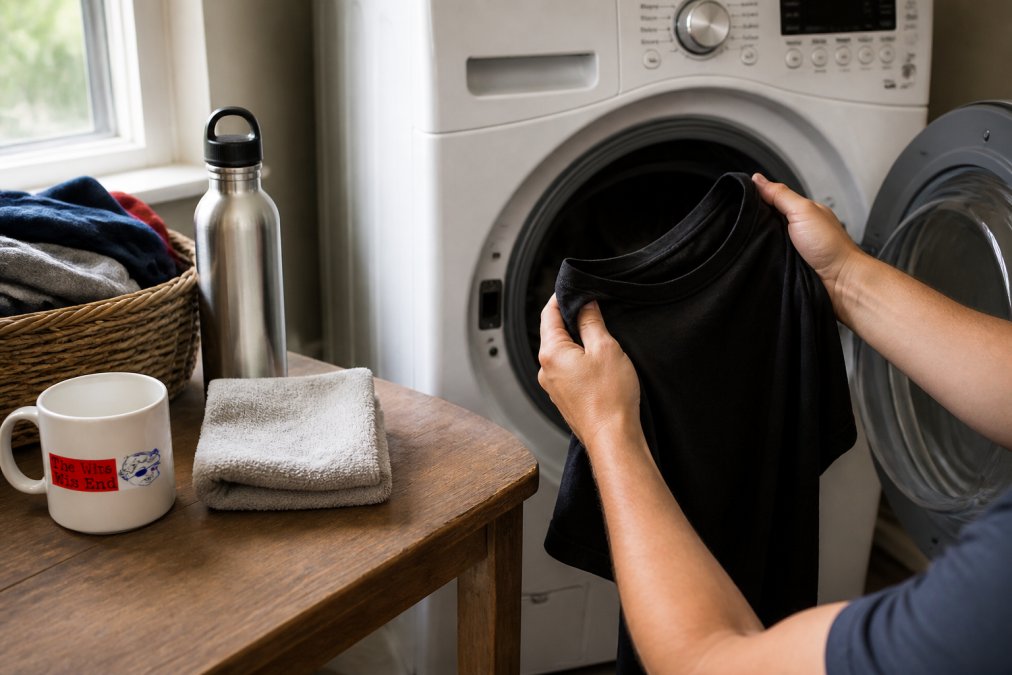
Drying Your Direct-to-Garment Printed Items
How you dry matters as much as how you wash. Heat is the biggest threat to print longevity after washing.
Tumble dry vs. hang dry
Hang drying is the safest option for how to care for direct-to-garment printed apparel, eliminating heat exposure and letting moisture evaporate naturally in a well-ventilated area away from direct sunlight.
If you must use a dryer, set it to the lowest heat setting or air-dry mode; high temperatures cause ink to become brittle and crack, while even medium heat accelerates fading.
Remove the shirt from the dryer while it's still slightly damp. This prevents wrinkles and reduces the need for ironing, which means less heat exposure overall.
Air drying best practices
Hang shirts on a hanger to allow air circulation on all sides and speed drying.
Keep prints away from direct sunlight during drying; UV rays fade colors just like heat does.
Avoid clothespins on the printed area; use them on shoulder or side seams instead.
How to Iron DTG Prints Without Damage
Ironing is sometimes necessary, but it poses real risk to DTG prints if done incorrectly. Understanding the mechanics of heat damage and using the right technique will protect your design.
Why heat damages DTG ink
DTG ink sits on fabric fibers and is set during production. Heat above 300°F softens the ink binder, causing loss of adhesion; pressure combined with heat accelerates this breakdown, causing permanent cracking, peeling, or color bleeding.
Choosing the right iron and settings
Use a steam iron set to the lowest heat setting (230°F-280°F, labeled "Synthetic" or "Low"). Never use "Cotton" or "High" settings. Turn off steam; moisture weakens the ink bond.
Use a pressing cloth or thin cotton towel as a barrier between the iron and garment to diffuse heat and pressure.
Ironing technique for printed garments
Always iron the back side when possible, or flip the shirt inside out to iron from behind the design.
If you must iron the front, place a pressing cloth over the print and press gently for 3-5 seconds per spot with constant movement to prevent heat buildup.
Keep the iron moving at a steady pace; avoid the printed area entirely if possible and iron only unpainted portions (collar, sleeves, side seams).
When not to iron
For large all-over prints, skip ironing entirely. Remove the shirt from the dryer while slightly damp and hang it to air-dry, eliminating wrinkles without heat exposure.
For textured or embellished prints (puff ink, glitter), never iron, these are more heat-sensitive and will be permanently damaged.
Troubleshooting ironing mistakes
If you accidentally iron directly on a print and notice discoloration or shine, stop immediately, the damage is permanent. Use back-side ironing or air-dry instead going forward.
A glossy or plastic-like sheen indicates the ink binder was partially melted; avoid any future heat application to that area.
DTG Print Fading Prevention Strategies
Fading happens gradually, but you can slow it dramatically with the right approach.
Wash less frequently; wear items multiple times before washing if not visibly soiled. This extends print life significantly.
Store printed apparel in a cool, dark place away from heat sources and direct sunlight, which are primary causes of fading.
Keep prints away from chlorine and salt water. If exposed, rinse immediately with fresh water, chlorine and salt accelerate fading and discoloration.
Avoid perfume, cologne, and alcohol-based products, which break down the ink bond and cause spotting or fading.
Storage and Folding for Long-Term Print Protection
How you store your apparel between wears matters more than most people realize.
Fold rather than hang for extended storage to avoid stretching fabric and permanent creases.
Store in breathable containers, not plastic bags, which trap moisture and promote mildew.
Keep stored items in stable, cool, dry conditions away from heat sources and humidity.
Don't stack heavy items on stored printed apparel, which can create permanent creases and damage.
Troubleshooting Common DTG Print Issues
Even with perfect care, print problems can occur. Understanding whether the issue stems from care mistakes, production defects, or unavoidable wear helps you prevent future damage and know when a print cannot be saved.
Distinguishing care damage from production defects
Determine whether the issue is a care-related failure or a production defect. Production defects typically appear immediately or within the first few washes, while care-related damage develops gradually.
Production defects include sticky or tacky ink, peeling or cracking within the first 1-3 washes despite proper care, uneven coverage, or color bleeding on the first wash.
Care-related damage includes fading after 10+ washes, cracking from high heat, edge peeling from rough handling, or discoloration from chemicals.
Contact the seller or printer within 30 days with photos if you suspect a production defect; most offer replacements. Damage after months of wear is almost certainly a care issue.
Print cracking
Cause: Excessive heat during drying, ironing, or storage. High-temperature dryers are the most common culprit; hot water can also cause fabric shrinkage that stresses the ink layer.
Prevention: Use cold water, set dryers to air-dry or low heat, avoid ironing directly on prints, and store away from heat sources and sunlight.
Can it be fixed? No. Once cracked, damage is permanent and spreads with each wash. Prevent cracking by following low-heat drying protocols from the first wear.
Fading
Cause: Repeated exposure to heat, sunlight, or harsh washing. Warm or hot water, chlorine, salt water, and UV rays accelerate fading.
Prevention: Wash in cold water on delicate cycle, air dry indoors or in shade, reduce wash frequency, and rinse immediately if exposed to pool or beach water.
Can it be fixed? No, but adjusting your care routine will prevent additional color loss.
Peeling or lifting edges
Cause: Rough handling, excessive agitation, or tumble drying. Peeling starts at edges where adhesion is naturally weaker; washing with rough fabrics or using heavy-duty cycle accelerates it.
Discoloration or spotting
Cause: Contact with bleach, fabric softener, perfume, cologne, sunscreen, or other chemicals that break down the ink binder or cause localized fading. Dye transfer from incompatible colors also causes discoloration.
Ink bleeding or color transfer
Cause: Washing with incompatible colors, especially reds and dark colors in the first few washes. Some prints, particularly those with darker inks, may release excess dye during initial washes. Warm water accelerates this process.
Dull or matte finish loss
Cause: Buildup of detergent residue, fabric softener, or hard water minerals on the print surface. This creates a cloudy or dull appearance even though the ink itself is intact.
Eco-Friendly Care Alternatives
Caring for your DTG prints doesn't require harsh chemicals or excessive water use.
Frequently Asked Questions
How long do direct-to-garment prints typically last?
DTG prints can last 50+ washes when cared for properly using cold water, mild detergent, and gentle drying methods. The water-based ink bonds directly to garment fibers, creating durability comparable to traditional screen printing. However, neglecting care instructions, using hot water, bleach, or high heat drying, can reduce print longevity to just 10-15 washes. Proper care for DTG printed apparel is essential to maintain both print vibrancy and garment integrity.
Can you put DTG printed shirts in the dryer?
Yes, but with caution. Use tumble dry low or air dry settings only. High heat damages water-based ink and can cause print cracking and fading. Machine drying on low heat is acceptable occasionally, but hanging or air drying is the safest option for extending print life. Avoid the dryer entirely if your garment shows signs of ink fading or if you want maximum durability from your custom printed t-shirt.
Why is my DTG print fading after one wash?
Premature fading usually results from using hot water, harsh detergents, bleach, or fabric softener on your first wash. DTG prints need time to fully cure; some manufacturers recommend waiting 24-48 hours before the first wash. Always use cold water and mild detergent for the first several washes. If fading occurs immediately, the garment may not have been properly cured at the production stage. DTG print fading prevention starts with correct first-wash practices and consistent cold-water care.
What detergents should be avoided for DTG printed clothing?
Avoid bleach, oxygen-based cleaners, fabric softeners, and heavy-duty or enzyme-based detergents. These break down water-based ink and damage fiber integrity. Skip any product labeled 'color-safe bleach' or containing optical brighteners. Use mild, fragrance-free detergent instead. For how to wash custom printed t-shirts effectively, choose detergents specifically formulated for delicate fabrics or colors. When in doubt, select a gentle, phosphate-free option designed for sensitive skin.