 1-361-589-1048
Table of Contents
- What Makes Vinyl Stickers Weather Resistant
- How Long Do Vinyl Stickers Last Outdoors
- Best Vinyl for Outdoor Stickers: Material Selection Guide
- UV Resistant Sticker Lamination and Protective Coatings
- Application Best Practices for Longevity
- Testing Sticker Quality and Durability
- Common Misconceptions About Sticker Weather Resistance
- Conclusion
Last Updated: August 30, 2026
What Makes Vinyl Stickers Weather Resistant
Vinyl stickers are weather resistant because they're made from polyvinyl chloride (PVC), a durable plastic polymer that resists moisture, UV rays, and temperature fluctuations. However, weather resistance depends on material quality, adhesive strength, lamination, and proper surface preparation before application.
The key distinction is that vinyl stickers are water-resistant, not waterproof. Water-resistant means they repel moisture for extended periods. Waterproof means completely impervious to water indefinitely. Vinyl stickers will survive rain, splashes, and humid conditions, but prolonged submersion or extreme moisture exposure can eventually degrade the adhesive or cause edge lifting.
Weatherproof vs. Waterproof: Understanding the Difference
Weatherproof refers to resistance against general weather elements: rain, UV exposure, temperature changes, and wind. Waterproof means completely sealed against water intrusion, a standard harder to achieve with adhesive-backed stickers because edges are always slightly exposed.
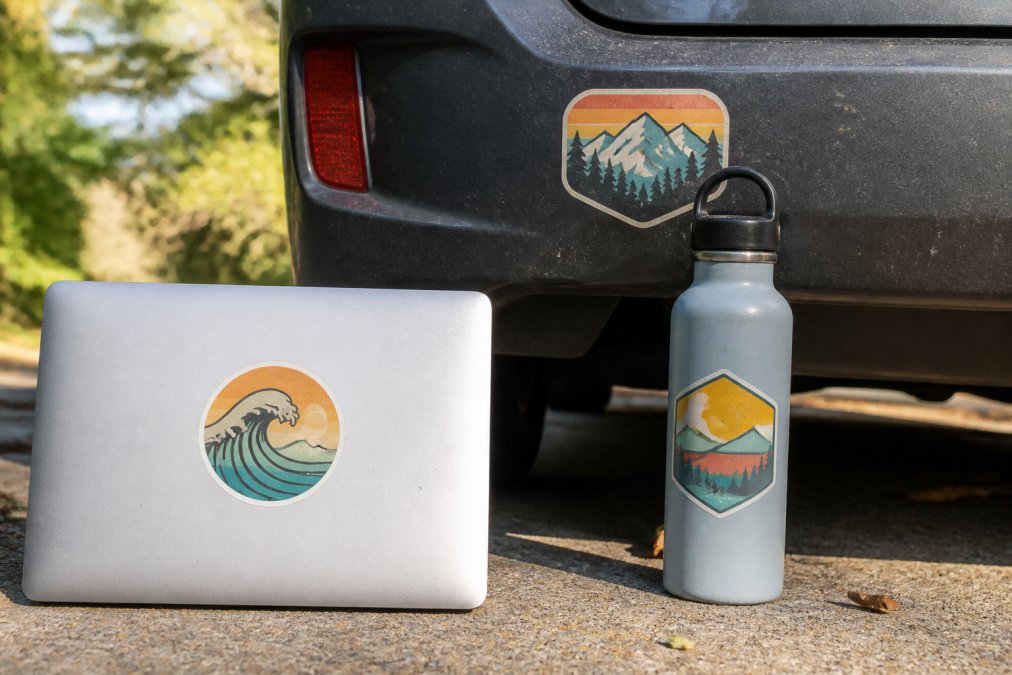
Vinyl stickers marketed as "weatherproof" withstand outdoor conditions for months or years, resisting fade, peeling, and degradation. Water can eventually seep under edges if the sticker sits in standing water or gets submerged repeatedly. For most real-world outdoor uses, car bumpers, laptop cases, outdoor signage, weatherproof vinyl stickers perform exactly as needed.
Material Composition: Vinyl, Polyvinyl Chloride, and Adhesive Strength
Vinyl stickers are made from PVC, a synthetic plastic that resists UV degradation and moisture better than paper or standard alternatives. The PVC substrate doesn't absorb water, doesn't swell when damp, and doesn't break down from sun exposure.
The adhesive backing is equally important. Premium vinyl stickers use solvent-based or permanent adhesives that bond strongly and resist peeling from temperature fluctuations. Budget adhesives are water-based and break down faster when exposed to moisture and heat cycles.
Lamination adds a protective layer. A UV-resistant laminate coating sits on top of the printed design, protecting the ink from fading and the surface from scratches. Without lamination, vinyl stickers fade noticeably within 6-12 months of outdoor exposure (peer-reviewed research). With it, they last 2-3 years or longer.
How Long Do Vinyl Stickers Last Outdoors
Vinyl stickers weather resistant designs typically last 2-3 years outdoors with moderate exposure. In harsh conditions, direct sunlight, salt air, extreme temperature swings, that lifespan drops to 12-18 months. In protected outdoor settings or with minimal UV exposure, they can last 3-5 years.
The lifespan depends heavily on placement. A bumper sticker on a car parked in a garage lasts longer than one on a car left in the sun daily. A laptop sticker carried indoors most days outlasts one on an outdoor toolbox.

Environmental Factors: UV Exposure, Heat, Moisture, and Salt
UV exposure is the primary degradation factor. Ultraviolet radiation breaks down chemical bonds in ink and vinyl, causing fading and brittleness. Stickers in full sun fade noticeably within 6-12 months; the same sticker in partial shade can last 2-3 years.
Heat accelerates adhesive breakdown. High temperatures soften the adhesive, making edges curl and peel. Temperature cycling creates expansion and contraction stress that eventually breaks the bond.
Moisture is the second major factor after UV. Rain, humidity, and salt spray promote peeling and edge degradation. Moisture seeps under sticker edges, breaking the adhesive bond from underneath. Salt air is particularly damaging, corroding adhesives and promoting rust on metal substrates.
Temperature swings stress the adhesive layer. Repeated expansion and contraction eventually causes edges to lift and peel. Stickers in temperate climates with stable temperatures last longer than those in regions with extreme seasonal shifts.
Lifespan Expectations by Application
A vinyl sticker on a water bottle that gets occasional splashes and is stored indoors most of the time lasts 3-5 years. A bumper sticker on a daily-driven car in moderate climate lasts 18-24 months. The same bumper sticker in a hot, sunny climate lasts 12-15 months. Outdoor signage stickers last 12-24 months depending on exposure.
Best Vinyl for Outdoor Stickers: Material Selection Guide
The best vinyl for outdoor stickers combines a durable PVC substrate, solvent-based inks, and a protective laminate coating. Look for products that specify UV-resistant lamination and permanent adhesive. These are non-negotiable features.
Standard vinyl is cheaper but fades faster and peels sooner. Premium vinyl costs 20-40% more but lasts 2-3 times longer (the FTC). For stickers placed outdoors, premium vinyl is the better investment.
Premium Vinyl vs. Standard Vinyl
Premium vinyl uses higher-grade PVC with UV-resistance additives. The ink is solvent-based, bonding more strongly to the substrate and resisting fading longer. The adhesive is permanent-grade, designed for long-term outdoor use.
Standard vinyl uses basic PVC and water-based inks with medium-strength adhesive. It's acceptable for indoor stickers or short-term outdoor exposure. For anything outdoors, premium vinyl is worth the extra cost.
The Wits End offers vinyl stickers like the "It's Loaded - And I'm Not Afraid to Use It!" bumper sticker using premium materials designed for outdoor durability, combining quality vinyl substrate with solvent-based inks and protective lamination.
Solvent-Based Ink and Gloss vs. Matte Finishes
Solvent-based inks bond chemically to the vinyl substrate, creating a permanent connection that resists peeling and fading. Water-based inks break down faster when exposed to UV and moisture. For outdoor use, solvent-based inks are essential.
Gloss finishes are more durable and weather-resistant than matte finishes. Gloss reflects UV light, reducing fade, and sheds water better. Matte finishes absorb more light and moisture, accelerating degradation. For outdoor stickers, gloss is the stronger choice.
UV Resistant Sticker Lamination and Protective Coatings
Lamination separates a vinyl sticker that lasts 12 months from one that lasts 3 years. A UV-resistant laminate coating blocks ultraviolet radiation from reaching the ink. Without lamination, UV light degrades ink continuously. With lamination, ink fades much more slowly.
The laminate also provides scratch resistance and water repellency. A laminated sticker sheds water better than an unlaminated one, and scratches don't penetrate to the ink layer.
How Lamination Prevents Fade and Degradation
UV-resistant laminates use additives that absorb ultraviolet radiation and convert it to heat, preventing ink degradation. A laminated sticker in full sun fades gradually over 2-3 years; an unlaminated sticker fades noticeably within 6-12 months.
Lamination also seals the ink surface, preventing oxidation and chemical degradation from air exposure. The protective layer prevents moisture from seeping into the ink layer, which would cause discoloration and smudging.
Weather-Resistant Coating Options
Standard UV-resistant laminate is the most common option, providing good UV protection and water repellency. Premium UV-resistant laminates offer enhanced protection at higher cost. For most applications, standard UV-resistant lamination is sufficient for 2-3 years of outdoor durability.
Application Best Practices for Longevity
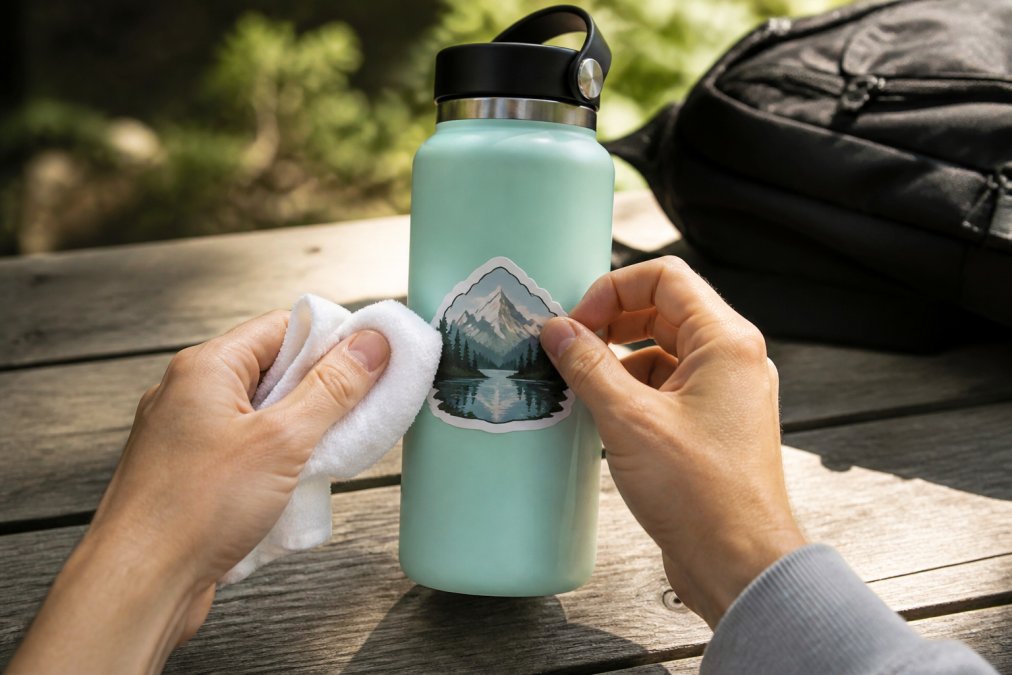
How you apply a vinyl sticker matters as much as the sticker itself. Poor application cuts lifespan in half. Proper application extends it by months or years. The surface must be clean, dry, and properly prepped, with firm, even pressure applied during installation.
Surface Preparation and Curing Time
Clean the surface thoroughly before applying any vinyl sticker using soap and water, then dry completely. Remove dust, dirt, or oils with a cloth or rubbing alcohol. A clean surface is essential; dirt particles prevent full adhesive contact, creating weak spots where peeling starts.
Let the sticker cure for 24 hours after application before exposing it to water or extreme conditions. Full curing takes 48-72 hours in cool conditions. After curing, the sticker can handle rain, splashes, and normal outdoor exposure.
Optimal Application Temperature and Pressure
Apply vinyl stickers at room temperature or slightly warmer (65-75°F is ideal) (the FDA). Cold temperatures make adhesive stiff; warm temperatures make it too soft. Apply firm, even pressure across the entire sticker using a roller, squeegee, or credit card to press out air bubbles and ensure full contact. Work from the center outward to push air toward the edges.
Testing Sticker Quality and Durability
Before committing to a large batch of vinyl stickers for outdoor use, test a sample. Real-world testing reveals whether a sticker will actually perform outdoors.
Scratch Resistance and Peeling Assessment
Apply a test sticker to a surface matching your intended use. Expose it to normal conditions for 2-4 weeks. Check for peeling, fading, and edge lifting. Scratch the surface with a fingernail or plastic tool. Quality vinyl stickers show minimal damage; budget stickers scratch easily. Peel an edge gently. A good sticker resists peeling; a poor one comes off easily.
Real-World Durability Checks
Place a test sticker on a water bottle and use it daily, exposing it to dishwasher cycles, sun, and temperature changes. After 4 weeks, check for peeling, fading, and adhesive breakdown. Test a bumper sticker on your car for a month in your local climate. This real-world test is more reliable than any marketing claim.
Common Misconceptions About Sticker Weather Resistance
Many assume all vinyl stickers are equally weather-resistant. They're not. Material quality, adhesive type, and lamination vary dramatically. A cheap vinyl sticker might fail in 6 months while a premium one lasts 3 years.
Another misconception is that lamination isn't necessary. Unlaminated vinyl stickers fade noticeably within 6-12 months of outdoor exposure. Lamination extends that to 2-3 years or longer.
People also assume waterproof means the sticker won't peel. Waterproof vinyl stickers still have edges where water can seep underneath and break the adhesive bond. Finally, many believe application doesn't matter much. Poor application cuts lifespan significantly. Proper application is just as important as material quality.
When shopping for vinyl stickers weather resistant enough for outdoor use, material quality and application matter equally. The Wits End offers vinyl stickers designed with premium materials, solvent-based inks, and protective lamination specifically for outdoor durability. Products like the "Aware Bubble-free stickers" and "Scientifically Literate Individual Warning Sticker" are built to last through seasons of exposure while maintaining vibrant colors and strong adhesion. Start with a test sticker to verify durability in your specific climate, then scale up with confidence. Quality vinyl stickers properly applied outlast cheap alternatives by years, making them the smarter long-term investment.

| Sticker Type | Expected Lifespan | Best Use Case | Key Requirement |
|---|---|---|---|
| Premium vinyl with lamination | 2-3 years | Outdoor vehicles, equipment | UV-resistant coating |
| Standard vinyl with lamination | 12-18 months | Mixed indoor/outdoor | Basic UV protection |
| Unlaminated vinyl | 6-12 months | Indoor use, short-term | Not recommended for outdoors |
| High-gloss finish | 2-3+ years | Maximum durability | Solvent-based ink |
| Matte finish | 12-24 months | Aesthetic priority | Faster fade expected |
Frequently Asked Questions
Are vinyl stickers actually weather resistant?
Yes, quality vinyl stickers are genuinely weather resistant when made with polyvinyl chloride (PVC) and permanent adhesive. They resist moisture, UV rays, and temperature fluctuations better than paper or standard labels. However, durability depends on material quality, lamination, and application method. Premium vinyl with UV-resistant coating can last for years outdoors, while lower-grade vinyl may fade or peel within a shorter timeframe. The difference is significant, proper vinyl stickers on water bottles or vehicle bumpers hold up far better than cheaper alternatives.
How long do vinyl stickers last outdoors?
Premium vinyl stickers typically last for several years in outdoor conditions with full sun exposure. In shaded areas or on protected surfaces, they may last even longer. Factors affecting lifespan include UV intensity, temperature swings, moisture exposure, and salt spray (in coastal areas). Lower-quality vinyl without lamination degrades faster. Application surface matters too: smooth, clean surfaces extend life, while rough or contaminated surfaces accelerate peeling. Regular inspection helps catch early degradation before stickers fail completely.
What's the difference between waterproof and weather resistant stickers?
Waterproof stickers resist liquid penetration but may still fade or degrade from UV exposure and temperature changes. Weather resistant stickers handle multiple environmental factors: moisture, UV radiation, heat, cold, and salt spray. A weather resistant vinyl sticker is waterproof plus protected against fading and degradation. For outdoor use, weather resistant is the better choice because it addresses all the elements your sticker will face, not just water. Lamination and UV-resistant coatings are what elevate a waterproof sticker to truly weather resistant status.
Do vinyl stickers fade in the sun?
Standard vinyl stickers can fade noticeably in direct sunlight because UV rays break down the ink and material. Premium vinyl with UV-resistant lamination or protective coating resists fading much longer. Solvent-based inks hold color better than water-based alternatives. Matte finishes tend to show fading earlier than gloss finishes. If your sticker will face constant sun exposure (like on a south-facing water bottle), choose laminated vinyl with UV protection. Placement matters: stickers on shaded surfaces or under cover fade far more slowly than those in full sun.
This article was written using GrandRanker