 1-361-589-1048
Table of Contents
- Quick Comparison: Top Durable Stickers for Water Bottles
- What Makes Stickers Actually Durable on Water Bottles
- Are Dishwasher Safe Vinyl Stickers Real?
- The Best Material for Water Bottle Decals
- How to Seal Stickers for Water Bottles (Step-by-Step)
- 5 Durable Sticker Designs for Water Bottles
- Removing Stickers Without Damaging Your Bottle
- Conclusion: Pick Stickers That Outlast the Bottle
- Frequently Asked Questions
Last Updated: September 20, 2026
Quick Comparison: Top Durable Stickers for Water Bottles
Durable stickers for water bottles live or die on three things: the vinyl, the laminate, and the adhesive. Get them right and your sticker survives the dishwasher, the sun, and a year in a backpack; get them wrong and you're peeling curled plastic off by October.
What Makes Stickers Actually Durable on Water Bottles
A durable sticker resists water, UV light, abrasion, and temperature swings without curling, fading, or leaving residue. Four factors decide this: the vinyl base, the adhesive, the laminate, and the ink.
- Laminate or protective coating, the moisture barrier that keeps water out
- Adhesive chemistry, how well it bonds to curved, low-surface-energy surfaces
- Vinyl base thickness, thicker vinyl resists tearing and edge curl
- Ink type, solvent-based ink holds color; dye-based ink fades fast
Waterproof Vinyl and Adhesive Backing
Waterproof vinyl is a plastic film that repels water rather than absorbing it, and it stays waterproof only when paired with a pressure-sensitive adhesive backing that seals the edges. Standard sticker paper is porous. Vinyl is not.
UV Resistance and Scratch Protection
UV-resistant stickers use a laminate sheet that blocks ultraviolet light from reaching the ink underneath. Without it, solvent-based ink breaks down and colors shift, usually toward yellow or gray, within a single summer.
Are Dishwasher Safe Vinyl Stickers Real?
Yes, dishwasher safe vinyl stickers exist, but "dishwasher safe" is a claim about the sticker, not your bottle. A sticker rated for dishwasher cycles uses a high-tack adhesive and a sealed laminate edge; a standard sticker survives one or two cycles and then peels.
The Best Material for Water Bottle Decals
The best material for water bottle decals is a die-cut vinyl sticker with a UV-resistant laminate and a solvent-based adhesive. Die-cut means the sticker is cut to the design's shape rather than printed on a rectangular sheet, eliminating the extra border that curls first.
| Material | Water Resistance | UV Resistance | Typical Wash-Cycle Life | Best Bottle Surface |
|---|---|---|---|---|
| Paper sticker paper | None | None | 0 (fails on first contact) | None, indoor use only |
| Standard calendered vinyl | Good | Moderate | 5-15 hand washes | Smooth plastic, glass |
| Cast laminated vinyl | Excellent | Excellent | 50+ hand washes, 20-30 top-rack cycles | Powder-coated stainless steel |
| Industrial grade vinyl | Excellent | Excellent | 100+ hand washes, 50+ top-rack cycles | Textured or matte powder coat |
Matching the Sticker to the Bottle Surface
Bottle material changes how a sticker performs, and most buying guides go quiet here. The same decal can last a year on one bottle and a month on another.

- Powder-coated stainless steel. The most common insulated bottle finish. Slightly textured, giving adhesive more to bite into than bare metal, but still low-surface-energy. Pair it with cast vinyl and a high-tack acrylic adhesive. Glossy powder coat is more forgiving than matte because there's less texture for water to wick along.
- Bare or brushed stainless steel. Smooth and non-porous, so adhesive has almost nothing to grip and stickers lift at the edges faster than on any other surface. Reseal edges often, or skip stickers and go engraved or printed.
- Plastic (Tritan, polypropylene). Bonds well and is the easiest surface for standard vinyl, but plastic scratches, and a scratched surface under a sticker traps air and moisture.
- Glass. Excellent adhesion and easy to clean, but glass sees more thermal shock, hot water, cold fridge, and that cycling stresses the adhesive faster than the surface itself.
How to Seal Stickers for Water Bottles (Step-by-Step)
Sealing a sticker means adding a protective coating over the vinyl and adhesive edge so water can't get underneath, a clear laminate sheet, brush-on sealant, or clear nail polish for small edges. Here's the method that holds up best.
- Clean the bottle surface with isopropyl alcohol and let it dry fully
- Position the sticker and mark placement with a piece of tape
- Peel the backing and press from the center outward to push out air
- Smooth the edges down with a credit card or squeegee
- Apply a laminate sheet or sealant over the sticker and 3-5 mm past every edge
- Press the sealed edge firmly and let it cure for 24 hours before washing
- Hand wash only, and avoid soaking the bottle
5 Durable Sticker Designs for Water Bottles
The five designs below are built for the bottles we sell: 32 oz double-walled stainless steel with a straw lid and a glossy finish. Each is a durable design for water bottles because the bottle itself is the canvas, and a glossy powder-coated surface takes laminated vinyl well.
1. Life Is So Much Funnier When You Have a Dirty Mind Bottle
The first pick is the Life Is So Much Funnier When You Have a Dirty Mind stainless steel water bottle at $24.00: a 32 oz double-walled vacuum-insulated bottle with a glossy finish, a straw lid, and text that wraps around the body.

2. Sometimes Evolution Sucks Bottle
For science and dinosaur fans, the Sometimes Evolution Sucks stainless steel water bottle runs $24.00 and shows the de-evolution from T-Rex to chicken. Same 32 oz build, same double-walled insulation, same glossy finish.

3. I Love Modula-2 Bottle
Programmers get their own entry. The I Love Modula-2 stainless steel water bottle is $24.00 and pays tribute to Niklaus Wirth and the Modula-2 language, with a red heart standing in for the word "love."
Life Is So Much Funnier When You Have a →
4. Go Mountain Biking Bottle
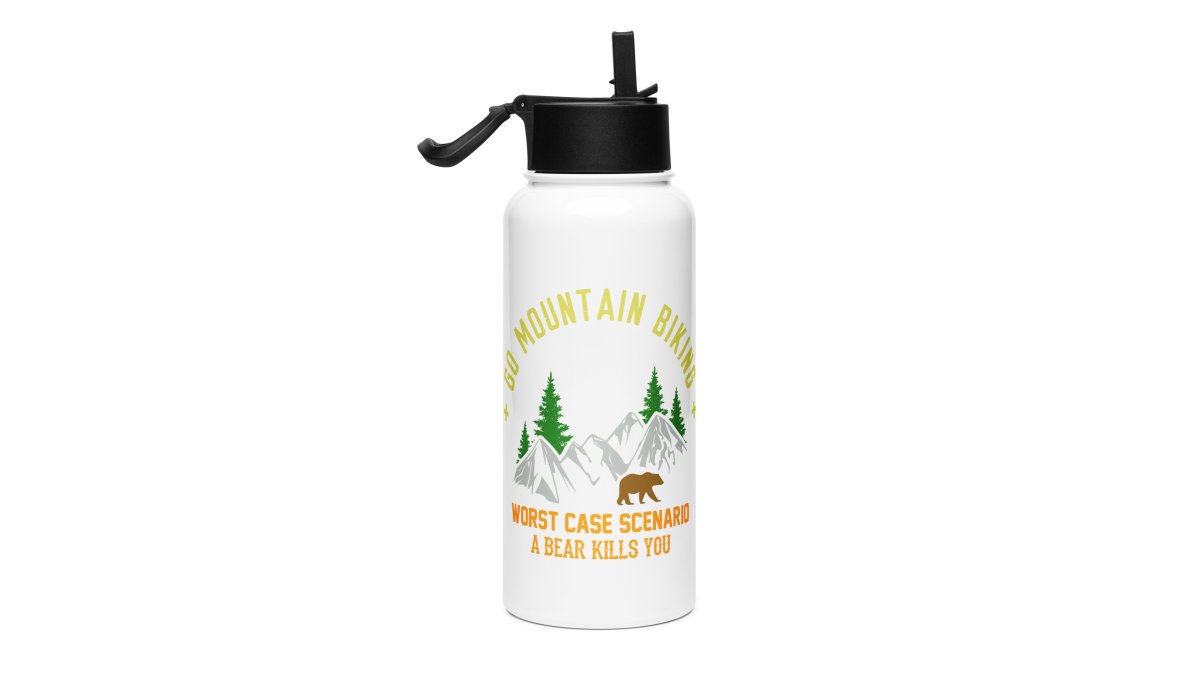
The Go Mountain Biking stainless steel water bottle at $24.00 is the outdoor pick. Same 32 oz stainless build, same straw lid, same rotating handle for carrying.
5. Best Mom Ever Bottle
Rounding out the list, the Best Mom Ever stainless steel water bottle is $24.00 with the same 32 oz double-walled construction and straw lid. It's the cleanest surface of the five.
Removing Stickers Without Damaging Your Bottle
Removing a sticker safely means warming the adhesive, peeling slowly, and dissolving the residue instead of scraping. A hair dryer on low softens the adhesive without touching the powder coat. Peel from a corner at a shallow angle, not straight up.
The Removal Method That Protects the Finish
Work through these steps in order. Skipping ahead to scraping is what causes damage.
- Warm the sticker, don't soak it. A hair dryer on low, a few inches away for 30-60 seconds, softens the adhesive enough to release. Boiling water or a long soak can push moisture under the powder coat at a chip or seam and cause it to lift later.
- Peel at a shallow angle, slowly. Get a fingernail or plastic card under one corner and pull back nearly parallel to the surface, not straight up, pulling straight up tears powder coat. If the sticker resists, add heat, not force.
- Work in sections on large decals. A big wrap-around graphic releases unevenly. Warm and peel one edge at a time so you're never fighting the whole sticker at once.
- Dissolve the residue, don't scrub it. Rubbing alcohol, citrus-based adhesive remover, or warm soapy water on a microfiber cloth lifts most residue. Let the solvent sit a minute before wiping.
- Finish with a clean wipe. Remove any solvent film with warm water and dry the bottle fully before applying anything new.
What Not to Use on a Powder-Coated Bottle
Abrasive tools are the fastest way to permanently damage a finish, usually irreversibly.
- Metal scrapers, razor blades, and putty knives. These cut through powder coat and leave bare metal that rusts or discolors.
- Steel wool and scouring pads. They leave a dull, scratched patch no polish will restore.
- Acetone, nail polish remover, and paint thinner. These can soften or cloud the powder coat itself, not just the adhesive.
- High heat from a heat gun. A hair dryer on low is enough; a heat gun can blister the coating.
Removing Stickers From Bare Stainless Steel and Plastic
The method changes slightly by surface.
- Bare or brushed stainless steel. Adhesive releases more easily, but the surface shows smudges and fingerprints. Use alcohol and a microfiber cloth, wiping with the grain so you don't leave streaks.
- Plastic bottles. Avoid alcohol on some plastics, which can cloud the surface. Warm soapy water and a plastic scraper are safer; test any solvent on the bottom first.
- Glass. The most forgiving surface. Warm water, dish soap, and a plastic scraper handle almost any adhesive.
If a sticker has been on the bottle a year or more, the adhesive may have cured hard. Warm it longer, peel in smaller increments, and expect more time on residue. Patience is cheaper than a replacement bottle.
Conclusion: Pick Stickers That Outlast the Bottle
The hard part isn't finding a sticker you like. It's finding one that survives a year of sun, water, and being dropped in a gym bag. Laminated vinyl, a UV-resistant top layer, and a sealed edge do more for longevity than any design choice.
Frequently Asked Questions
What kind of stickers will stay on water bottles?
Waterproof vinyl stickers with a strong adhesive backing stay on water bottles best. Look for UV-resistant and scratch-resistant options made from printable vinyl or a laminate sheet. Avoid paper stickers, which break down with moisture. The Wits End bottles, like the Sometimes Evolution Sucks design, pair well with durable decals because their glossy finish gives adhesive a smooth surface to grip.
How do I keep stickers from peeling off my water bottle?
Clean the bottle with rubbing alcohol and let it dry completely before applying. Press the sticker firmly from the center outward to push out air bubbles. For extra hold, seal the edges with a clear waterproof sealant or a piece of thermal lamination tape. Avoid soaking the bottle in hot water, which softens adhesive and speeds up peeling, especially on curved surfaces.
Are vinyl stickers the best for water bottles?
Vinyl is the most reliable choice for water bottle decals. It resists water, UV rays, and everyday wear better than paper or standard sticker paper. Printable vinyl with a laminate sheet adds a moisture barrier and scratch resistance. For bottles that see heavy use, like the Go Mountain Biking bottle, vinyl stickers hold up through hand washing and outdoor conditions.
How do you clean a water bottle without ruining the stickers?
Hand wash with mild soap and lukewarm water, and avoid scrubbing directly over the sticker. Skip the dishwasher, since heat and harsh detergent break down adhesive and can lift edges. The Wits End bottles are hand-wash only, so this keeps both the bottle and any durable stickers for water bottles in good shape. Pat dry instead of rubbing.
Do I need to seal stickers for water bottles?
Sealing is optional but helps stickers last longer, especially on bottles that get wet often. A clear waterproof sealant or laminate sheet over the sticker creates a moisture barrier and protects against scratches. If you skip sealing, choose stickers that are already UV-resistant and waterproof vinyl. Sealing is most useful for stickers on curved surfaces where edges tend to lift.