 1-361-589-1048
Table of Contents
- Why Shoppers Look Beyond Big Marketplaces for Unique Graphic Apparel
- What Actually Separates Independent Graphic Apparel Brands
- How to Find Unique Graphic Clothing Without Wasting Money
- Print on Demand Quality Comparison: What the Labels Don't Tell You
- Retro Tech and Geek Designs That Stand Out
- Pricing Breakdown: What You Pay and What You Get
- Frequently Asked Questions
Last Updated: September 16, 2026
Why Shoppers Look Beyond Big Marketplaces for Unique Graphic Apparel
A Teepublic alternative for unique graphic apparel usually wins on one thing the big marketplaces can't match: a design you won't see on three other people at the same show. This guide from The Wits End breaks down what actually separates independent graphic apparel brands from mass-market listings, and how to buy without wasting money.
Marketplace catalogs are built for volume. The same joke, the same meme, the same font gets uploaded by dozens of sellers, and the algorithm rewards whoever uploaded it first. Independent shops work the opposite way. They print in small runs or on demand, which is why the selection feels narrower but the designs feel sharper.
Below, we'll cover the three things that decide whether a graphic tee survives a year of wear: print method, sizing range, and how honest the product photography is.
What Actually Separates Independent Graphic Apparel Brands
Independence isn't a vibe, it's a set of production choices. Independent graphic apparel brands typically print on demand or in small batches, which lets them carry niche designs a mass marketplace would never stock.
That difference shows up in two places you can verify before buying.
Print Method and Wash Durability
Direct-to-garment (DTG) printing is a process where a printer applies water-based ink directly onto the fabric, which works well for detailed, multi-color designs on cotton. Screen printing pushes ink through a mesh screen, laying down a thicker layer that holds up through repeated washing on bold, high-contrast graphics.
A common mistake is judging a print by how it looks in the listing photo. Look instead at the ink layer: if you can feel a stiff plastic sheet, that's a heat-transfer print, and it's the one that cracks first. Most complaints about "the print fell apart" trace back to that method, not to DTG or screen printing.
Sizing That Goes Past 2XL
Here's where most marketplaces quietly fail. A brand can advertise "extended sizing" and still only offer it on a handful of designs, which means plus-size shoppers get the leftover catalog.
The Wits End carries inclusive sizing up to 5XL across its collection. That transparency matters more than the size range itself. If a shop won't show you a real measurement chart, assume the fit is a guess.
How to Find Unique Graphic Clothing Without Wasting Money
Finding unique graphic clothing comes down to three checks you can run in under five minutes per shop. Skip them and you're gambling on a listing photo.
- Read the print method. If the product page doesn't say DTG or screen printed, that's a red flag.
- Open the size chart. Look for actual measurements in inches and centimeters, not just S/M/L labels.
- Check who runs the shop. A veteran-owned small business with a real location and a stated production process is easier to hold accountable than an anonymous storefront.
- Look at the blank. Fabric weight tells you a lot. A 4.2 oz./yd.² combed ring-spun cotton tee feels different from a thin promotional blank.
- Confirm the return path. On-demand printing means longer delivery times, so know the policy before you order.
That's the whole framework. It's not complicated, but most shoppers skip steps two and three, which is exactly where the disappointment comes from.
Print on Demand Quality Comparison: What the Labels Don't Tell You
A print on demand quality comparison only means something if you're comparing the same variables. Fabric weight, construction, and print method decide durability; everything else is marketing.
| What to Check | What Good Looks Like | Why It Matters |
|---|---|---|
| Fabric weight | 4.2 oz./yd.² or heavier | Thin blanks wear out and lose shape |
| Construction | Side-seamed, shoulder taping | Reduces twisting and stretched collars |
| Pre-shrunk | Stated on the listing | Prevents surprise shrinkage after wash one |
| Print method | DTG or screen printed | Holds color and detail longer |
| Size range | Published chart through 5XL | Confirms real extended sizing |
| Production | Made on demand | Reduces overproduction waste |
The "made on demand" row is the one shoppers misread. On-demand production means your shirt is printed after you order, so delivery takes a bit longer. In exchange, the shop isn't sitting on unsold inventory, and you're not buying a design that was printed months ago and sat in a warehouse.
Retro Tech and Geek Designs That Stand Out
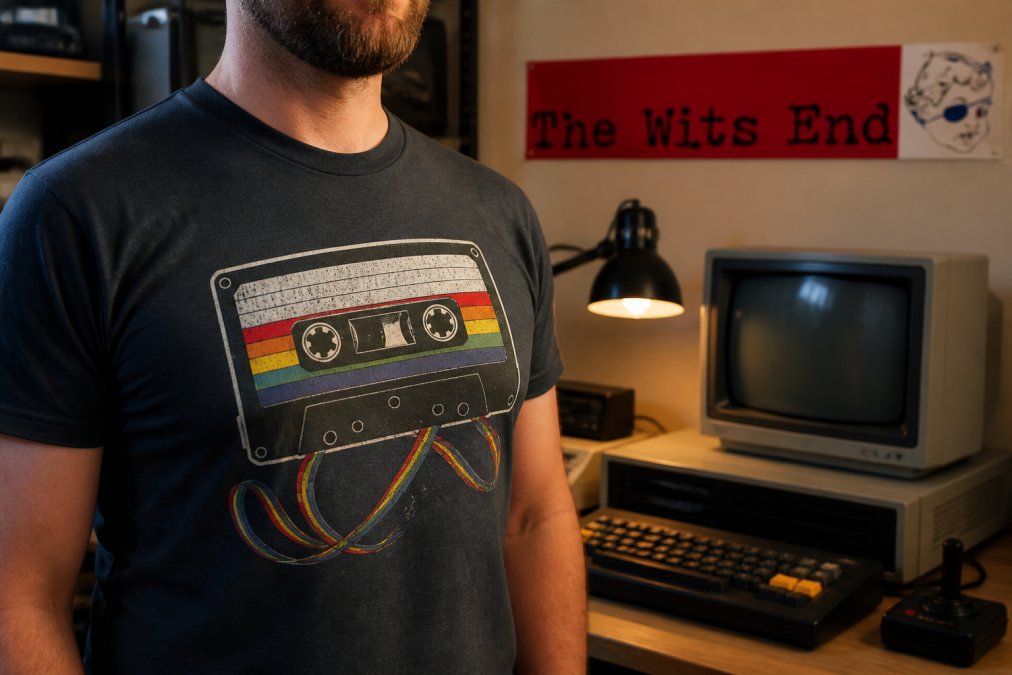
Retro tech designs work because they're specific. A shirt that says "geek" in a clean minimalist font lands differently than a generic "I'm a nerd" gag, and the audience for it knows the difference instantly.
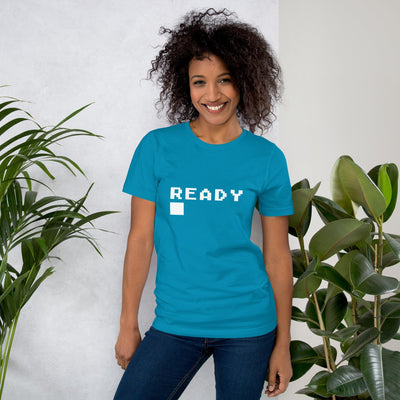
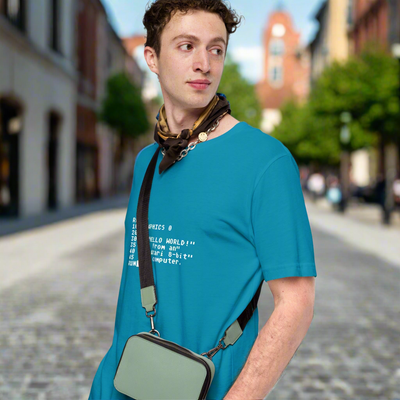
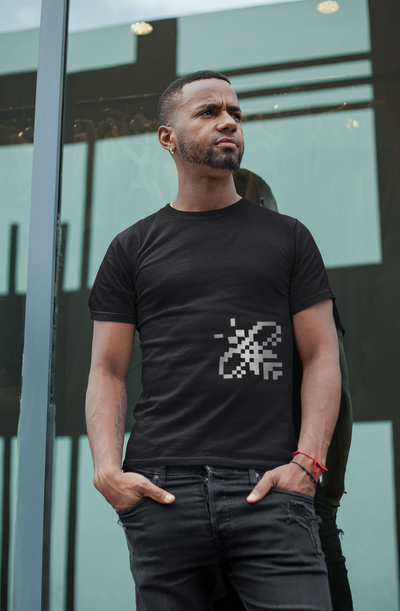
Take the geek. Unisex t-shirt: 100% combed and ring-spun cotton, 4.2 oz./yd.², pre-shrunk, side-seamed, with shoulder-to-shoulder taping. It's a plain statement tee, and that's the point.

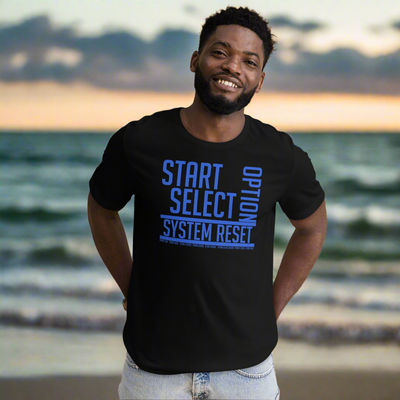
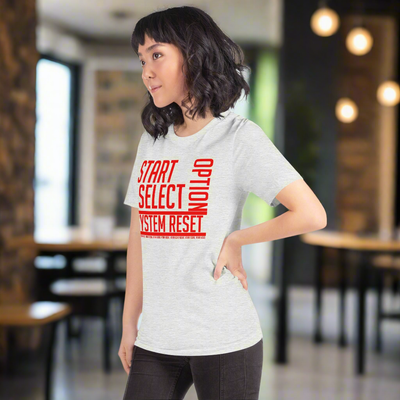
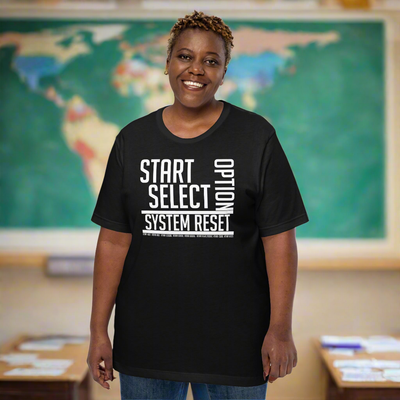
Then there's the deep-cut tier. The Star Raiders Garbage Scow Captain Unisex T-shirt references an Atari 8-bit game most people under 40 have never played. The Atari 8-bit Function Keys (red) Unisex T-shirt prints the actual Start, Select, Option, and System Reset keys, plus a list of the machines they belonged to: 400, 800, 800XL, 600XL, 1200XL, 65XE, 800XE, 130XE, XEGS.


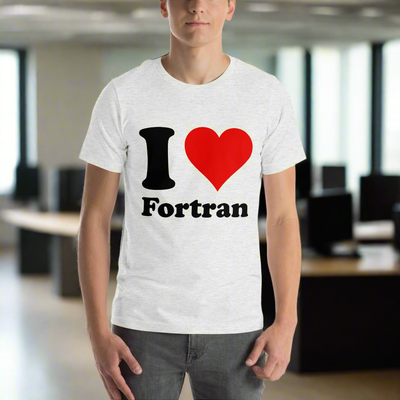
For the programming-language crowd, there's the I ❤️ Modula-2 Unisex T-shirt, the Love Lisp Unisex t-shirt with its parentheses joke, and the Tux the Linux Mascot Unisex T-shirt.
Pricing Breakdown: What You Pay and What You Get
Every design in The Wits End catalog is priced at $16.50, one-time purchase, with no subscription and no membership tier.
| Item | Price | Fabric | Sizes |
|---|---|---|---|
| geek. Unisex t-shirt | $16.50 | 100% combed ring-spun cotton | XS-5XL |
| Star Raiders Garbage Scow Captain | $16.50 | 100% combed ring-spun cotton | XS-5XL |
| Atari 8-bit Function Keys (red) | $16.50 | 100% combed ring-spun cotton | XS-5XL |
| IT Chimp with MOS 6502 | $16.50 | 100% combed ring-spun cotton | XS-5XL |
| Tux the Linux Mascot | $16.50 | 100% combed ring-spun cotton | S-4XL |
| Love Lisp | $16.50 | 100% combed ring-spun cotton | S-2XL |
Heather colorways contain polyester; everything else is cotton. Blanks are sourced from Nicaragua, Mexico, Honduras, or the US.
So why pay this instead of grabbing the cheapest option on a marketplace? Because the flat price applies across the full size run, and the construction details (pre-shrunk, side-seamed, taped shoulders) are the ones that decide whether the shirt is still wearable.
Marketplaces optimize for volume, and volume is exactly why the designs blur together. Finding a Teepublic alternative for unique graphic apparel means choosing a shop that prints on demand, publishes real measurements, and stocks the niche designs you actually want to wear. The Wits End is a veteran-owned shop built for that: inclusive sizing up to 5XL, on-demand DTG and screen printing, and a catalog aimed at retro computing, geek culture, and progressive values. Shop now and find a design that says something specific about you.
Frequently Asked Questions
Which print-on-demand site has the highest quality graphic apparel?
Quality depends on the print method and fabric weight, not the platform name. Look for shirts made from 100% combed and ring-spun cotton at 4.2 oz./yd.², pre-shrunk, with side-seamed construction. Direct-to-garment printing holds up well when the fabric is properly prepared. Independent shops that print on demand often use the same blanks as large marketplaces, but they tend to disclose the exact specs, which makes comparing quality possible.
Are there alternatives to Teepublic that support independent artists better?
Yes. Smaller independent graphic apparel brands typically pay artists directly or design in-house, which means a larger share of your purchase supports the creator. When you buy from an independent shop, the money stays with a small business rather than being split across a marketplace and its fulfillment network. Look for shops that describe their design process, show real product photos, and list fabric details upfront.
How do print-on-demand marketplaces compare for unique apparel buyers?
Marketplaces offer volume and variety, but independent shops offer niche designs you will not find in mass catalogs. A print on demand quality comparison comes down to three things: fabric weight, print method, and whether the shop discloses its blanks. Independent shops like The Wits End list exact fabric specs and print on demand, so you know what you are getting before it arrives.
Is it better to buy graphic apparel from independent shops or large marketplaces?
Independent shops win on design uniqueness, sizing range, and transparency. Large marketplaces win on speed and selection volume. If you want a shirt that reflects a specific interest, like retro computing or programming humor, an independent shop is more likely to carry it. If you need a basic design fast, a marketplace works. The trade-off is usually design originality versus delivery speed.
What should I look for when choosing a graphic apparel marketplace?
Check four things: fabric composition and weight, print method (screen print versus direct-to-garment), available sizes, and whether the shop shows real product photos instead of mockups. Also look for pre-shrunk fabric and side-seamed construction, which affect fit after washing. A shop that lists these details is more likely to deliver what you expect.