 1-361-589-1048
Table of Contents
- What Makes Apparel Truly Unique for Makers
- How to Spot Quality in Independent Graphic Apparel Brands
- The Real Cost of Cheap: How to Support Independent Artists Through Apparel
- Why Values-Driven Fashion Brands Earn Your Dollar
- Sizing, Fit, and Durability: What to Check Before You Buy
- Where to Find Unique Apparel for Makers: A Practical Checklist
- Frequently Asked Questions
Last Updated: September 17, 2026
What Makes Apparel Truly Unique for Makers
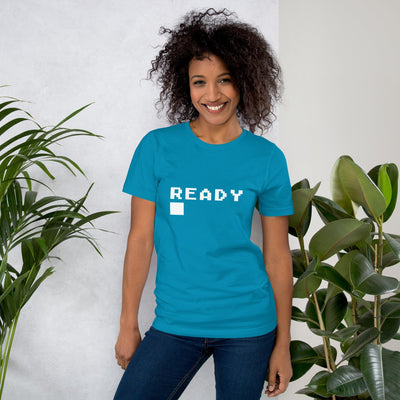
Finding unique apparel for makers means hunting down graphic tees that speak to how you actually think, not what a trend cycle decided you should wear. At The Wits End, we've built our catalog around the idea that a shirt referencing the Atari 8-bit READY prompt says more about you than a plain logo tee.

Mass-market graphic clothing follows a simple formula: find what's trending, print it on the cheapest blank available, and move on. Makers, tinkerers, and retro-computing fans want a design that rewards people who get the reference.
Unique apparel isn't about rarity for its own sake. It's about a design matching a specific subculture, printed well enough to survive years of wear, and sold by someone who understands the reference.
Beyond the Big Box Store: Why Niche Matters
Big-box graphic apparel sells volume, so it defaults to the broadest possible reference. A generic "vintage computer" design has to appeal to someone who owned an Atari 800, someone who played an emulator once, and someone who just likes the aesthetic.
A niche design assumes you know the difference between the Atari 400's "Candy" codename and the 800's "Colleen." That specificity is the entire value: when a design assumes knowledge, it signals the maker has that knowledge too.
The Maker Aesthetic: From Retro Tech to Modern Irony
The maker aesthetic pulls from retro computing, geek culture, and a dry, ironic humor about both: phosphor-green text on black, pixel-perfect lettering, and jokes that only land if you spent a childhood typing commands into a BASIC prompt.
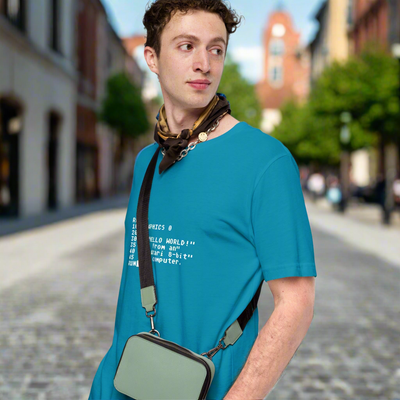
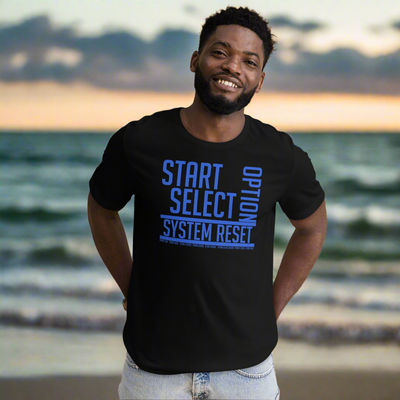
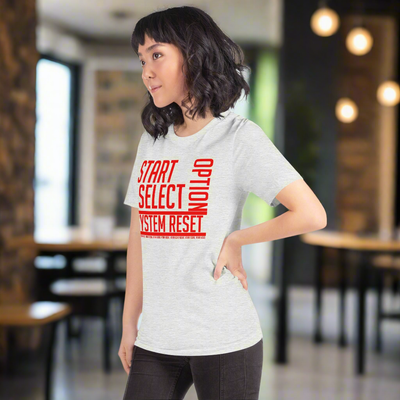
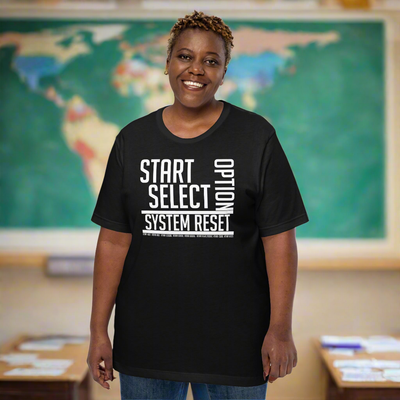
This is a real aesthetic lane, not a costume. A shirt featuring the four function keys from an Atari 8-bit computer, or the "Garbage Scow Captain" rank from Star Raiders, reads as authentic because the reference is precise.
How to Spot Quality in Independent Graphic Apparel Brands
Quality in independent graphic apparel comes down to three things you can check before you buy: the printing method, the blank itself, and the brand's transparency about both. A hand-screened or DTG print on a well-specified blank outlasts a cheap heat-transfer print.
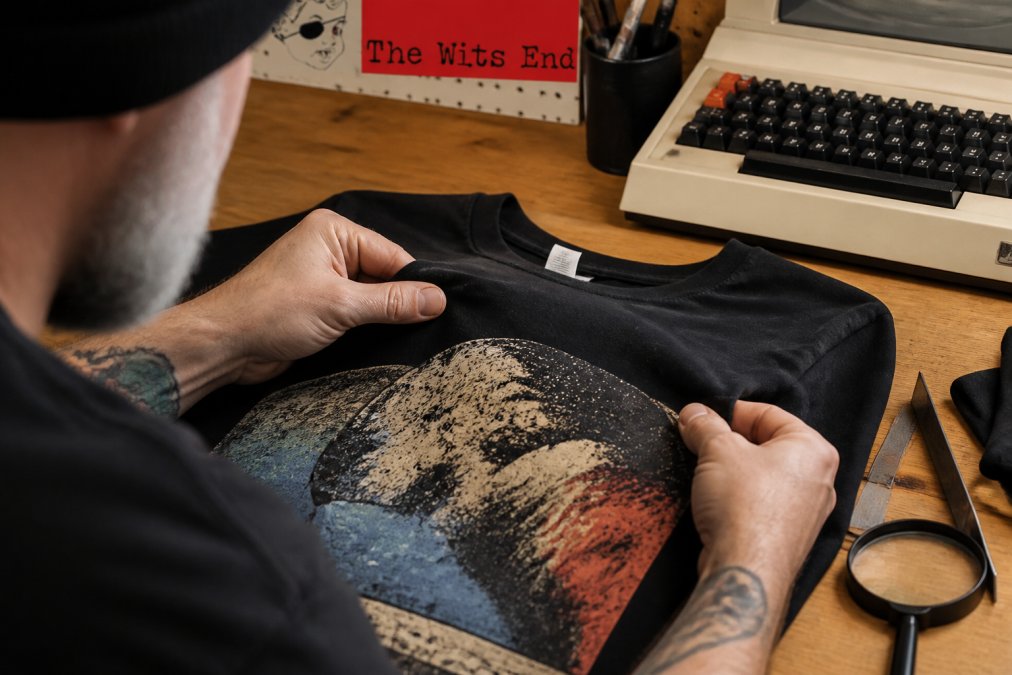
Start with the print method. Screen printing pushes ink into the fabric and holds up to repeated washing. Direct-to-garment sprays ink onto the surface, giving more color detail but needing quality pretreatment to last. Heat-transfer vinyl is cheapest and first to crack.
Then check the blank. A shirt listed at 4.2 oz/yd² (142 g/m²) in 100% combed and ring-spun cotton, pre-shrunk, with side-seamed construction and shoulder-to-shoulder taping, is built to keep its shape. Vague "soft cotton" listings tell you nothing.
If You're the Maker: Vetting a Printer or Manufacturer
If you're producing apparel rather than buying it, the same three signals apply, but verify them before money changes hands.
- Ask for the actual blank spec sheet. A real printer will name the mill and style number and send the spec PDF. A broker will send you a photo.
- Request a physical sample before a full run. A pre-production sample is the only way to check ink opacity, placement tolerance, and how the print sits on the fabric. Expect to pay for it; a printer who won't produce one won't stand behind the run.
- Confirm the print method in writing. "Screen print" and "DTG" are not interchangeable, and a quote that doesn't specify is a quote you can't compare.
- Ask who owns the screens. Clarify whether screens are billed once and stored for reorders, or charged every run.
- Get lead time and reorder terms in the quote. A 10-day first run often becomes 4-6 weeks on reorder if the shop must re-burn screens.
Protecting Your Design Before You Send It
Unique apparel is only valuable if the design stays yours. Before sending artwork to any printer or manufacturer, put basic protection in place.
Finally, look at how the brand talks about its process. On-demand production, where a shirt is made after you order it, is a legitimate quality signal when the brand explains why: it cuts overproduction and usually means the shop is small enough to care about each print.
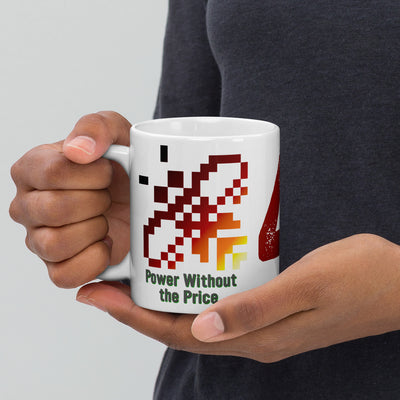
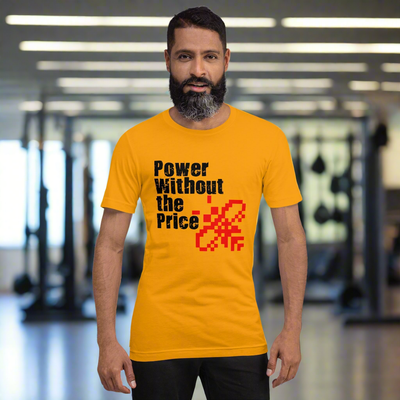
Atari ST Power Without the Price Unisex →
The Real Cost of Cheap: How to Support Independent Artists Through Apparel
Knowing how to support independent artists through apparel starts with where your money goes.
Supporting independent artists also means supporting people who take creative risks. A niche design only exists because someone decided a reference was worth printing, and every purchase tells them it was.
Why Values-Driven Fashion Brands Earn Your Dollar
Values-driven fashion brands earn repeat customers because their values show up in decisions you can verify, not just a mission statement. For a veteran-owned shop, that means a clear point of view on what they print and why; for a maker-focused brand, being upfront about production methods and sizing.
Sizing, Fit, and Durability: What to Check Before You Buy
Sizing and durability are what online apparel buyers get burned on most, so check both before ordering. Fit comes down to the blank's measurements; durability to the print method and fabric construction.
| What to Check | Why It Matters | What Good Looks Like |
|---|---|---|
| Print method | Determines how long the graphic lasts | Screen print or quality DTG, not heat transfer |
| Fabric weight | Affects durability and feel | Around 4.2 oz/yd² (142 g/m²) |
| Construction | Keeps the shirt from twisting | Side-seamed, shoulder-to-shoulder taping |
| Size range | Whether your size is actually stocked | Full range across the collection, up to 5XL |
| Shrinkage | Whether it fits after washing | Pre-shrunk fabric |
Where to Find Unique Apparel for Makers: A Practical Checklist
The best places to find unique apparel for makers are small, maker-run shops specializing in a specific subculture rather than marketplaces selling everything to everyone. Specialization signals the shop understands the references it prints.
- The brand names a specific niche (retro computing, geek culture, a particular fandom) rather than "cool graphic tees"
- The listing states the print method: screen print, direct-to-garment, or heat transfer
- The blank specs are listed: fabric weight, cotton type, construction details
- A real size chart with measurements in inches is available
- The full size range, up to 5XL if offered, applies across the collection
- The brand explains its production model, such as on-demand printing
- You can find a clear point of view on what the brand prints and why
If You're Making the Apparel: Small-Batch and Micro-Manufacturing Options
Direct-to-garment (DTG) on demand. No inventory, no minimums, and per-unit cost that only makes sense at low volume, the default for a first run of 10-25 shirts. The trade-off: higher cost per unit and a print that holds up well on a quality blank with proper pretreatment but won't match screen print's hand-feel.
Understanding Minimum Order Quantities (MOQs)
For printed apparel, MOQs commonly fall in these ranges:
| Production Path | Typical MOQ | Best For |
|---|---|---|
| DTG on demand | 1 | Testing a design, no inventory |
| Local screen print | 12-24 per design | Small first runs, reorders |
| Contract screen print | 50-100 per design | Scaling a proven design |
| Cut-and-sew | Several hundred per style/color | Full custom garments |
If you want a design that rewards people who know the history, The Wits End prints references like these on blanks built to last, with inclusive sizing up to 5XL. The Atari 8-bit 'Ready' Prompt Unisex T-shirt is a good starting point for a design that says you're ready for anything.
Frequently Asked Questions
What makes apparel 'unique' for makers?
Unique apparel for makers goes beyond a generic logo. It reflects specific subcultures like retro computing, coding, or progressive values. Look for designs that reference niche knowledge, such as the Atari 'Ready' prompt or a Zork text adventure. These items often come from small shops that prioritize original art over mass-produced templates, giving you a shirt that starts conversations and feels personal.
Where can I find high-quality graphic tees designed by independent artists?
Start with small, specialist shops rather than large marketplaces. Look for brands that print on demand or hand-screen in small batches, as this reduces waste and ensures attention to detail. Check product listings for fabric weight, like 4.2 oz/yd² combed ring-spun cotton, and pre-shrunk claims. Independent graphic apparel brands often share their printing process, which is a good sign of quality.
How do I identify ethical and sustainable apparel brands?
Look for transparency about production methods. On-demand printing, which creates items only after an order is placed, helps reduce overproduction. Check if the brand shares where blanks are sourced, such as from Guatemala, Nicaragua, or the US.
Are print-on-demand sites good for finding unique clothing?
Print-on-demand can be excellent for unique clothing if the designs are original. The model avoids mass production waste, but quality varies by printer. Focus on shops that specify the printing method, like direct-to-garment or hand-screening, and offer detailed sizing up to 5XL. A good print-on-demand shop will show real photos of the product and explain how the design holds up after washing.